
Current Euro Exchange Rates in Venezuela: MSMN News
Follow MSMN
Official channels from Martins Studio Media Network.
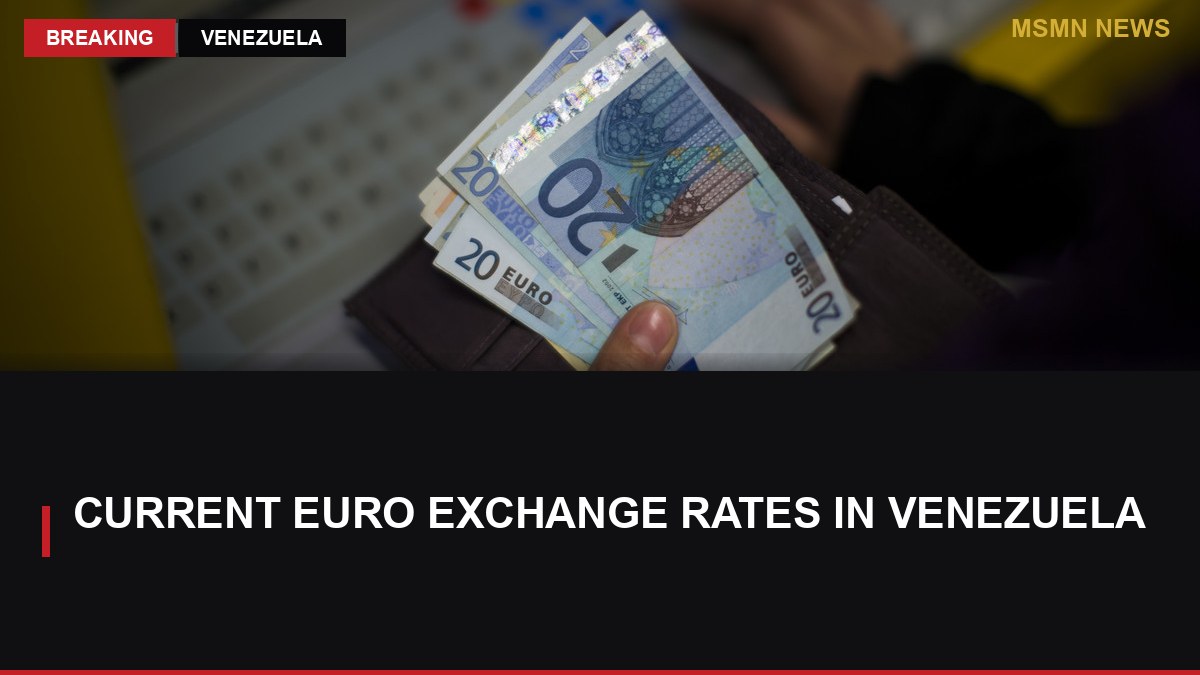
As of August 1, 2026, the euro's exchange rate against the Venezuelan bolívar has become a focal point for both individuals and businesses amid the country's ongoing economic crisis.
- MK Stalin Challenges Kolathur Election Result: MSMN News
- Revolutionizing Virtual Displays: MSMN News
- CM Dhami Launches Sashakt Behna Utsav Yojana in Dehradun: MSMN News
- High-Stakes India-China Border Talks Scheduled in Beijing: MSMN News
- Navigating New Identities: A Journey of Openness After Cancer Treatment: MSMN News
Overview of the Euro in Venezuela
The euro has become a significant currency in Venezuela, especially as the country continues to grapple with economic challenges. As of August 1, 2026, the exchange rate of the euro against the Venezuelan bolívar is drawing considerable attention from both individuals and businesses. With inflation rates soaring and the local currency losing value, many Venezuelans are turning to the euro as a more stable option for transactions and savings.
In recent years, the economic landscape in Venezuela has been tumultuous, characterized by hyperinflation and severe Currency devaluation. The euro, being one of the major currencies globally, has increasingly been adopted by Venezuelans seeking to preserve their purchasing power. This shift towards the euro is not merely a trend; it reflects a desperate need for stability in a country where the bolívar has lost much of its value.
Current Exchange Rate
On the specified date, the Euro's exchange rate in Venezuela is reported to be fluctuating, reflecting the ongoing economic conditions. The precise value can vary significantly throughout the day due to market demand and supply dynamics. This volatility is a direct result of the broader economic environment, which has been characterized by hyperinflation and currency devaluation.
As of August 1, 2026, the exchange rate is reported to be around 5,000 bolívares for one euro, but this figure can change rapidly. The euro's strength against the bolívar has provided a lifeline for many Venezuelans, who are increasingly using euros for everyday transactions, especially in major cities where international commerce is more prevalent. The local Economy's reliance on the euro highlights the dire state of the bolívar, which has struggled to maintain its value amidst ongoing economic turmoil.
Historical Context
To understand the current situation, it is essential to look back at the history of the euro in Venezuela. Over the last few years, Venezuela has experienced one of the most severe economic crises in its history, marked by hyperinflation that has rendered the local currency almost worthless. In this context, the euro has emerged as a preferred alternative for many citizens.
In previous years, the euro's value against the bolívar has seen dramatic changes. For instance, in 2024, the euro was valued significantly lower than it is today, which reflects the ongoing decline of the Venezuelan economy. As the government has struggled to stabilize the economy, the euro's strength has increased, making it a crucial currency for trade and personal finance in the country.
The rise of the euro in Venezuela is also a reflection of the country's broader economic challenges. With the bolívar losing its purchasing power, many citizens have turned to foreign currencies, particularly the euro and the US dollar, as a means of protecting their savings and conducting transactions. This shift has been particularly pronounced in urban areas, where international trade and tourism have created a demand for stable currencies.
Factors Influencing the Euro's Value
Several factors influence the exchange rate of the euro in Venezuela. One of the most significant is the economic policies implemented by the Venezuelan government. The country has faced numerous sanctions, and its oil-dependent economy has suffered due to declining oil prices and production. These factors have led to a lack of confidence in the bolívar, prompting many to seek refuge in more stable currencies like the euro.
Additionally, the global economic climate plays a role. Changes in the European economy, including interest rates set by the European Central Bank and economic growth indicators, can directly impact the euro's value. As the eurozone grapples with its own economic challenges, fluctuations in its currency can also affect its exchange rate in Venezuela.
For instance, if the European Central Bank decides to raise interest rates to combat inflation, this could strengthen the euro against the bolívar. Conversely, any signs of economic weakness in Europe could lead to a depreciation of the euro, impacting its value in Venezuela. The interconnectedness of global economies means that Venezuelans must remain vigilant about international developments that could influence their financial situation.
Public Reaction
The public's response to the euro's performance has been mixed. Many people express relief in having a more stable currency option amid the economic turmoil. For businesses, especially those that engage in international trade, the euro offers a means to transact with foreign partners without the risks associated with the bolívar.
Conversely, some citizens express frustration over the ongoing economic instability. The rising cost of living has made daily necessities increasingly unaffordable, leading to widespread discontent. As the euro remains a preferred currency for savings and transactions, its fluctuations can directly impact the purchasing power of Venezuelans, further complicating their economic situation.
The sentiment among the public is one of cautious optimism, as many have adapted to using the euro for transactions. However, this reliance on a foreign currency also highlights the deep-seated issues within the Venezuelan economy and the challenges that lie ahead. The ongoing struggle for stability has left many citizens feeling vulnerable, as they navigate a landscape where their financial security is constantly at risk.
The Trend of the Euro in 2026
As 2026 progresses, the trend of the euro in Venezuela shows a tendency toward stability, albeit amidst significant volatility. The year has seen various fluctuations in the euro's value, reflecting both local and international economic conditions. Analysts suggest that if the Venezuelan government implements effective economic reforms, the euro could stabilize further.
However, the outlook remains uncertain. Economic experts warn that without substantial changes, the volatility of the euro against the bolívar may continue, affecting consumer behavior and business operations across the country. As Venezuelans navigate their financial futures, the euro's value will remain a critical focal point.
Throughout 2026, various events have impacted the euro's exchange rate. Changes in government policies, international sanctions, and fluctuations in oil prices have all played a role in shaping the economic landscape. As the year progresses, it will be essential to monitor these developments closely, as they will undoubtedly influence the euro's performance in the coming months.
Looking Ahead
As Venezuela moves forward, the exchange rate of the euro will likely continue to be a vital aspect of the economic landscape. Residents are advised to stay informed about ongoing economic developments and monitor the euro's performance closely. Understanding the factors that influence its value can help individuals and businesses make more informed financial decisions.
As the situation evolves, it will be crucial to follow updates regarding economic policies and international relations, as these will significantly impact the euro's exchange rate in Venezuela. The government’s actions, global economic trends, and local market conditions will all play a role in shaping the future of the euro in the country.
In conclusion, the euro's value in Venezuela remains a critical issue for citizens navigating a challenging economic environment. As fluctuations continue, the importance of this currency cannot be understated. It serves not just as a means of transaction, but also as a symbol of stability in a turbulent economic landscape. The reliance on the euro is a testament to the resilience of the Venezuelan people as they adapt to their circumstances, seeking stability amid uncertainty. As the economy evolves, the role of the euro will undoubtedly remain significant, shaping the financial futures of many Venezuelans in the years to come.
Source / Reference
Reporting by MSMN News, based on publicly available source material.
Source: Clarin Argentina
Reference link: https://www.clarin.com/economia/euro-hoy-en-venezuela-precio-y-cotizacion-de-la-divisa-este-sabado-1-de-agosto-de-2026_0_HexY8VI9XM.html
Recommended products
 -20%
-20%

 Best seller
Affiliate disclosure: MSMN may earn from qualifying purchases. Prices and availability may change.


Comments