
Debating the Future of Global Conflict: US vs. China: MSMN News
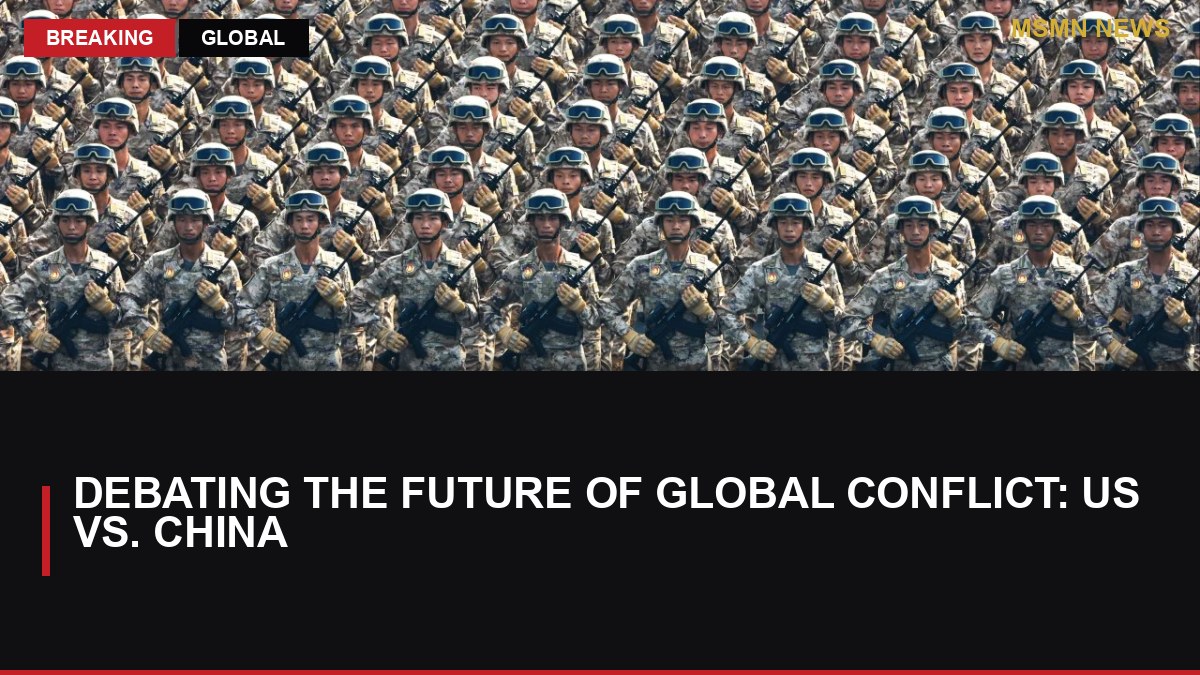
In a world increasingly defined by the rivalry between the US and China, the question of who would win a potential military conflict may be the wrong one to ask. Instead, understanding the underlying philosophies and dynamics of this relationship is crucial.
- Ned Lamont Secures Victory in Connecticut's Democratic Primary: MSMN News
- Prosecutors Investigate Firm Linked to Judge in Trump Hush Money Case: MSMN News
- Tragic Drowning of Local Farmer in Cork River: MSMN News
- Championship Play-Offs Expand to Six Teams: MSMN News
- UK Prime Minister Reverses Course on Early Release of Andrew Harper's Killers: MSMN News
The Central Question of Military Rivalry
In the latest issue of Foreign Affairs, a provocative question takes center stage: who would emerge victorious in a military conflict between the United States and China? This inquiry does not merely arise from academic curiosity; it reflects the growing concerns and tensions surrounding the geopolitical landscape shaped by the two most powerful nations in the world. However, many analysts caution that focusing solely on the question of victory may overlook deeper strategic philosophies and the implications of such a rivalry.
The relationship between the US and China has evolved into one of the most significant dynamics in international relations today. As China continues to rise economically and militarily, its ambitions challenge the long-standing US-led global order. This clash is not just about military might but also about contrasting worldviews and strategies that both nations employ in their pursuit of power and influence.
The Philosophical Divide
At the heart of the US-China rivalry lies a fundamental clash of philosophies. The United States operates under a liberal realist framework, which emphasizes the importance of individual rights, democratic governance, and a rules-based international order. This perspective has shaped the US's approach to foreign policy for decades, promoting democracy and capitalism as cornerstones of global stability.
On the other hand, China presents a different worldview, rooted in authoritarianism and a state-centric approach. The Chinese Communist Party’s rise has been characterized by a focus on national sovereignty, economic development, and a rejection of Western liberal ideals. This divergence in philosophies creates a complex backdrop for understanding the potential for conflict between these two nations.
Military Capabilities and Technological Advancements
As the debate around military conflict heats up, it is essential to assess the military capabilities of both countries. The United States maintains a technological edge with its advanced military hardware, extensive global alliances, and a well-established network of bases around the world. The US military's capability to project power globally remains unmatched, and its investments in cutting-edge technologies like artificial intelligence and cyber warfare continue to shape its strategic posture.
Meanwhile, China has made significant strides in modernizing its military forces. The People's Liberation Army (PLA) has developed an array of advanced weaponry, including hypersonic missiles and artificial intelligence systems. China's Military Strategy emphasizes anti-access/area denial (A2/AD) capabilities, which aim to restrict US military operations in the Asia-Pacific region. This shift has raised alarms in Washington, prompting a reevaluation of military strategies and alliances.
The Importance of Context
While the question of who would win in a conflict is compelling, it is crucial to place this debate in a broader context. The potential for war between the US and China is not simply a matter of military strength; it is also influenced by economic interdependence, diplomatic relations, and global institutions. Both nations are deeply entwined in a complex web of trade, investment, and cooperation on various global challenges, such as climate change and pandemics.
The economic ties between the US and China are profound, with each country relying on the other for trade and investment. Disruption of this relationship due to military conflict could have catastrophic consequences not only for both nations but for the global economy as a whole. This reality underscores the need for Diplomacy and dialogue, rather than a focus on military confrontation.
Public Sentiment and Reactions
Public opinion regarding US-China relations is varied and complex. In the United States, there is a growing sentiment that China poses a significant threat to American interests and values. This perspective is fueled by concerns over human rights abuses, territorial expansion in the South China Sea, and aggressive economic practices. Many Americans fear that a failure to confront China now could lead to greater challenges in the future.
Conversely, there is also a portion of the American public that advocates for a more diplomatic approach, arguing that engagement rather than confrontation is the best path forward. This perspective emphasizes the importance of finding common ground and addressing global challenges collaboratively, rather than escalating tensions through military posturing.
In China, public sentiment is shaped by nationalism and a desire for recognition as a global power. Chinese citizens are often proud of their country's rapid economic growth and increasing influence on the world stage. However, there is also a growing awareness of the potential consequences of a military confrontation with the US, leading to calls for a more measured approach to international relations.
The Path Forward
As the US and China navigate their complex relationship, the question of military conflict remains a pressing concern. However, experts suggest that rather than framing the discussion solely around who would win, it is more productive to focus on how to prevent conflict and foster cooperation. This approach requires a commitment to dialogue, mutual understanding, and a recognition of the shared challenges both nations face.
In recent years, there have been efforts to establish communication channels between military leaders in both countries to reduce the risk of miscalculation and escalation. These initiatives are vital in building trust and understanding, especially in times of heightened tension. Additionally, multilateral forums and international organizations can play a crucial role in facilitating dialogue and cooperation on global issues.
Conclusion: A Call for Strategic Thinking
The debate surrounding US-China relations and the potential for conflict is complex and multifaceted. While the question of who would win in a military confrontation is intriguing, it is essential to approach this topic with a broader perspective. Understanding the underlying philosophies, military capabilities, economic interdependencies, and public sentiments can provide valuable insights into the dynamics at play.
As both nations continue to evolve and adapt to changing global realities, the focus should shift from questions of victory to strategies for peace and cooperation. The stakes are high, and the consequences of conflict would be felt far beyond the borders of the US and China. It is imperative that leaders on both sides prioritize diplomacy and engagement to navigate this critical juncture in history. The future of global stability may very well depend on it.
Source / Reference
Recommended products

 Editor's choice

Affiliate disclosure: MSMN may earn from qualifying purchases. Prices and availability may change.


Comments