
Iran Dismisses Claims of U.S. Negotiations Following Trump’s Statements: MSMN News
Follow MSMN
Official channels from Martins Studio Media Network.
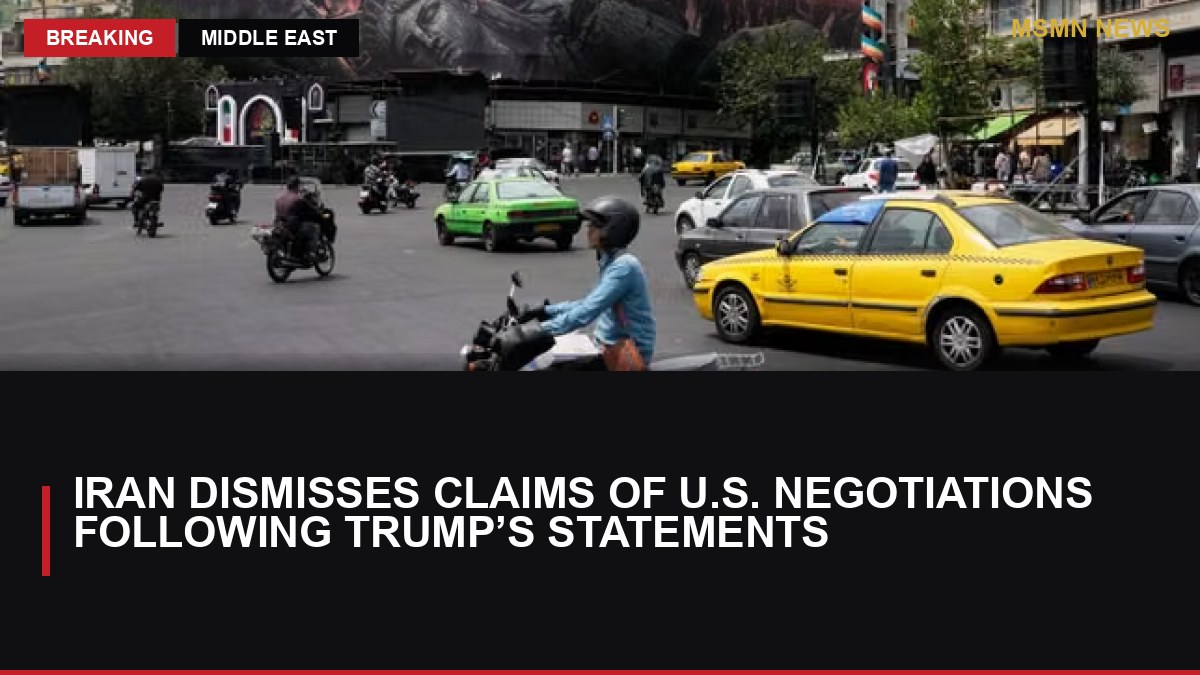
Iran's foreign ministry has firmly denied any negotiations with the United States, following former President Trump's claims of postponing military action to facilitate diplomacy. This response underscores the ongoing complexities surrounding U.S.-Iran relations.
- Ruby Tui signs for English rugby club Trailfinders: MSMN News
- Dubai accelerates India deal to adopt agentic AI in private sector: MSMN News
- New UK Middle East Minister renews calls for Israel to let more aid into Gaza: MSMN News
- Effetto domino, anche Vienna rimanda i migranti in Italia: MSMN News
- New Fan Theory Points to Hidden Doctor Doom in 'Avengers: Doomsday': MSMN News
Iran Responds to Trump's Claims
In a swift and definitive statement, the Iranian foreign ministry has denied reports of any negotiations with the United States. This denial comes on the heels of comments made by former President Donald Trump, who suggested that he had temporarily refrained from military action against Iran to facilitate diplomatic discussions. The Iranian government’s response underscores the complexities and tensions that characterize U.S.-Iran relations, particularly in light of Trump's controversial history with the nation.
### Background on U.S.-Iran Relations
The relationship between the United States and Iran has been fraught with tension for decades, rooted in a history of political upheaval and conflict. The 1979 Iranian Revolution marked a significant turning point, leading to the severance of diplomatic ties. Since then, various administrations have grappled with how to engage with Iran, particularly regarding its nuclear ambitions and regional influence.
Trump's presidency was marked by a hardline approach towards Iran, culminating in the U.S. withdrawal from the Joint Comprehensive Plan of Action (JCPOA) in 2018. This agreement, aimed at curbing Iran's nuclear program, was a significant diplomatic achievement of the Obama administration. Trump's decision to exit the deal not only escalated tensions but also led to the imposition of severe economic sanctions on Iran, which have had profound effects on its economy and society.
The sanctions regime has been a central aspect of U.S. policy towards Iran, aimed at pressuring the Iranian government to alter its behavior in the region. However, these measures have also resulted in widespread suffering among the Iranian populace, creating a complex backdrop for any potential negotiations.
### Trump's Recent Comments
During a recent public appearance, Trump claimed that he had postponed launching new military strikes against Iran in order to allow for what he termed potential diplomatic negotiations. His remarks were met with skepticism and caution, particularly given the history of aggressive rhetoric and actions associated with his administration. Trump’s assertion that he was open to talks with Iran raised eyebrows, especially considering the longstanding animosity between the two nations.
The former president's comments have sparked debate among political analysts and foreign policy experts. Many view Trump's statements as an attempt to position himself as a statesman willing to engage in Diplomacy, despite his previous actions that undermined trust between the two countries. Critics argue that such claims may be more about political posturing than genuine interest in dialogue.
### Iran's Firm Denial
In response to Trump's comments, Iranian officials were quick to issue a statement denying any ongoing negotiations with the U.S. The Iranian foreign ministry emphasized that there are no current discussions taking place and that any claims to the contrary are unfounded. This firm stance reflects Iran's broader strategy of maintaining its sovereignty and resisting external pressures, particularly from the U.S.
Iran's rejection of Trump's claims also highlights the complexities of international diplomacy. The Iranian leadership has often framed its interactions with the U.S. in terms of resistance to perceived aggression and interference. By denying any negotiations, Iran seeks to project strength and unity in the face of external pressures.
### Public Reaction in Iran
The public reaction in Iran to Trump's statements and the subsequent denial has been one of skepticism. Many Iranians view the U.S. as a historical adversary, and any suggestion of negotiations is often met with caution. The Iranian populace has been subjected to years of economic hardship due to sanctions, leading to a complex relationship with the idea of diplomacy.
Social media platforms in Iran have seen a flurry of activity, with many citizens expressing their disbelief regarding the possibility of genuine negotiations. Some commentators have pointed out that Trump's track record raises questions about the sincerity of his intentions. Others argue that any dialogue must be predicated on mutual respect and the lifting of sanctions.
### The Broader Context of Diplomacy
The current geopolitical climate adds another layer of complexity to the situation. The ongoing conflict in the Middle East, particularly tensions involving Israel and various regional actors, complicates the potential for U.S.-Iran negotiations. Many analysts suggest that any future talks would require a significant shift in U.S. policy, particularly regarding sanctions and military presence in the region.
Moreover, Iran's relationships with other global powers, including Russia and China, play a critical role in its diplomatic strategy. As the U.S. continues to navigate its foreign policy objectives, Iran's alignment with these nations could influence its approach to negotiations. The interplay of these relationships could serve as a counterbalance to U.S. influence in the region.
### Next Steps for U.S.-Iran Relations
As the situation unfolds, experts are watching closely for any signs of a shift in U.S. policy or Iranian willingness to engage in dialogue. The Biden administration has expressed a desire to return to the JCPOA framework, but achieving a consensus on terms remains a significant hurdle. The Iranian government has stated that it will not engage in talks unless the U.S. returns to compliance with the JCPOA and lifts sanctions.
The potential for future negotiations hinges on a variety of factors, including domestic political pressures within both countries. In the U.S., the upcoming elections could significantly impact foreign policy, while in Iran, the leadership must balance public sentiment with strategic interests. Observers anticipate that these internal dynamics will play a crucial role in shaping the future of U.S.-Iran relations.
### Conclusion
The exchange between Trump and Iranian officials illustrates the ongoing complexities of U.S.-Iran relations. While Trump’s comments may have sparked speculation about potential negotiations, Iran's swift denial reaffirms its position against what it perceives as coercive diplomacy. As both nations navigate this fraught landscape, the path forward remains uncertain and filled with challenges. Observers will be keenly attuned to any developments that might suggest a thaw in relations or further escalation.
The future of U.S.-Iran relations continues to be a pressing issue for policymakers and citizens alike, as both countries grapple with their historical animosities and the potential for a new era of diplomacy. With the stakes high, the international community watches closely as the narrative unfolds, hoping for a resolution that could lead to stability in a tumultuous region. The coming weeks and months will be critical in determining whether dialogue can be rekindled or if tensions will escalate further, impacting not only the two nations but the broader Middle East and beyond.
Source / Reference
Reporting by MSMN News, based on publicly available source material.
Source: Le Monde English
Reference link: https://www.lemonde.fr/en/international/article/2026/08/03/iran-denies-negotiating-with-us-after-trump-announces-talks_6756111_4.html
Recommended products


Affiliate disclosure: MSMN may earn from qualifying purchases. Prices and availability may change.


Comments