
UEFA Stands Firm on World Cup Boycott Amid FIFA Crisis: MSMN News
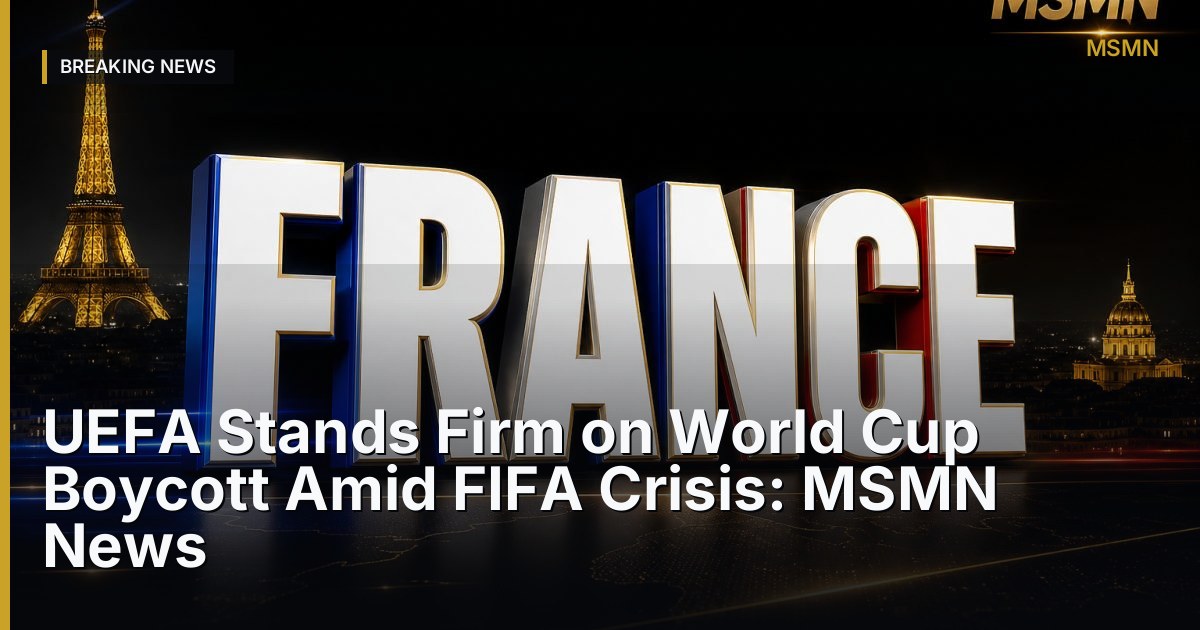
UEFA continues its boycott of the FIFA World Cup, highlighting the ongoing rift between the two football governing bodies amid calls for reform and transparency.
- Marvel's 'Vision Quest' Trailer Reveals Ultron's Anticipated Comeback: MSMN News
- Luigi Mangione Admits Guilt in Federal Case Linked to Health Executive's Murder: MSMN News
- New Evidence Unveils Racial Bias in Immigration Raids: MSMN News
- Election Day Approaches: Unveiling Results Timing in Key States: MSMN News
- Dublin's Reservoirs Face Severe Drought as Water Levels Plummet: MSMN News
In a bold move that underscores the deepening rift between two of football's most powerful governing bodies, UEFA has announced its continued boycott of the FIFA World Cup. This decision, reaffirmed amid a backdrop of ongoing turmoil and controversy within FIFA, highlights the growing discontent within European football circles over the direction and governance of the global football body.
The crisis within FIFA, which has been unfolding over several years, reached a new crescendo this week. UEFA, the umbrella organization for European Football, has long expressed dissatisfaction with FIFA's leadership and decision-making processes. This latest stance is not just a reaction to recent events but rather a culmination of years of frustration and disagreement over governance issues, transparency, and the handling of various scandals that have plagued FIFA.
The roots of UEFA's grievances can be traced back to the numerous corruption scandals that have rocked FIFA in the past decade. High-profile arrests and investigations have marred FIFA's reputation, leading to calls for reform from various quarters. UEFA, representing some of the most influential and financially powerful football associations, has been vocal in its demand for a new governance model that prioritizes transparency and accountability.
The decision to maintain the Boycott was made following an internal review by UEFA's executive committee. This review considered the current state of FIFA's governance, its response to past scandals, and its ongoing efforts to implement reforms. The conclusion was clear: FIFA's progress has been insufficient, and UEFA's participation in future World Cup events would be untenable under the current circumstances.
This boycott means that UEFA's member associations will not participate in any FIFA World Cup events until significant changes are made. This is a significant blow to FIFA, considering that European nations are some of the most successful and popular teams in the tournament's history. The absence of teams like Germany, France, and Italy would not only reduce the competitive quality of the World Cup but also impact its global viewership and commercial appeal.
UEFA's decision has been met with a mixed reaction. While some national associations and clubs support the move, believing it is necessary to force meaningful change within FIFA, others are concerned about the implications for players and fans. The World Cup is a pinnacle event in football, and its absence from UEFA's calendar would deny European players the chance to compete on the sport's biggest stage.
FIFA, for its part, has expressed disappointment over UEFA's decision. In a statement, FIFA reiterated its commitment to reform and transparency, pointing to recent changes in leadership and governance structures as evidence of its progress. However, these assurances have done little to sway UEFA, which remains steadfast in its demand for more comprehensive changes.
The broader football community is watching these developments with keen interest. The relationship between FIFA and UEFA has always been complex, marked by both cooperation and competition. UEFA's decision to boycott the World Cup is a significant escalation in their ongoing disputes and could have far-reaching implications for the sport.
Looking ahead, the onus is now on FIFA to address UEFA's concerns substantively. This will likely involve further reforms, increased transparency in decision-making processes, and a renewed commitment to ethical governance. Whether FIFA can meet these demands remains to be seen, but the pressure is undoubtedly mounting.
In the meantime, UEFA is expected to focus on its own competitions, such as the UEFA European Championship, which remains a highly prestigious tournament in its own right. There is also the possibility of UEFA organizing alternative international competitions to fill the gap left by the World Cup boycott.
For football fans and stakeholders, this standoff between UEFA and FIFA is a reminder of the complex interplay between governance, ethics, and the business of sport. As the situation evolves, all eyes will be on how these two giants of football navigate their differences and what it means for the future of the beautiful game.
The ongoing conflict between UEFA and FIFA is not just a matter of administrative disagreement; it is a clash of ideals and visions for the future of football. UEFA's insistence on a boycott is a powerful statement of its discontent with the status quo within FIFA. It reflects a broader sentiment within European football that change is necessary for the sport to maintain its integrity and global appeal.
The history of tension between UEFA and FIFA dates back decades, with both organizations having different priorities and approaches to managing the sport. UEFA, with its roots deeply embedded in European football traditions, has often pushed for a more democratic and transparent governance model, one that reflects the values of its member associations. FIFA, on the other hand, as the global governing body, has had to balance the diverse interests of its 211 member associations, which often leads to conflicts of interest and accusations of favoritism.
The current crisis can be seen as a culmination of these long-standing tensions. The corruption scandals that engulfed FIFA in recent years exposed deep-rooted issues within the organization, leading to widespread calls for reform. While FIFA has made some efforts to address these issues, including changes in leadership and governance structures, UEFA and other critics argue that these measures have not gone far enough.
One of the key points of contention is the allocation of World Cup hosting rights. The process has been criticized for a lack of transparency and alleged corruption, with some decisions sparking controversy and backlash. UEFA has been particularly vocal about the need for a more transparent and fair process, one that ensures the World Cup is hosted by countries that can provide the best infrastructure and experience for players and fans alike.
Another significant issue is the financial distribution model within FIFA. UEFA has raised concerns about how FIFA allocates its revenues, arguing that more funds should be directed towards grassroots development and supporting smaller football associations. This, they argue, would help to level the playing field and promote the growth of the sport globally.
The implications of UEFA's boycott are far-reaching. For players, it means missing out on the opportunity to compete on the world stage, which could impact their careers and marketability. For fans, it means missing out on seeing their favorite teams and players in action at the World Cup. For FIFA, the absence of European teams would be a significant blow to the tournament's prestige and commercial success.
The situation also raises questions about the future of international football competitions. If the rift between UEFA and FIFA continues, it could lead to the emergence of alternative tournaments, potentially reshaping the landscape of international football. UEFA has the resources and influence to organize its own competitions, which could rival the World Cup in terms of quality and appeal.
As the standoff continues, stakeholders across the football world are watching closely. The outcome of this conflict will have significant implications for the governance and future direction of the sport. It is a pivotal moment for football, one that could lead to meaningful change and set a new standard for transparency and accountability in sports governance.
In conclusion, UEFA's decision to maintain its boycott of the FIFA World Cup is a bold and significant move that highlights the ongoing crisis within FIFA. It reflects deep-seated frustrations with the current state of governance in football and underscores the need for reform. As the situation unfolds, the football world will be watching closely to see how FIFA responds and whether meaningful changes can be achieved.
Source / Reference
Reporting by MSMN News, based on publicly available source material.
Source: France24 English
Reference link: https://www.france24.com/en/sport/20260806-uefa-maintains-its-world-cups-boycott-following-fifa-crisis
Recommended products
 -20%
-20%


Affiliate disclosure: MSMN may earn from qualifying purchases. Prices and availability may change.


Comments