
Jetstar's New Baggage Policy Sparks Debate on Budget Airline Costs: MSMN News
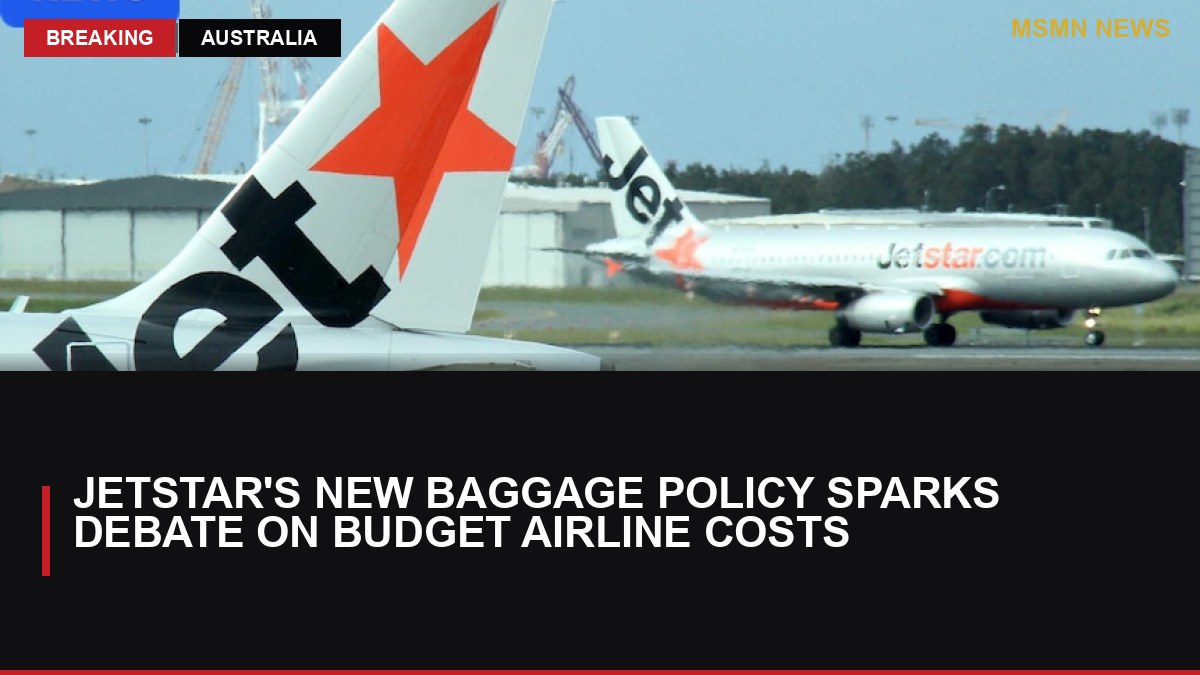
Jetstar's decision to charge for overhead locker use has reignited discussions on the true cost of budget airlines, as travelers weigh the implications of unbundled fees.
- Exploring a Millennia of Jewish-Muslim Relations: MSMN News
- Michigan Senate Candidate Abdul El-Sayed Faces Backlash Over Deleted Posts: MSMN News
- South Korea President Proposes Peace Talks with North Korea: MSMN News
- Tragic Toll of Heavy Rains in Eastern Japan Leaves Eight Dead: MSMN News
- Anne Hathaway Addresses 'Fake Baby Bump' Theories at Premiere: MSMN News
In a move that has sparked widespread debate among travelers and industry experts alike, Jetstar, Australia's prominent low-cost airline, has announced a significant change to its baggage policy. The airline will now charge passengers for the use of overhead lockers, a decision that it claims brings its practices in line with many international budget carriers. This announcement has reignited discussions about the true cost of flying with Budget Airlines and whether such policies ultimately make air travel more expensive for passengers.
Jetstar's decision to implement fees for overhead locker use is not unprecedented in the world of budget airlines. Many low-cost carriers around the globe, such as Ryanair and EasyJet, have long adopted similar policies as part of a strategy known as 'unbundling.' This approach involves separating various services and charging for them individually, allowing airlines to offer lower base fares while monetizing additional services. While this model can be beneficial for travelers who pack lightly and require fewer services, it often results in higher overall costs for those who need to use additional amenities.
The introduction of this Baggage Policy arrives amidst a broader trend within the airline industry, where carriers are increasingly seeking new revenue streams in the face of rising operational costs and competitive pressures. By charging for overhead locker space, Jetstar aims to optimize cabin storage and streamline the boarding process, potentially reducing delays and improving efficiency. However, critics argue that such fees disproportionately affect passengers who rely on carry-on luggage to avoid the costs and inconvenience associated with checked baggage.
For many travelers, the appeal of budget airlines lies in their promise of low fares. However, the practice of unbundling has led to concerns that the initial savings are often offset by additional charges. As airlines continue to introduce fees for services that were once included in the ticket price, passengers are left to navigate a complex web of potential costs. This has prompted some to question whether budget airlines truly offer a cost-effective alternative to traditional carriers, especially when factoring in the cumulative expenses of seat selection, priority boarding, and now, overhead locker use.
Jetstar's new policy also raises questions about the future of air travel and consumer expectations. As airlines across the world adapt to changing market dynamics, the definition of 'budget' travel is evolving. Passengers are increasingly required to make trade-offs between convenience and cost, with some opting to pay for added comfort while others prioritize affordability. This shift has significant implications for the industry, as airlines must balance the need to remain competitive with the desire to enhance customer satisfaction.
The response from Jetstar's customer base has been mixed, with some expressing frustration over the additional charges and others acknowledging the rationale behind the decision. Frequent flyers who have grown accustomed to the convenience of carry-on luggage without extra fees may find the new policy particularly irksome. Meanwhile, travelers familiar with international budget airlines might view the change as a natural progression in line with global standards.
As Jetstar implements its new baggage policy, the airline industry will be closely watching to see how passengers react and whether similar changes will be adopted by other carriers. The success of this strategy could influence future decisions regarding ancillary fees and the overall structure of budget airline pricing models.
Looking ahead, travelers will need to be more vigilant when booking flights, carefully considering the full range of potential costs associated with their journey. This includes evaluating the benefits of paying for additional services versus exploring alternative travel options. As the landscape of air travel continues to shift, passengers must remain informed and adaptable to ensure they are getting the best value for their money.
Ultimately, Jetstar's move reflects broader trends within the airline industry as companies seek innovative ways to remain profitable while meeting the evolving needs of consumers. While the introduction of fees for overhead locker use may initially appear as a burden to some, it underscores the complex balance airlines must strike between cost efficiency and customer experience. As the debate over budget airline pricing continues, travelers and industry stakeholders alike will be watching closely to see how these changes unfold and what they mean for the future of affordable air travel.
The concept of 'unbundling' in the airline industry is not new, but it has become more pronounced in recent years as carriers look to differentiate themselves in a highly competitive market. By offering a la carte pricing, airlines can attract a wider range of customers, from those seeking the lowest possible fare to those willing to pay for added conveniences. This pricing strategy allows airlines to tailor their offerings to individual passenger needs, potentially increasing overall customer satisfaction.
However, this approach also presents challenges for consumers, who must now navigate a more complex pricing structure. The transparency of costs is a significant concern, as passengers often find themselves surprised by additional fees that were not immediately apparent when booking their flights. This has led to calls for greater clarity in airline pricing, with some advocating for standardized disclosures of all potential fees at the time of booking.
Jetstar's decision to charge for overhead locker use is indicative of a broader shift in the airline industry towards maximizing revenue from ancillary services. As traditional revenue streams, such as ticket sales, face pressure from increased competition and fluctuating fuel prices, airlines are exploring new ways to boost profitability. Ancillary fees have become an essential component of many carriers' business models, contributing significantly to their bottom line.
The impact of these fees on consumer behavior is an area of ongoing research and debate. Some studies suggest that passengers are willing to accept additional charges if they perceive the overall value of the flight to be high. Others indicate that excessive fees can lead to customer dissatisfaction and brand disloyalty, prompting travelers to seek alternatives with fewer hidden costs.
As Jetstar moves forward with its new baggage policy, it will be crucial for the airline to communicate clearly with its customers about the changes and the reasons behind them. Transparency and customer education will be key to mitigating potential backlash and ensuring that passengers understand the benefits of the new policy, such as improved boarding efficiency and potentially lower base fares.
In the long term, the success of Jetstar's strategy will depend on its ability to strike the right balance between cost-cutting measures and maintaining a positive customer experience. As the airline industry continues to evolve, carriers must remain agile and responsive to changing consumer preferences and market conditions. By doing so, they can continue to offer competitive pricing while also meeting the demands of a diverse and discerning customer base.
For travelers, the introduction of fees for overhead locker use serves as a reminder of the importance of being an informed consumer. By carefully reviewing the terms and conditions of their flights and considering the full range of potential costs, passengers can make more informed decisions about their travel plans. This proactive approach will be essential as the airline industry continues to navigate the challenges and opportunities of a rapidly changing landscape.
Source / Reference
Reporting by MSMN News, based on publicly available source material.
Source: ABC Australia
Reference link: https://www.abc.net.au/news/2026-08-06/jetstar-baggage-shakeup-are-budget-airlines-still-cost-effective/106999546
Recommended products
 -23%
-23%
Martinus.cz
Tadej Pogacar - -,Tadej Pogacar - -
Approx. CZK 460.00
599.00
Final price on merchant site

 Best seller
Affiliate disclosure: MSMN may earn from qualifying purchases. Prices and availability may change.


Comments