
Peggy Flanagan Emerges as a Key Player in Minnesota Senate Race: MSMN News
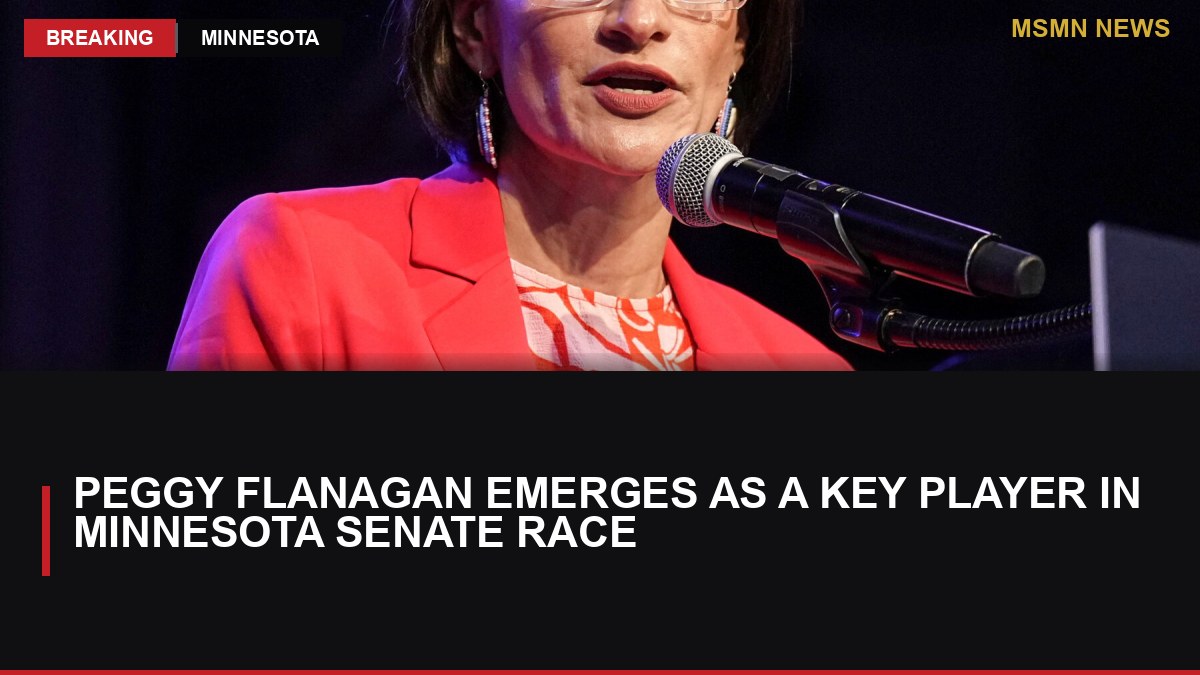
Peggy Flanagan, Minnesota's lieutenant governor, is running for the U.S. Senate seat vacated by Amy Klobuchar, potentially becoming the first Native American woman in the Senate.
- Transgender Participation Sparks Debate in WNBA: MSMN News
- TASL and NIBE Secure ₹1,577 Crore Contracts for Loitering Munitions: MSMN News
- The Hindu's Legacy as Rich as That of Chennai: MSMN News
- Angie Craig Gains Financial Edge in Minnesota Senate Primary: MSMN News
- Jonah Koech Faces Three-Year Ban for Doping Violations: MSMN News
In a pivotal moment for Minnesota politics, Peggy Flanagan, the state’s current lieutenant governor, has thrown her hat into the ring for the U.S. Senate seat being vacated by the retiring Amy Klobuchar. Flanagan, a prominent figure in the Democratic Party and a fierce advocate for progressive causes, is poised to make history as the first Native American woman to serve in the Senate. Her candidacy not only reflects her personal journey but also embodies a broader shift towards inclusivity and representation in American politics.
Flanagan's campaign is set against a backdrop of increasing focus on diversity within the halls of power. With a rich heritage as a member of the White Earth Band of Ojibwe, she brings a unique perspective to the political landscape, one that resonates with many voters who have long felt marginalized. Her rise through the political ranks—from grassroots organizing to holding the second-highest office in Minnesota—illustrates her commitment to public service and advocacy for underrepresented communities.
Born and raised in Minnesota, Flanagan's early experiences shaped her worldview and ignited her passion for social justice. She began her career as an organizer, working with various community groups to address issues such as education, healthcare, and economic opportunity. Her grassroots roots have instilled in her a deep understanding of the challenges faced by everyday Minnesotans, particularly those from marginalized backgrounds. This connection to the community has become a cornerstone of her political identity and is likely to be a significant theme in her campaign.
As lieutenant governor since 2019, Flanagan has worked closely with Governor Tim Walz on a range of initiatives, focusing on issues like mental health, education reform, and economic recovery in the wake of the COVID-19 pandemic. Her efforts have gained her recognition beyond Minnesota, positioning her as a rising star in the Democratic Party. Her campaign is expected to leverage her accomplishments in office, particularly her advocacy for policies that aim to uplift families and promote equity.
The upcoming Senate Race is particularly crucial as it comes at a time when the Democratic Party is attempting to maintain its slim majority in the Senate. With Klobuchar stepping aside, the seat represents a golden opportunity for the party to elect a candidate who not only supports progressive values but also embodies a new generation of leadership. Flanagan's candidacy is likely to energize the base, especially among younger voters and those seeking representation for indigenous communities.
While Flanagan has garnered significant support, she will face competition from other candidates vying for the Democratic nomination. The race is expected to heat up as potential challengers emerge, each bringing their own vision for Minnesota’s future. However, Flanagan’s unique background and her established track record of public service may provide her with an edge in the primary.
The importance of this election extends beyond Minnesota’s borders; it is emblematic of a larger national conversation about representation in government. Flanagan's candidacy could inspire a new wave of indigenous and women leaders to seek office, challenging the status quo and advocating for policies that benefit their communities. As the campaign unfolds, Flanagan is likely to emphasize her commitment to listening to constituents and addressing their concerns, a message that resonates in an era where many voters feel disconnected from their elected officials.
Public reaction to Flanagan's announcement has been largely positive, with many praising her dedication to social justice and her ability to connect with diverse communities. Activists and community leaders within Minnesota have expressed their excitement about her candidacy, viewing it as a significant step towards greater representation for Native American voices in government. This enthusiasm is reflected in early fundraising efforts, which have reportedly exceeded expectations, indicating strong grassroots support.
Looking ahead, Flanagan’s campaign will need to navigate the complexities of a competitive primary while also preparing for the general election. As the political landscape continues to evolve, her ability to unite various factions within the Democratic Party will be crucial. Strategies involving outreach to key demographics, including younger voters and people of color, will be essential as she seeks to build a coalition broad enough to secure victory.
In addition to her campaign efforts, Flanagan is likely to face scrutiny over her policy positions and past decisions as lieutenant governor. Critics may question her record on certain issues, and how she plans to address the pressing challenges facing Minnesota, including economic inequality and healthcare access. How Flanagan responds to these challenges and articulates her vision for the future will be key factors in determining her success in the race.
As the campaign progresses, many will be watching closely to see how Flanagan navigates the political landscape, particularly in light of her unique background and the historical significance of her candidacy. Her potential election to the Senate would not only mark a milestone for Minnesota but also signal a broader shift towards inclusivity in American politics. Whether she can maintain momentum and translate her grassroots support into electoral success remains to be seen, but one thing is clear: Peggy Flanagan is a candidate to watch as she aims to make history in the upcoming Senate race.
With the primary elections approaching, the political climate in Minnesota is heating up. Flanagan's campaign will be closely monitored, not just for its implications for her future but for the potential impact on the Democratic Party as a whole. As she steps onto this national stage, the eyes of the nation will undoubtedly be focused on her every move, and her journey could inspire many others to follow in her footsteps, advocating for a more representative and equitable future in American politics.
As Flanagan embarks on this ambitious journey, her campaign is expected to address key issues that resonate with voters across Minnesota. Education remains a particularly salient topic, especially in the wake of the pandemic, which has exacerbated disparities in learning opportunities. Flanagan's commitment to educational equity—ensuring that all children, regardless of their background, have access to quality education—will likely be a cornerstone of her platform.
Additionally, healthcare access, particularly for marginalized communities, is another critical issue that Flanagan is expected to tackle. With the ongoing discussions around healthcare reform at the national level, her stance on these matters will be closely scrutinized. Voters are eager to hear her plans for expanding access to affordable healthcare and addressing the social determinants of health that disproportionately affect indigenous populations and low-income communities.
Economic recovery post-COVID is also a pressing concern for many Minnesotans. Flanagan's experience as lieutenant governor during the pandemic equips her with first-hand knowledge of the challenges faced by small businesses and workers alike. Her campaign will likely focus on job creation, support for local businesses, and initiatives aimed at fostering economic resilience in the state.
As the race heats up, Flanagan's ability to communicate her vision clearly and authentically will be paramount. Voters are increasingly looking for leaders who not only articulate policies but also embody the values of empathy, integrity, and accountability. Flanagan's background as an organizer and her commitment to community engagement position her well to resonate with constituents seeking a representative who understands their struggles and aspirations.
In summary, Peggy Flanagan's candidacy marks a significant moment in Minnesota's political landscape, with the potential to reshape the narrative around representation and inclusivity in government. As she navigates the complexities of a competitive primary and prepares for the general election, her campaign will serve as a litmus test for the Democratic Party's direction and its commitment to embracing diverse voices. The coming months will be critical, not only for Flanagan's political future but for the broader implications of her candidacy on the national stage. Voters, activists, and political observers alike will be watching closely as she aims to make history and pave the way for future generations of leaders.
Source / Reference
Reporting by MSMN News, based on publicly available source material.
Source: NYT US
Reference link: https://www.nytimes.com/2026/08/11/us/politics/peggy-flanagan-minnesota-senate-candidate.html
Recommended products

Knetbooks.com
Personal Health: A Public Health Perspective A Public Health Perspective
Approx. USD 86.24 Final price on merchant site

 Best seller
Affiliate disclosure: MSMN may earn from qualifying purchases. Prices and availability may change.



Comments