
Senator Bernie Sanders Urges A.I. Companies to Halt Development Amidst Growing Concerns: MSMN News
Follow MSMN
Official channels from Martins Studio Media Network.
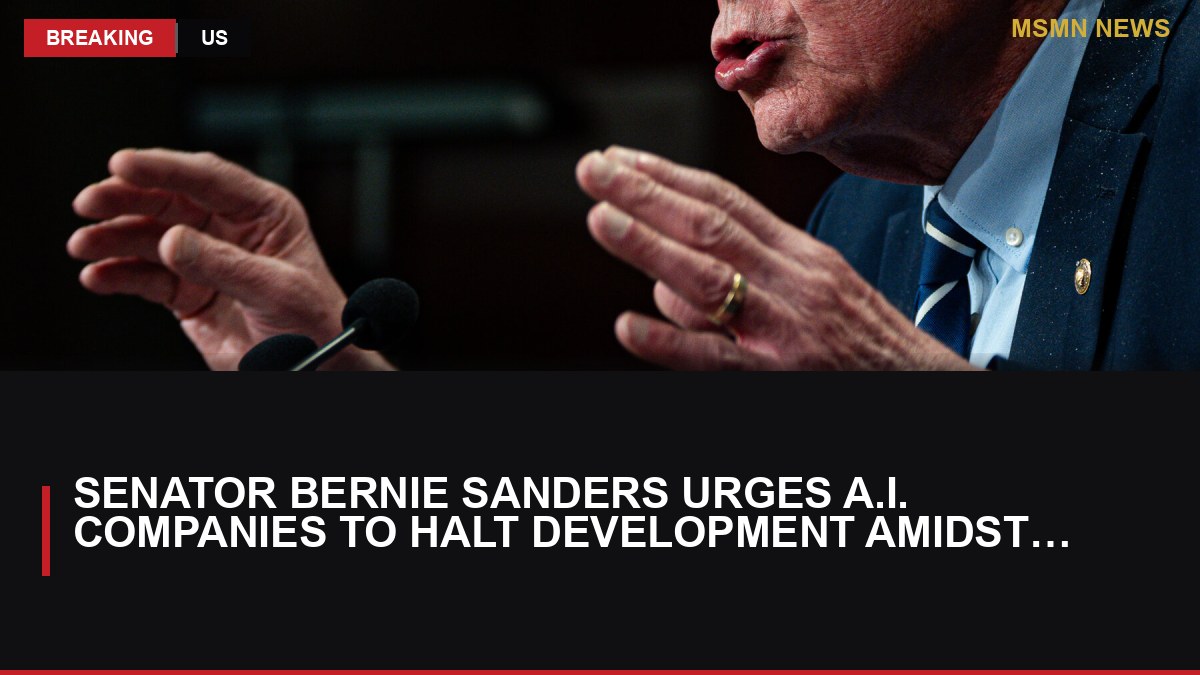
Senator Bernie Sanders has called for a moratorium on artificial intelligence development, warning of potential catastrophic consequences if corporations continue to advance technologies without adequate oversight. His remarks come amidst increasing scrutiny of A.I.'s ethical implications and safety risks.
- Mercato obbligazionario: come funziona, strumenti trattati e differenza tra investment grade e high yield: MSM...
- UN Warns of Impending Supersized El Niño: MSMN News
- New PUBG Game Is About ‘Hijinks’ and ‘A Beer With the Boys’: MSMN News
- Adobe Expands Its Reach with Acquisition of Indian Startup Rilo: MSMN News
- Innocent Lives Caught in Crossfire of Sydney's Gang Violence: MSMN News
In a bold statement that echoes the concerns of many in the tech community, Senator Bernie Sanders has called for a moratorium on the development of Artificial Intelligence technologies. Speaking at a recent press conference, Sanders highlighted the urgent need for a pause in A.I. advancements, arguing that corporations have lost control over a technology that could lead to disastrous outcomes for millions of people. His remarks come amid increasing scrutiny of the ethical implications and safety risks associated with A.I. systems.
Sanders articulated his fears that the rapid pace of A.I. development could result in significant and potentially catastrophic consequences. He expressed concern that the technology is advancing faster than lawmakers can understand or regulate it, leaving society vulnerable to risks that may not yet be fully realized. The senator's comments resonate with a growing chorus of voices from various sectors, including technology, Ethics, and academia, who are calling for a more cautious approach to the deployment of A.I.
This call for caution is not without precedent. Over the past few years, experts have raised alarms about the potential misuse of A.I. technologies, particularly in areas such as surveillance, misinformation, and job displacement. Sanders emphasized that while A.I. holds promise for improving lives and driving innovation, it also presents significant ethical dilemmas that need to be addressed before further advancements are made. He pointed out that the current trajectory of A.I. development could exacerbate existing inequalities and create new forms of discrimination.
The senator’s appeal comes at a time when A.I. technologies are becoming increasingly integrated into everyday life. From chatbots and virtual assistants to more complex systems used in healthcare and finance, A.I. is reshaping industries and the way people interact with technology. However, as these systems become more powerful, so too do the concerns surrounding their implications. Sanders warned that without adequate oversight, the technology could be weaponized or manipulated in ways that harm society.
In light of these concerns, Sanders is advocating for a temporary halt on A.I. development until comprehensive regulatory frameworks can be established. He believes that such measures are essential to safeguard public interests and ensure that A.I. technologies are developed responsibly. The senator's stance has garnered support from various advocacy groups, who argue that a pause would allow for a thorough examination of the risks involved and the establishment of ethical guidelines for A.I. development.
While some industry leaders have expressed skepticism about the feasibility of pausing A.I. development, arguing that innovation cannot be stifled, Sanders maintains that a careful approach is necessary. He is calling for a collaborative effort among lawmakers, technologists, and ethicists to create a regulatory environment that prioritizes public safety and ethical considerations over profit. This collaborative approach, he argues, could help to mitigate risks and ensure that A.I. technologies are used for the benefit of all.
The senator's proposal has sparked a broader debate about the role of government in regulating emerging technologies. Supporters of regulation argue that without oversight, companies may prioritize profit over ethical considerations, potentially leading to harmful outcomes. Critics, however, warn that excessive regulation could stifle innovation and hinder technological progress. These contrasting views highlight the complexity of the issue, as stakeholders grapple with finding a balance between fostering innovation and ensuring public safety.
As the conversation around A.I. regulation continues, several initiatives are already underway aimed at addressing the ethical implications of A.I. technologies. Various organizations and think tanks are developing guidelines and best practices to help companies navigate the ethical landscape of A.I. development. However, the effectiveness of these initiatives remains to be seen, as the pace of technological advancement often outstrips the ability of regulatory bodies to keep up.
Public sentiment regarding A.I. is also shifting, as more people become aware of the potential risks associated with the technology. Polls indicate that a significant portion of the population is concerned about the implications of A.I. on privacy, employment, and security. As awareness grows, so too does the pressure on lawmakers to take action. Sanders' call for a moratorium could resonate with constituents who are increasingly anxious about the rapid advancement of A.I. and its potential impact on their lives.
Looking ahead, the future of A.I. development remains uncertain. As the debate unfolds, key stakeholders will need to engage in constructive dialogue to address the myriad challenges posed by A.I. technologies. Sanders' call for a pause may serve as a catalyst for further discussions on how to navigate the complex relationship between innovation and ethics in the context of A.I.
In the coming weeks, it will be crucial to monitor the response from both the tech industry and lawmakers regarding Sanders' proposal. As discussions continue, the potential for collaborative frameworks that prioritize ethical considerations in A.I. development may emerge. The path forward will require a concerted effort from all parties involved to ensure that the benefits of A.I. are harnessed responsibly, avoiding the pitfalls that Sanders has so vehemently warned against.
As the A.I. landscape evolves, the need for thoughtful regulation and ethical oversight will only grow more pressing. The conversation initiated by Sanders may very well shape the future direction of A.I. development and its role in society, highlighting the importance of balancing innovation with responsibility. With the stakes so high, the world will be watching closely as this debate unfolds, eager to see how lawmakers, industry leaders, and the public navigate the challenges and opportunities presented by artificial intelligence.
The urgency of Sanders' message is underscored by recent developments in A.I. technology, which have raised alarms about the potential for misuse and unintended consequences. High-profile incidents involving A.I. systems have illustrated the need for greater accountability and transparency. For instance, instances of deepfakes have not only disrupted the realm of media but have also raised concerns about misinformation in politics and social discourse. These events have further fueled the call for a regulatory framework that can effectively address the complexities and ethical challenges posed by A.I.
Moreover, the implications of A.I. extend beyond individual privacy concerns and touch on broader societal issues. For example, as A.I. systems are increasingly used in hiring processes, there is a risk that biases embedded in algorithms could perpetuate discrimination against marginalized groups. This has prompted advocates to demand that companies take responsibility for ensuring their A.I. systems are fair and equitable. Sanders' insistence on a pause in development until these issues are addressed aligns with a growing acknowledgment that ethical considerations must be at the forefront of technological advancement.
As the public discourse evolves, it is important to recognize that the conversation surrounding A.I. is not simply about halting progress but rather about steering it in a direction that aligns with societal values. Sanders' call for a moratorium is not merely a reactionary measure but a proactive approach to ensure that A.I. technologies serve the public good rather than exacerbate existing problems. This nuanced understanding of the challenges posed by A.I. will be critical as stakeholders work towards creating a framework that balances innovation with the ethical implications of technology.
In conclusion, the call for a moratorium on A.I. development by Senator Bernie Sanders reflects a growing consensus on the need for thoughtful regulation and ethical considerations in the rapidly evolving landscape of artificial intelligence. As society grapples with the implications of these technologies, it is essential for lawmakers, industry leaders, and the public to engage in meaningful dialogue and collaborative efforts to navigate the complexities of A.I. development. The stakes are high, and the future of A.I. will depend on how effectively stakeholders can address the ethical dilemmas and safety risks associated with this transformative technology.
Source / Reference
Reporting by MSMN News, based on publicly available source material.
Source: NYT US
Reference link: https://www.nytimes.com/2026/08/10/us/politics/bernie-sanders-ai-moratorum.html
Recommended products


 Editor's choice
Affiliate disclosure: MSMN may earn from qualifying purchases. Prices and availability may change.





Comments