
Suspected Iranian Cyberattacks Target U.S. Water Supply Amid Years of Warnings: MSMN News
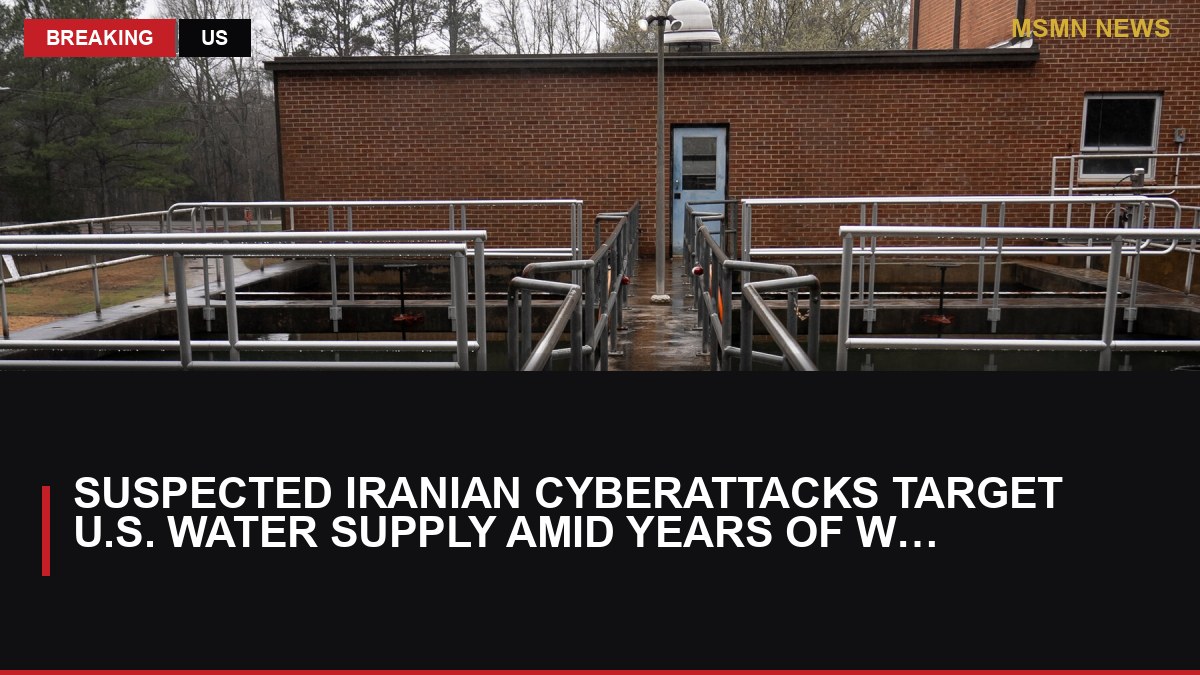
Federal and state officials are racing to address a series of cyberattacks on the U.S. water supply that are suspected to be the work of Iranian hackers, highlighting long-standing vulnerabilities.
- Cultural Highlights: A Look at Notable Releases This Week: MSMN News
- Marvel's Avengers: Doomsday Trailer Unveils Doctor Doom's Impact on the MCU: MSMN News
- The Untold Impact of Epilepsy Medication on Expecting Mothers: MSMN News
- Arsenal Faces Manchester City in Community Shield Showdown: MSMN News
- Exploring Life Under the Taliban and Strategies Against AI: MSMN News
In a disturbing development that underscores the vulnerabilities of critical infrastructure in the United States, federal and state officials are urgently working to address a series of cyberattacks targeting the nation's water supply. These attacks, suspected to be the handiwork of Iranian hackers, have sent shockwaves through government agencies and the public alike. The incident, which has yet to be fully contained, highlights longstanding concerns about Cybersecurity in key sectors that underpin everyday life.
The attacks, which came to light in recent weeks, have prompted a swift response from authorities who are racing against the clock to mitigate potential damage. The Department of Homeland Security, along with state and local agencies, has been mobilized to assess the extent of the breach and to shore up defenses against further incursions. Officials have indicated that the attacks appear to be part of a broader campaign of cyber aggression aimed at destabilizing essential services in the United States.
The Water Supply, a critical component of public health and safety, has long been identified as a potential target for cyberattacks. Experts have warned that the sector's outdated infrastructure and insufficient cybersecurity measures make it particularly vulnerable to such threats. Despite these warnings, investment in strengthening the security of water systems has lagged, leaving them exposed to sophisticated cyber threats from state actors and criminal organizations.
This latest incident is believed to have involved attempts to infiltrate control systems that manage the distribution and quality of water. While officials have not disclosed the specific details of the attacks, they have confirmed that there have been disruptions in water treatment processes in several locations. So far, there have been no reports of contaminated water reaching consumers, but the potential for such an outcome has raised alarm bells across the nation.
Cybersecurity experts have long cautioned that water systems are a ripe target for hackers due to their decentralized nature and the varying levels of security across different jurisdictions. Many water utilities, particularly smaller ones, lack the resources and expertise necessary to defend against sophisticated cyber threats. This disparity in preparedness has been a point of concern for federal agencies tasked with safeguarding critical infrastructure.
The suspected involvement of Iranian hackers in this case is not surprising to analysts who have been tracking cyber threats emanating from the region. Iran has been identified as a significant player in the global cyber arena, often employing cyberattacks as a tool of statecraft. The country has been linked to previous incidents targeting financial institutions, energy companies, and other critical sectors in the United States and its allies.
The timing of these attacks is particularly concerning, as they coincide with heightened geopolitical tensions between the United States and Iran. Relations between the two nations have been strained over issues ranging from nuclear proliferation to regional conflicts. Cyberattacks offer a means for Iran to exert pressure on the U.S. without engaging in direct military confrontation, making them an attractive option for Tehran.
In response to the attacks, federal officials are calling for a comprehensive review of cybersecurity protocols across the water sector. There is a growing consensus that more needs to be done to protect critical infrastructure from cyber threats, with calls for increased funding and support for cybersecurity initiatives. This includes not only strengthening defenses but also improving the ability to detect and respond to incidents in real time.
The public reaction to the news has been one of concern and frustration. Many citizens are worried about the safety of their water supply and the potential for future attacks. Lawmakers have echoed these concerns, urging swift action to address the vulnerabilities that have been exposed. There is a recognition that the issue of cybersecurity in critical infrastructure is not one that can be ignored any longer.
Looking ahead, the focus will likely be on enhancing collaboration between federal, state, and local agencies to ensure a coordinated response to cyber threats. There is also an opportunity for public-private partnerships to play a role in strengthening cybersecurity measures. By pooling resources and expertise, it may be possible to build a more resilient infrastructure that can withstand the evolving threat landscape.
As investigations into the attacks continue, the immediate priority for officials is to ensure the safety and reliability of the water supply. This means not only addressing the current threat but also implementing long-term solutions to prevent future incidents. The events of recent weeks serve as a stark reminder of the critical importance of cybersecurity in an increasingly interconnected world.
The urgency of the situation is compounded by the complexity of the U.S. water system. With over 150,000 public water systems across the country, each with varying degrees of cybersecurity measures, the task of securing these systems is daunting. Larger metropolitan areas may have the resources to invest in robust cybersecurity infrastructure, but smaller rural water utilities often operate on shoestring budgets, making them particularly vulnerable to cyber threats.
Federal officials have been advocating for a unified approach to cybersecurity for years, but progress has been slow. The Water Sector Coordinating Council, a public-private partnership that works to improve the resilience of the water sector, has been actively involved in developing strategies to enhance cybersecurity. However, the implementation of these strategies has been inconsistent, largely due to the fragmented nature of the water sector.
The Environmental Protection Agency (EPA), which oversees the safety of the nation's drinking water, has been working with state and local governments to improve cybersecurity practices. The agency has issued guidelines and best practices for water utilities to follow, but compliance is voluntary. The recent attacks have reignited calls for mandatory cybersecurity standards across the water sector to ensure a baseline level of protection.
The role of the private sector in addressing these challenges cannot be overstated. Many water utilities rely on third-party vendors for their operational technology and cybersecurity needs. This creates additional vulnerabilities, as a breach in a vendor's system could potentially compromise multiple water utilities. Strengthening the cybersecurity posture of these vendors is crucial to safeguarding the water supply.
Public awareness and education are also key components of a comprehensive cybersecurity strategy. While the technical aspects of cybersecurity may be complex, the public can play a role in advocating for stronger protections and supporting initiatives that aim to secure critical infrastructure. Engaging the public in these efforts can help build a culture of security that extends beyond the water sector to other critical industries.
As the investigation into the suspected Iranian cyberattacks unfolds, it is clear that a multi-faceted approach is needed to address the vulnerabilities in the U.S. water supply system. This includes not only enhancing technical defenses but also fostering collaboration among stakeholders, promoting public awareness, and ensuring that the necessary resources are allocated to protect this vital infrastructure.
The events of recent weeks serve as a wake-up call for policymakers, industry leaders, and the public alike. The time for action is now, and the lessons learned from this incident must be used to inform future efforts to secure the nation's critical infrastructure. By taking a proactive approach to cybersecurity, the United States can better protect its water supply and other essential services from the growing threat of cyberattacks.
Source / Reference
Reporting by MSMN News, based on publicly available source material.
Source: NYT US
Reference link: https://www.nytimes.com/2026/08/05/us/politics/water-supply-warnings.html
Recommended products


 Editor's choice
Affiliate disclosure: MSMN may earn from qualifying purchases. Prices and availability may change.



Comments