
Trump's Controversial Remarks Ignite Debate on Islamophobia: MSMN News
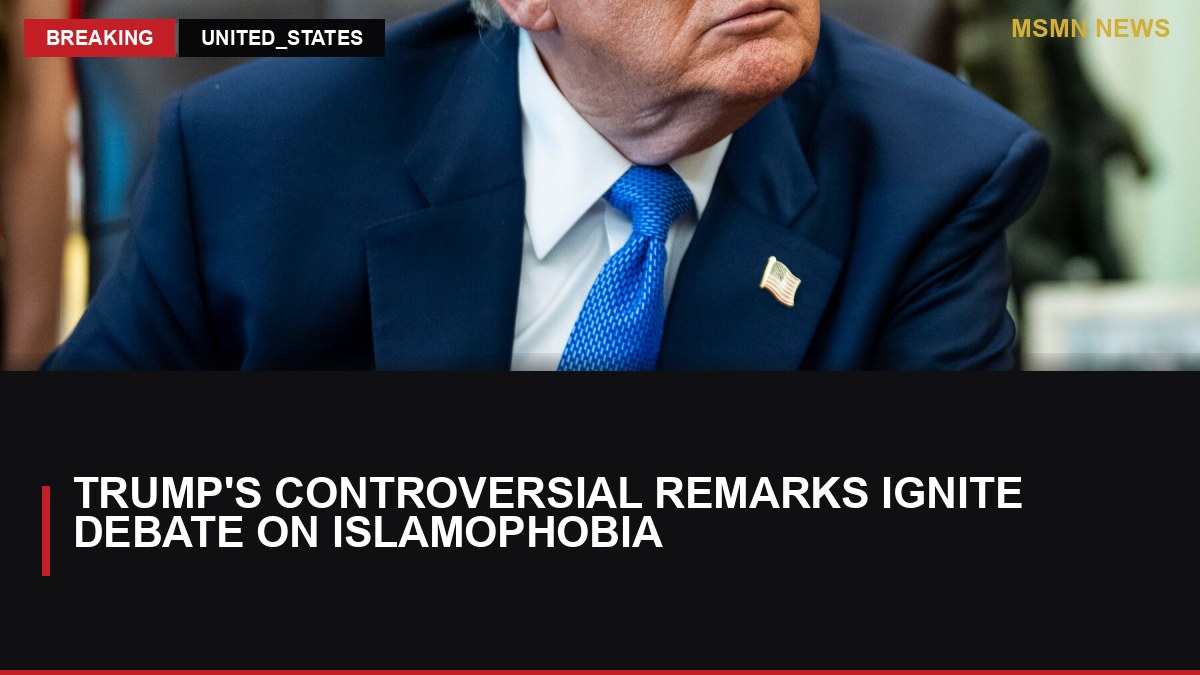
Former President Donald Trump's recent comments labeling Democratic candidates as 'jihadists' and disparaging Somali immigrants have reignited discussions on Islamophobia in America, drawing widespread condemnation and concern over the implications for marginalized communities.
- World Champion Aaron McKenna Celebrated at Homecoming in Monaghan: MSMN News
- Arsenal Faces Manchester City in Community Shield Showdown: MSMN News
- Navy Faces Challenges as USS Lincoln's Operations Shift to Diego Garcia: MSMN News
- IDF Teams Mobilize for Rescue Efforts Following Colombia Earthquake: MSMN News
- 5 people shot at US university, as police probe multiple suspects: MSMN News
In a recent rally, former President Donald Trump unleashed a barrage of controversial remarks that have drawn sharp criticism and rekindled discussions surrounding Islamophobia in the United States. Targeting Democratic Candidates, Trump described them as 'jihadists,' a term that many believe carries heavy connotations of violence and extremism. His comments come at a time when the political climate is already fraught with divisions, particularly regarding race and religion. Trump's rhetoric, which has often been characterized by inflammatory language, has once again raised alarms among civil rights advocates and political analysts. By labeling political opponents in such a derogatory manner, he not only undermines the integrity of democratic discourse but also reinforces harmful stereotypes about Muslims. This incident highlights an ongoing trend where political figures utilize fear-based narratives to galvanize their bases, often at the expense of marginalized communities.
The former president's remarks did not stop at Democratic candidates. He also made derogatory comments about Somali Immigrants in the United States, suggesting that they are 'not smart.' This statement has sparked outrage among various advocacy groups and community leaders who argue that such generalizations perpetuate negative stereotypes and foster a culture of discrimination. In the backdrop of these comments, the Somali community in America has been grappling with increasing instances of Islamophobia and xenophobia. Many members of this community have expressed feeling targeted, not just by political rhetoric but also by societal attitudes that have become increasingly hostile in recent years. The impact of Trump's words is profound, as they can embolden individuals who harbor prejudices and lead to real-world consequences for those affected.
Critics of Trump have pointed out that his choice of language is not merely an isolated incident but part of a broader pattern of incitement that has characterized his political career. The term 'jihadist' is particularly loaded; it evokes images of terrorism and violence, which are not representative of the vast majority of Muslims who live peacefully in the United States and around the world. By using such terms, Trump not only alienates a significant portion of the electorate but also risks inflaming tensions between communities that are already on edge. Political analysts note that this strategy of scapegoating certain groups has been employed by Trump and his allies throughout his tenure in office. It serves a dual purpose: rallying his base by creating a common enemy, while simultaneously diverting attention from pressing issues such as healthcare, climate change, and economic inequality. By focusing on identity politics and cultural battles, Trump can maintain a grip on his supporters, many of whom feel disenfranchised in a rapidly changing America.
The fallout from Trump's comments has been swift. Various political figures, including Democrats and some Republicans, have condemned his remarks, arguing that they are not only divisive but also dangerous. The backlash highlights a growing consensus among many in Washington that such incendiary language has no place in political discourse. Community leaders have also stepped up, calling for unity and solidarity among different groups to combat the rising tide of hate. As the 2024 presidential election approaches, Trump's remarks may play a significant role in shaping the political landscape. His ability to galvanize support through fear and division raises questions about the future of American politics. Will candidates continue to exploit cultural anxieties, or will there be a shift towards more inclusive and respectful dialogue?
In the wake of these events, advocacy groups are mobilizing to counteract the negative narratives surrounding Muslim communities. They are emphasizing the importance of education and awareness in combating Islamophobia. Initiatives aimed at fostering interfaith dialogue and understanding are gaining traction, as community leaders seek to build bridges rather than walls. Organizations such as the Council on American-Islamic Relations (CAIR) and the Muslim Public Affairs Council (MPAC) have been vocal in their opposition to Trump's remarks, urging for a united front against hate and discrimination. These groups are also working to provide resources and support for those affected by Islamophobia, advocating for policies that protect minority communities.
Looking ahead, the impact of Trump's comments on the Somali community and Muslim Americans at large cannot be understated. The potential for increased discrimination and violence looms, prompting calls for greater protections and support for marginalized communities. As public sentiment evolves, it will be crucial for leaders across the political spectrum to address these issues with sensitivity and care. The broader implications of Trump's rhetoric extend beyond the immediate political context. They touch on fundamental questions about identity, belonging, and the values that underpin American society. As the nation grapples with these challenges, the need for a more inclusive and empathetic political discourse has never been more pressing. Political leaders, educators, and community members must work together to foster an environment where diversity is celebrated rather than weaponized.
In conclusion, Trump's recent remarks serve as a stark reminder of the challenges that lie ahead in American politics. The potential for increased Islamophobia and the marginalization of communities must be met with a concerted effort to promote understanding and acceptance. As the nation stands at a crossroads, the choices made by political leaders will shape the future of American society for generations to come. The call for unity and respect is louder than ever, and it is imperative that all voices are heard in this critical conversation. The repercussions of this incident will likely continue to resonate as the political landscape evolves. With the 2024 election on the horizon, the discourse surrounding race, religion, and identity will undoubtedly play a pivotal role in shaping voter sentiment. As citizens engage with these pressing issues, the hope is that a more inclusive narrative will emerge, one that honors the diverse tapestry of American society and champions the values of respect and understanding.
Source / Reference
Reporting by MSMN News, based on publicly available source material.
Source: NYT US
Reference link: https://www.nytimes.com/2026/08/10/us/politics/trump-democrats-somalis-jihadists-muslim.html
Recommended products

 Editor's choice

Affiliate disclosure: MSMN may earn from qualifying purchases. Prices and availability may change.


Comments