
FAI to Refund Season Ticket Holders After Controversial Decision: MSMN News
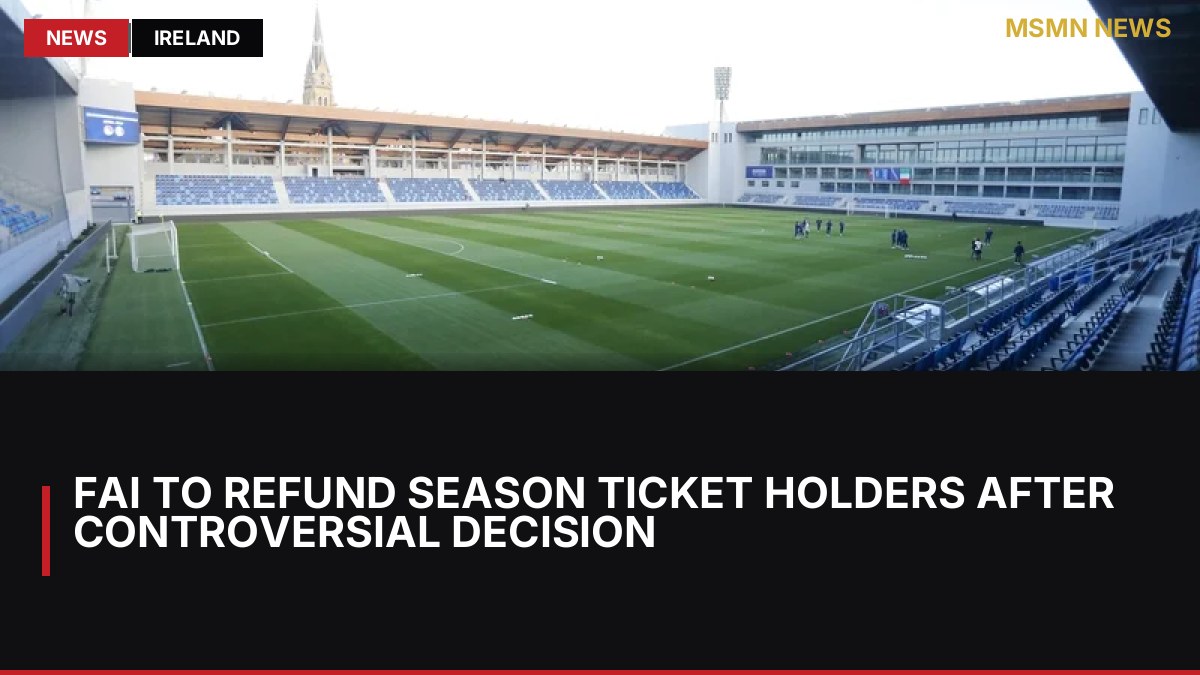
The FAI has announced that it will reimburse season ticket holders due to the decision to play the upcoming home fixture against Israel behind closed doors in Serbia, igniting backlash among fans and advocacy groups.
In a significant move that has stirred conversations among fans and stakeholders, the Football Association of Ireland (FAI) has decided to reimburse season ticket holders after announcing that the upcoming home fixture against Israel will be played without spectators in Serbia. This decision comes in light of the ongoing tensions surrounding Israel's involvement in international sporting events, raising questions about the implications for Irish football and its supporters.
The FAI's announcement was made public in the wake of a growing backlash from fans and advocacy groups who have raised concerns about the association's ties with Israel. Set to be held in October, the match against Israel is part of the UEFA Euro 2024 qualification campaign. However, the decision to relocate the game to Serbia and play it behind closed doors has sparked outrage among supporters who feel sidelined and disillusioned.
The FAI's choice to refund season ticket holders is a direct response to the backlash and reflects an understanding of the frustration felt by fans. Many supporters had already purchased tickets with the expectation of attending the match, only to be informed that they would not be allowed entry. By offering refunds, the FAI aims to mitigate some of the disappointment and restore trust with its fan base.
This decision also highlights the complexities of sports governance in an increasingly polarized world. The ongoing conflict in the Middle East has seeped into various facets of international relations, including sports. Several sporting organizations have faced scrutiny for their dealings with Israel, and the FAI is no exception. The association's relationship with Israel has drawn criticism from various quarters, including human rights advocates who argue that engaging with Israeli teams and events promotes a narrative that overlooks the ongoing humanitarian issues in the region.
The FAI's decision to play the match behind closed doors is not just a logistical choice; it is also a political statement. By moving the game to Serbia, the FAI seems to be attempting to navigate the delicate balance between sporting integrity and political realities. However, this has led to a sense of betrayal among supporters who feel that their voices have been ignored in the decision-making process.
The timing of the announcement has further fueled the controversy. With the match approaching, fans had expected to cheer on their team in person, and the sudden shift to a closed-door event has left many in disbelief. The FAI's decision to refund season ticket holders is a necessary but insufficient step in addressing the broader concerns regarding the association's handling of the situation.
In recent years, the intersection of sports and politics has become increasingly pronounced. Events that were once seen as merely athletic competitions are now often viewed through a political lens. The FAI's predicament is emblematic of this trend, as it finds itself caught between the demands of its supporters and the geopolitical realities that influence international sporting events.
As the FAI moves forward, it will need to engage in open dialogue with its supporters to rebuild trust. This situation has the potential to serve as a turning point for the association, prompting it to reconsider its policies and practices regarding international fixtures. Fans have expressed a desire for transparency and accountability, and the FAI's response to this controversy will likely shape its relationship with supporters for years to come.
Looking ahead, the FAI faces a challenging road. The backlash from fans is unlikely to dissipate quickly, and the association will need to navigate the complexities of public sentiment while also addressing the practicalities of organizing international matches. The decision to refund season ticket holders may be a step in the right direction, but it will not erase the discontent that has arisen from this situation.
In the coming weeks, as the match date approaches, the FAI will need to communicate clearly with its supporters about its plans and the rationale behind its decisions. Engaging with fans through forums, social media, and direct communication will be crucial in rebuilding the trust that has been shaken by this controversy.
The FAI’s experience serves as a reminder of the importance of considering the broader implications of sporting decisions. The association's relationship with Israel and the subsequent reaction from fans highlight the need for sports organizations to be attuned to the political and social contexts in which they operate. The FAI is now at a crossroads, with the potential to emerge stronger through engagement and transparency, or risk further alienating its fan base if it fails to address the underlying concerns that have been brought to light.
As this developing story continues to unfold, fans and stakeholders alike will be watching closely to see how the FAI navigates the challenges ahead and whether it can successfully reconcile its responsibilities to both the sport and its supporters.
In conclusion, the decision to refund season ticket holders is a significant acknowledgment of the frustrations expressed by fans. However, it also underscores the complex interplay between sports and politics, particularly in a world where fans are increasingly vocal about their expectations from sporting bodies. The FAI's next steps will be critical in determining how this situation unfolds and what it means for the future of Irish football. The association's ability to communicate effectively and engage with its supporters will be paramount in restoring confidence and ensuring that the voices of fans are heard in future decisions. As the world of international football continues to evolve, the FAI's handling of this situation will serve as a case study in the importance of transparency, accountability, and the need for sports organizations to adapt to the changing landscape of fan expectations and geopolitical realities.
Source / Reference
Reporting by MSMN News, based on publicly available source material.
Source: RTE News
Reference link: https://www.rte.ie/sport/soccer/2026/0814/1587918-fai-to-refund-season-ticket-holders-over-israel-ties/
Recommended products
SpringerNatureLink Shop INT
The Israeli-Palestinian Conflict
Approx. USD 39.99 Final price on merchant site

 Best seller
Affiliate disclosure: MSMN may earn from qualifying purchases. Prices and availability may change.



Comments