
Irish Scientist Captures Stunning Eclipse from the Skies: MSMN News
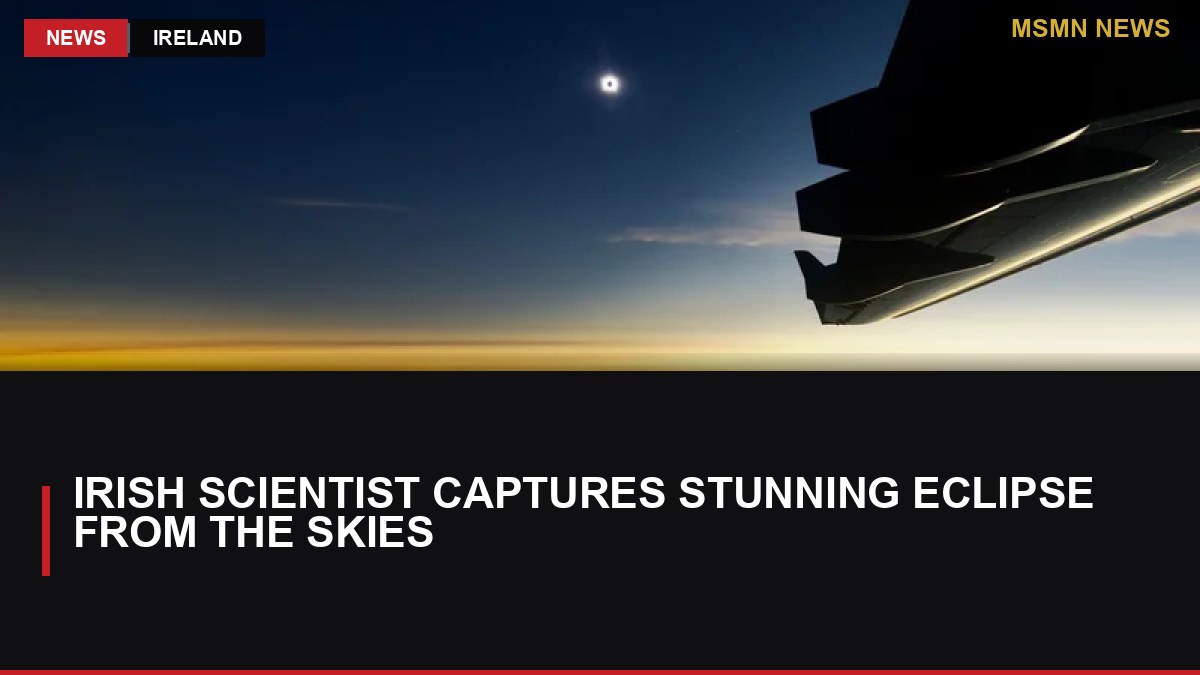
A solar physicist from County Wicklow shares her extraordinary experience capturing breathtaking images of a solar eclipse from an airplane, a career highlight that showcases innovative scientific methods.
In an extraordinary feat that has captivated both the scientific community and the public alike, a solar physicist from County Wicklow has described her recent experience capturing breathtaking images of a Solar Eclipse from the unique vantage point of an airplane. This remarkable opportunity not only highlights the wonders of astronomy but also showcases the innovative methods scientists are employing to study celestial phenomena. The event, which took place just yesterday, has been heralded as a career-defining moment for the physicist, who has dedicated her life to unraveling the mysteries of the sun.
The solar eclipse, a rare astronomical event where the moon passes between the Earth and the sun, casting a shadow on the planet, drew attention from enthusiasts and experts worldwide. This particular eclipse was notable for its visibility across various regions, with millions of people flocking to locations where the totality could be witnessed. However, for the Wicklow-based scientist, the opportunity to observe and document the eclipse from an aircraft presented a unique angle that is seldom available to researchers.
The mission involved a carefully coordinated effort, as the aircraft flew at an altitude that allowed for an unobstructed view of the celestial event. This height not only provided a clearer perspective but also minimized atmospheric interference, which can often distort the images taken from the ground. The physicist, along with her team, utilized advanced imaging technology to capture the eclipse in stunning detail, hoping to glean new insights into solar dynamics and the sun's behavior during such events.
For the scientist, this experience was not just a job; it was a culmination of years of study and passion for solar physics. She described the moment the moon began to obscure the sun as a profound experience, filled with both anticipation and awe. The sight of the sun’s corona becoming visible as the eclipse reached totality left her and her team in a state of exhilaration, their cameras clicking away to document the fleeting beauty of the phenomenon. Each image captured during those precious moments could potentially contribute to a deeper understanding of solar activity and its implications for space weather, which affects everything from satellite operations to power grids on Earth.
The significance of this aerial mission extends beyond the immediate thrill of witnessing an eclipse. Scientists have long been interested in studying solar eclipses as they provide a rare opportunity to observe the sun’s corona, a layer of plasma that is usually obscured by the sun's bright light. The data collected during such events can lead to breakthroughs in understanding solar flares and coronal mass ejections, which are significant drivers of space weather and can have profound effects on Earth's atmosphere.
As the images from the flight are analyzed, the scientific community is eagerly awaiting the results. The research team plans to publish their findings, contributing to the growing body of knowledge surrounding solar phenomena. The excitement surrounding this project has sparked interest among students and aspiring scientists, inspiring a new generation to explore the fields of astrophysics and space Science.
Public interest in solar eclipses has surged in recent years, fueled by social media and increased accessibility to viewing events. The Wicklow scientist's aerial mission is a testament to the lengths researchers will go to in order to deepen our understanding of the universe. As more people engage with Astronomy, the hope is that such endeavors will foster a greater appreciation for science and its role in uncovering the mysteries of our world and beyond.
In the aftermath of the eclipse, reactions from the scientific community and the public have been overwhelmingly positive. Many have expressed admiration for the innovative approach taken by the research team, emphasizing the importance of creativity in scientific inquiry. The physicist's narrative of her experience has resonated with many, serving as a reminder of the beauty and wonder that can be found in the pursuit of knowledge.
Looking ahead, the research team is preparing for further studies and potential collaborations with other institutions interested in solar research. The physicist’s experience has opened doors to new partnerships that may lead to additional aerial missions during future eclipses or other astronomical events. As scientists continue to push the boundaries of what is possible in the field of solar physics, the hope is that such initiatives will not only enhance our understanding of the sun but also inspire future generations to look up at the night sky with curiosity and wonder.
This aerial mission to capture a solar eclipse is a shining example of how innovative thinking and a passion for science can lead to significant advancements in our understanding of the cosmos. The images and data produced from this endeavor will undoubtedly contribute to the ongoing dialogue in the scientific community about solar phenomena and their impact on Earth. As more discoveries emerge from such studies, the world will continue to be captivated by the mysteries of the sun and the universe at large.
The solar eclipse phenomenon is not merely a spectacle of nature; it serves as a reminder of the intricate dynamics of our solar system. The sun, being the central star of our solar system, plays a crucial role in sustaining life on Earth. Understanding its behavior, especially during such rare events, is essential for advancements in solar physics. The research conducted during this eclipse not only aims to enhance our knowledge of the sun but also seeks to address practical concerns related to space weather, which can impact technology on Earth.
As we move forward in the age of technology, the integration of advanced imaging techniques and collaborative research efforts will likely yield more significant insights into solar activity. The Wicklow scientist's aerial mission represents a pioneering approach that could inspire others in the field. Future studies may involve partnerships with international space agencies, which could lead to joint missions that further our understanding of solar phenomena.
In conclusion, the recent solar eclipse captured from the skies above County Wicklow stands as a testament to the dedication and Innovation of scientists. This event not only marks a milestone in the career of the physicist involved but also reinforces the importance of continued exploration and curiosity in the field of astronomy. As the analysis of the images continues, the anticipation builds for what new information may be unveiled, potentially reshaping our understanding of the sun and its influence on our planet. The ongoing dialogue within the scientific community promises to keep the excitement alive, as researchers eagerly await the next opportunity to explore the wonders of the cosmos.
Source / Reference
Reporting by MSMN News, based on publicly available source material.
Source: RTE News
Reference link: https://www.rte.ie/news/2026/0813/1587786-irish-scientist-eclipse/
Recommended products

 Editor's choice

Affiliate disclosure: MSMN may earn from qualifying purchases. Prices and availability may change.
Quick answers
What is this story about?
Which MSMN desk covers this?
What are the key developments?
Related Stories

HISTORY-MAKING: Kerr’s mile world record: The sporting achievement of the year that went almost unnoticed: MSM: MSMN News

US renews strikes on Iran as Trump threatens to attack underground nuclear site: MSMN News

Iraqi Prime Minister Visits Turkey for Key Discussions on Energy, Water, and Security: MSMN News

Survivors Share Harrowing Experiences After Japan's 6.8-Magnitude Earthquake: MSMN News

Comments