
Opposition Urges Delay on Fuel Excise Duty Increases Amid Rising Prices: MSMN News
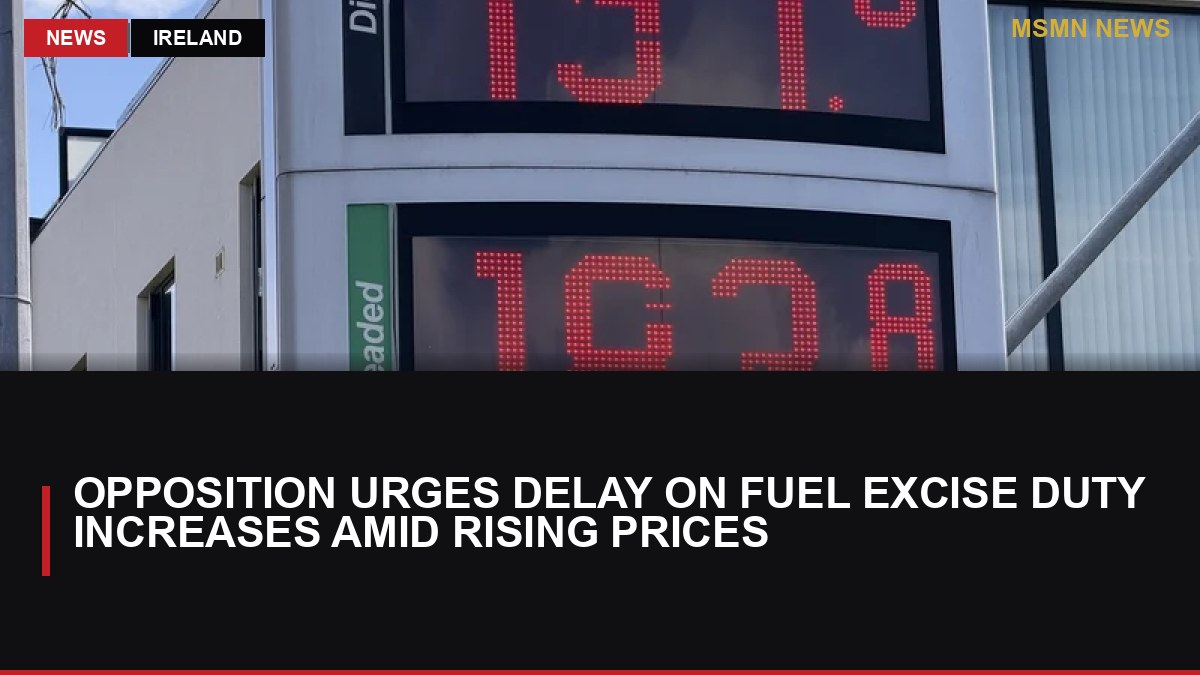
In a climate of rising fuel prices and increasing financial strain on households, opposition parties in Ireland are making a strong plea for the government to reconsider its plans to reinstate full excise duty costs on fuel.
- Disney Announces ‘Lilo & Stitch 2’ with New Character Angel: MSMN News
- Exploring a Millennia of Jewish-Muslim Relations: MSMN News
- Michigan Senate Candidate Abdul El-Sayed Faces Backlash Over Deleted Posts: MSMN News
- South Korea President Proposes Peace Talks with North Korea: MSMN News
- Tragic Toll of Heavy Rains in Eastern Japan Leaves Eight Dead: MSMN News
In a climate of rising Fuel Prices and increasing financial strain on households, opposition parties in Ireland are making a strong plea for the government to reconsider its plans to reinstate full excise duty costs on fuel. This call comes at a time when many families are grappling with the reality of escalating living expenses, which have been exacerbated by various economic pressures, including inflation and supply chain disruptions. The political landscape is heating up as these parties argue that the timing of such a tax increase could further burden citizens already feeling the pinch.
The situation has prompted a renewed debate about fiscal policy and its implications for the average consumer. The government had previously implemented temporary reductions in fuel excise duties as a measure to alleviate the financial impact of soaring fuel prices. However, with plans to revert to the original duty rates, many are concerned about the potential repercussions for everyday living costs. Recent reports indicate that fuel prices have been on a steady rise, causing alarm among consumers and businesses alike, with implications that reach far beyond the gas pump.
As of late, the price of petrol and diesel has surged, leading to widespread discontent. Families are now facing the prospect of higher transportation costs, which can significantly affect their monthly budgets. The opposition parties argue that reinstating the excise duties at this juncture would only serve to deepen the crisis for many households. They contend that the government should prioritize the welfare of its citizens, especially in light of the ongoing cost-of-living challenges that have left many struggling to make ends meet.
The backdrop to this political maneuvering is a broader economic context marked by uncertainty. Inflation rates have been climbing, driven by various factors, including global energy market volatility, the aftereffects of the COVID-19 pandemic, and geopolitical tensions that have disrupted supply chains. These elements have combined to create a perfect storm, leading to increased prices for essential goods and services. The rising costs at the fuel pump are just one aspect of a larger economic narrative that is affecting consumer confidence and spending.
In response to these pressures, the government has indicated that it remains committed to its fiscal strategy, which includes a gradual return to pre-pandemic tax rates. However, the opposition's vocal dissent suggests that there may be political repercussions if the government proceeds with its current plans. Many citizens are watching closely, and public sentiment appears to be shifting towards a demand for more immediate relief from rising costs. The opposition parties have seized upon this sentiment, framing their argument around the need for compassion and understanding in policymaking.
The political debate has also sparked discussions about alternative approaches to managing fuel prices and excise duties. Some experts and analysts suggest that rather than simply reinstating taxes, the government could explore other avenues, such as subsidies or targeted financial support for low- and middle-income families. This could provide immediate relief without exacerbating the financial strain that many households are currently experiencing. The idea of a more nuanced approach to fiscal policy is gaining traction, especially among constituents who feel that their voices are not being heard in the current political discourse.
As the situation evolves, it will be crucial to monitor how the government responds to the opposition's calls for a delay. Public opinion is a powerful force in Irish Politics, and the government may find itself under increasing pressure to reconsider its stance. The implications of this decision extend beyond mere economics; they touch on the social fabric of the nation and the trust citizens place in their leaders during difficult times.
Looking ahead, the next steps will likely involve negotiations and discussions between the government and opposition parties. The outcome of these talks could shape the trajectory of fuel prices and, by extension, the broader economic climate in Ireland. Citizens are left to ponder how their leaders will navigate these turbulent waters, balancing fiscal responsibility with the pressing needs of the populace.
As the situation unfolds, the stakes are high. The government faces a delicate balancing act: it must manage its fiscal policies responsibly while also addressing the urgent needs of its citizens. The calls for a delay on excise duty increases reflect a growing awareness of the interconnectedness of economic policies and their real-world impacts on families and individuals. The outcome of this debate will not only influence fuel prices but also set a precedent for how the government responds to future economic challenges.
In the meantime, the public remains vigilant. As fuel prices continue to rise, families are feeling the strain, and the pressure on the government is palpable. The coming weeks will be critical in determining how this issue unfolds and what it means for the broader economic landscape in Ireland. With opposition parties rallying their constituents and advocating for change, the government will have to tread carefully to maintain public trust and support.
The situation serves as a reminder of the complexities of governance, especially in times of economic distress. As citizens await further developments, the conversation around fuel prices and excise duties is likely to remain a focal point in political discourse. The challenges posed by rising costs are not merely economic; they resonate deeply within the lives of everyday people, making this issue one of both financial and social significance. The government's next steps will be watched closely, as the implications of their decisions could reverberate throughout Irish society for months to come.
The opposition parties, including notable figures from various political backgrounds, have united in their call for a delay, emphasizing the urgency of the situation. They argue that the government has a responsibility to protect its citizens from the harsh realities of rising costs. This appeal is not just about fuel; it reflects broader concerns about the ability of families to manage their finances in an increasingly difficult economic environment.
As discussions continue, analysts and economists will be observing closely to gauge the potential impact of any government decisions on the fuel market and the wider economy. The relationship between fuel prices and consumer spending is well-established; higher fuel costs can lead to reduced disposable income, thereby affecting a range of sectors from retail to leisure. The government’s fiscal policies will be scrutinized not only for their immediate effects but also for their long-term implications on economic recovery and growth.
The situation is further complicated by the fact that many households are already grappling with increased costs in other areas, such as food and housing. The cumulative effect of these rising expenses is creating a perfect storm for many families, who are left feeling financially squeezed. The opposition's argument for a delay on the excise duty increases resonates with a growing number of constituents who are feeling the pressure.
In conclusion, the call to delay the excise duty increases on fuel comes at a critical juncture for Ireland. As the government navigates the complexities of fiscal policy amidst rising fuel prices, the response to the opposition's plea will likely have significant implications for the economic landscape and the welfare of ordinary citizens. The coming weeks promise to be pivotal, as both the government and opposition prepare for what could be a defining moment in their political and economic strategy. The public's eyes remain fixed on their leaders, awaiting a response that not only addresses immediate concerns but also lays the groundwork for a more stable economic future.
Source / Reference
Reporting by MSMN News, based on publicly available source material.
Source: RTE News
Reference link: https://www.rte.ie/news/business/2026/0811/1587371-motor-fuel-prices/
Recommended products


 Editor's choice
Affiliate disclosure: MSMN may earn from qualifying purchases. Prices and availability may change.


Comments