
Visa Denials Spark Outrage Among Academics for Palestinian Students: MSMN News
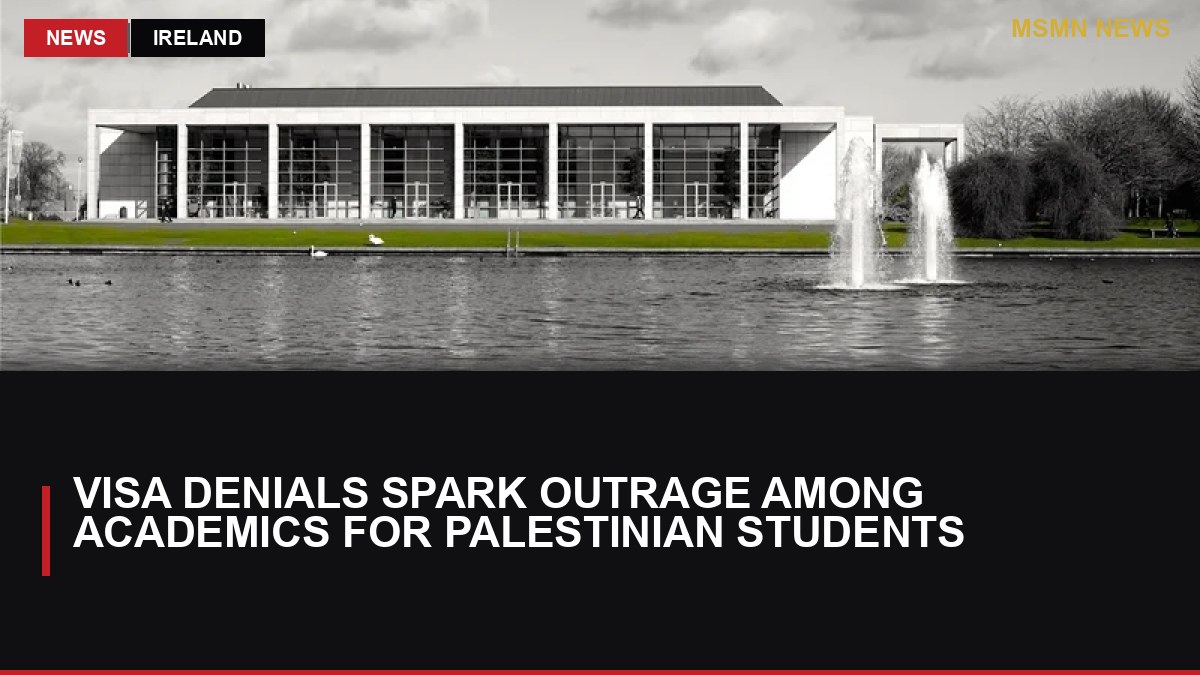
The refusal of study visas for Palestinian students in Ireland has ignited a fierce debate among academics and public figures, highlighting broader issues of educational access and equity.
- Hezbollah disarmament 'integral' to Lebanon-Israel security process, US official tells 'Post': MSMN News
- Highly competitive Likud primaries set as Netanyahu holds expanded control over Knesset slate: MSMN News
- Arab-Israeli activist Yoseph Haddad enters politics with new party ahead of elections: MSMN News
- Trump Vows Economic Pressure on Iran, Plans to Declare Hormuz US Territory: MSMN News
- Innovative Tribute to Freedom Fighter Alluri Sitarama Raju: MSMN News
In a move that has drawn widespread condemnation from the academic community, at least 31 out of 59 Palestinian students who applied for study visas to Ireland have been denied entry, despite having secured scholarships from Irish higher Education institutions. This situation has prompted a significant backlash, with educators and scholars calling for an urgent review of the visa process, highlighting the detrimental impact these refusals could have on the students’ futures and on broader educational exchanges between Ireland and Palestine.
The students in question had been awarded scholarships, either fully or partially funded, to pursue their studies in Ireland, a country known for its commitment to promoting education and cultural exchange. Many of these scholarships are designed to support students from underrepresented regions, offering them opportunities to gain valuable knowledge and skills that they can bring back to their communities. However, the recent visa refusals have raised serious questions about the accessibility of education for Palestinian students, who already face numerous challenges.
The visa rejections have not only frustrated the students but have also sparked a vigorous debate among academics and educational leaders about the implications of such decisions. Critics argue that these refusals reflect a broader trend of exclusion that undermines the principles of equity and access in higher education. Many believe that educational opportunities should transcend political boundaries, and these visa denials are seen as a barrier to collaboration and mutual understanding between cultures.
The timing of these refusals is particularly striking, coming at a moment when global dialogue around educational rights and access is gaining momentum. As nations increasingly recognize the importance of education in fostering peace and development, the denial of visas to students from conflict-affected regions raises alarms about the commitment to these ideals. Academics assert that by denying these students the chance to study abroad, the authorities are not only impacting their individual futures but are also stifling the potential for knowledge exchange that could benefit both Palestinian society and the global community.
The implications of these visa refusals extend beyond the immediate educational landscape. Many of the students who applied for these scholarships represent a generation eager to engage with the world and contribute to their communities upon their return. The opportunity to study in Ireland, a country with a rich educational heritage, would have provided them with insights and experiences that could foster innovation and development back home. Instead, the current situation leaves them facing uncertainty and missed opportunities.
In response to the growing criticism, several Irish academics and educational organizations have rallied to support the affected students. They are urging the Irish government and relevant immigration authorities to reconsider these visa applications, emphasizing the need for a more compassionate and understanding approach to students from conflict zones. Many have highlighted the importance of solidarity with Palestinian students, encouraging wider public support for their cause.
The academic community is not alone in its outrage; public figures and Human Rights organizations have also voiced their concerns. They argue that education is a fundamental human right and that these visa denials represent a violation of that right for the Palestinian students involved. The calls for action have resonated widely, with petitions and campaigns emerging to advocate for the students’ rights and to push for a reevaluation of the visa process.
As this situation unfolds, the question remains: what will happen next? The affected students, many of whom have already made plans and arrangements for their studies, are left in a state of limbo. Some have expressed their determination to continue pursuing their academic ambitions, even in the face of these setbacks, while others are grappling with the emotional toll of these refusals.
The Irish government has yet to issue a comprehensive response to the backlash. However, the pressure is mounting for them to address the concerns raised by the academic community and the public. Many are calling for transparency in the visa application process, arguing that students should not be penalized for their nationality or the political circumstances of their homeland. The hope is that this situation will prompt a reevaluation of the criteria used in granting visas, especially for students from regions facing significant challenges.
In the broader context, these visa refusals highlight the importance of international cooperation in education. As countries navigate complex geopolitical landscapes, it is crucial to remember that education serves as a bridge between cultures. The denial of opportunities for students not only affects their personal growth but also hinders the potential for future collaboration and understanding between nations.
Looking ahead, the academic community is likely to continue advocating for the rights of Palestinian students and pushing for changes in visa policies that promote inclusivity rather than exclusion. There is a growing recognition that the future of education must be built on principles of fairness, access, and support for those who seek knowledge, regardless of their background.
As discussions continue and actions unfold, the plight of these students serves as a poignant reminder of the challenges faced by many in accessing education. The hope is that through collective efforts, the barriers to educational opportunities can be dismantled, paving the way for a more inclusive and equitable future for students worldwide. The situation in Ireland will undoubtedly serve as a case study in how educational policies can impact lives and the importance of advocating for those who are often marginalized in the global education system.
The refusal of visas for these Palestinian students has not only raised eyebrows within the academic community but has also attracted attention from international observers. Advocacy groups have begun to mobilize, calling for a thorough investigation into the criteria used for visa approvals. These organizations argue that the current framework appears to disproportionately affect individuals from certain geopolitical backgrounds, which raises ethical questions about the fairness of the immigration system.
Moreover, as Ireland positions itself as a leader in promoting human rights and education, the implications of these visa denials could have long-term effects on its reputation. The country has historically welcomed international students, fostering a diverse educational environment that benefits both local and foreign students. The current situation may prompt a reevaluation of these values and the practices that support them.
In this context, the academic community is also exploring the potential for partnerships and collaborations with other educational institutions globally that may offer alternative pathways for these students. This includes online learning opportunities and exchange programs that do not require physical relocation, thus circumventing visa issues while still providing valuable educational experiences.
As the situation evolves, observers will be watching closely for any developments from the Irish government regarding policy changes or statements addressing the concerns raised. The hope is that this incident will serve as a catalyst for broader discussions about educational access and the need for a more equitable approach to visa applications, particularly for students from conflict-affected areas.
In conclusion, the denial of study visas to Palestinian students in Ireland is a complex issue that encapsulates the intersection of education, politics, and human rights. As the academic community and public figures rally to support these students, the hope is that their voices will lead to meaningful change that promotes inclusivity and access to education for all, regardless of their background or circumstances. The ongoing discourse surrounding this issue will undoubtedly shape the future of educational policies and practices, both in Ireland and beyond, as the global community grapples with the challenges of fostering understanding and cooperation in an increasingly divided world.
Source / Reference
Reporting by MSMN News, based on publicly available source material.
Source: RTE News
Reference link: https://www.rte.ie/news/primetime/2026/0814/1587781-academics-criticise-visa-refusals-for-gaza-scholarship-students/
Recommended products

OnBuy.com
Palestinian map pendant necklace, Palestinian flag triangle alloy pendant necklace, I support Palestine necklace, Palestinian flag pendant necklace
Approx. GBP 14.29 Final price on merchant site
 Editor's choice

Affiliate disclosure: MSMN may earn from qualifying purchases. Prices and availability may change.





Comments