
UK Supreme Court to Review Ban on Palestine Action Group: MSMN News
Follow MSMN
Official channels from Martins Studio Media Network.
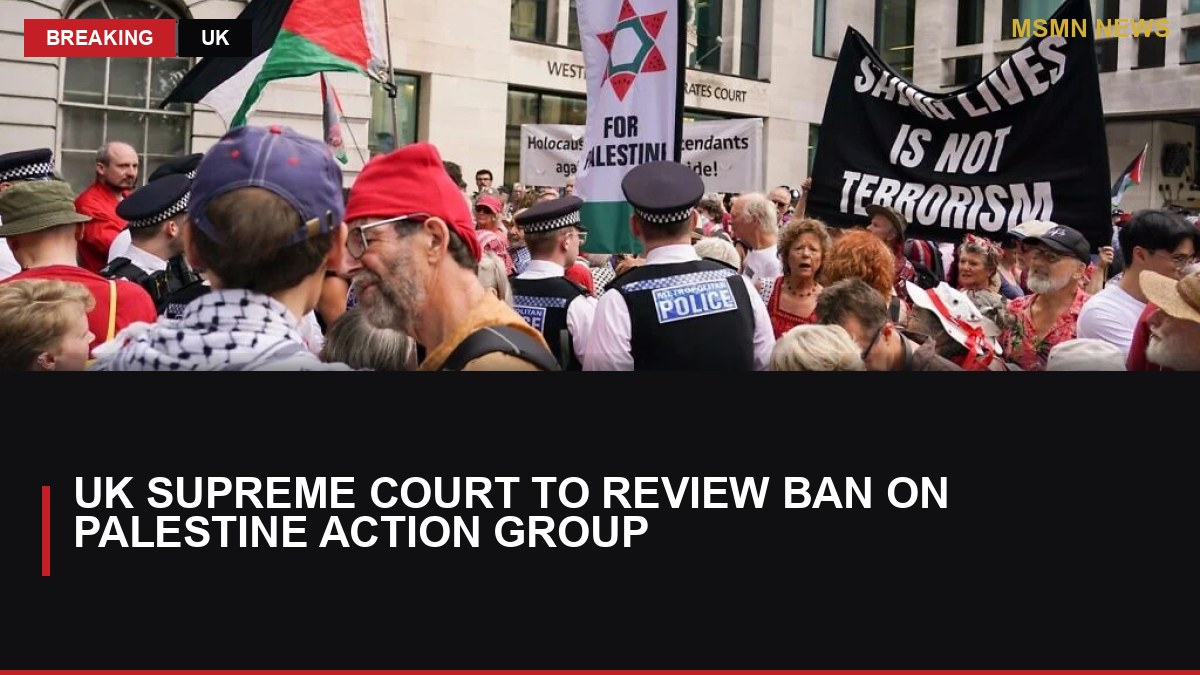
The UK Supreme Court is set to hear an appeal regarding the government's ban on the Palestine Action group, a decision that has sparked widespread debate on free speech and activism.
- 7 killed in Kenya tourist helicopter crash: MSMN News
- The Princess Diaries 3: Anne Hathaway Shares Honest Reaction to Julie Andrews’ Absence: MSMN News
- Rebecca Ferguson Had ‘Loads of Crazy Ideas’ for Her Magic Faraway Tree Villain | Director Interview: MSMN News
- Wildwood Trailer: Mahershala Ali & Carey Mulligan Enter a Hidden World in Fantasy Movie: MSMN News
- Por primera vez desde el nazismo y la Stasi, los espías alemanes vuelven al ataque: MSMN News
Background of the Case
The Palestine Action group, known for its direct action campaigns advocating for Palestinian rights, has been at the center of a legal battle in the United Kingdom. The organization was placed on the government's list of proscribed groups under the Terrorism Act, which prohibits support for organizations deemed to be involved in terrorism. This designation has serious implications for the group, effectively criminalizing its activities and putting its members at risk of prosecution.
In a significant ruling earlier this year, the Court of Appeal upheld the government’s decision to ban the organization. The court found that the group’s actions, including the targeting of businesses associated with Israeli companies, justified its classification as a terrorist organization. This ruling has drawn criticism from various human rights advocates and Free Speech organizations, who argue that the ban stifles legitimate political expression and activism around the Palestinian cause.
The Palestine Action group has been known for its high-profile protests and direct actions, including the occupation of buildings and the vandalism of properties linked to Israeli firms. While these actions are framed by the group as necessary forms of protest against what they describe as systemic oppression of the Palestinian people, critics argue that they cross the line into unlawful behavior. The legal battle centers on whether these actions can be deemed as terrorism or if they are a legitimate form of political protest.
Appeal Process and Legal Arguments
Following the Court of Appeal’s decision, one of the co-founders of Palestine Action, who has remained anonymous for safety reasons, announced plans to appeal to the UK Supreme Court. This co-founder expressed determination to fight against the ban, stating that if necessary, they would take their case to the European Court of Human Rights. The appeal to the Supreme Court is seen as a critical step in challenging the legitimacy of the ban and its broader implications for political activism in the UK.
Legal experts suggest that the Supreme Court's decision to hear the appeal reflects the significant legal questions surrounding the case. At the heart of the arguments is the tension between national security concerns and the right to free speech. Proponents of Palestine Action argue that their activities are protected under the right to protest and campaign for political change. They assert that the actions taken by the group are a response to a political situation that many view as unjust and oppressive.
In contrast, the government maintains that the group’s actions pose a genuine threat to public safety and order. Officials argue that the organization’s tactics could incite violence and disrupt public peace, which justifies their classification as a terrorist entity. The outcome of this appeal could hinge on how the Supreme Court interprets the definitions of terrorism and political Activism, as well as the broader implications for civil liberties in the UK.
Public Reaction and Broader Implications
The ban on Palestine Action has ignited a fierce debate across the UK. Many supporters of the group, including activists, academics, and some political figures, have rallied behind the organization, arguing that the proscription is an attack on freedom of expression. Demonstrations have been held in various cities, with participants calling for the government to revoke the ban and allow activists to operate freely. These protests have garnered attention not only for their messages but also for the passionate responses from both sides of the debate.
Critics of the government’s stance argue that labeling Palestine Action as a terrorist organization undermines the legitimate struggles for human rights and self-determination. They contend that such designations can lead to the criminalization of dissent and silence voices advocating for marginalized communities. The implications of this case extend beyond Palestine Action itself, as it raises critical questions about the boundaries of acceptable protest and the extent to which governments can restrict political expression.
On the other hand, some members of the public support the government’s decision, citing concerns over safety and the potential for violence in protests. They argue that while peaceful protest is a right, actions that threaten public safety should not be tolerated. This divide reflects a broader societal debate about the limits of protest and the implications of labeling political groups. The discussions surrounding this case have become emblematic of the ongoing tensions in the UK regarding national security, civil liberties, and the role of activism in a democratic society.
The Path Ahead
As the Supreme Court prepares to hear the appeal, the case has the potential to set a significant precedent regarding the balance between national security and civil liberties. Legal analysts are closely watching how the court will interpret the law in this context, particularly in light of the ongoing discussions about the rights of activists and the limits of state power. The implications of the court's decision could resonate beyond the immediate context of Palestine Action, influencing how other activist groups operate in the UK.
The timeline for the Supreme Court's decision remains uncertain, but the outcome could have far-reaching implications for similar organizations and movements in the UK and beyond. Should the court rule in favor of Palestine Action, it may open the door for other activist groups to challenge government restrictions on their activities. Conversely, a ruling upholding the ban could embolden the government to impose further restrictions on political activism, raising concerns among civil liberties advocates.
Activists and supporters of Palestine Action are preparing for both scenarios, emphasizing their commitment to continue advocating for Palestinian rights regardless of the legal outcomes. They argue that the fight for justice and equality will persist, and they remain hopeful that the legal system will ultimately protect their right to protest and express their views. This determination underscores the broader struggle for human rights and the critical role of activism in challenging injustices.
Conclusion
The upcoming Supreme Court hearing is not just a legal battle for the Palestine Action group; it represents a crucial moment in the ongoing struggle for human rights and free speech in the UK. As the nation grapples with complex issues surrounding activism, terrorism, and civil liberties, the court's decision will likely resonate far beyond this particular case. Activists across the spectrum are watching closely, recognizing that the implications of this ruling could shape the future of political activism in the country.
In the coming weeks, as the Supreme Court prepares to hear the appeal, the discourse surrounding the ban on Palestine Action will continue to evolve. Advocates for both sides of the argument are expected to ramp up their efforts, and public opinion will likely play a significant role in shaping the narrative. The legal and societal implications of this case are profound, and its resolution will be closely monitored by those invested in the ongoing struggle for justice and human rights. The outcome will not only affect Palestine Action but could also set a precedent for how similar cases are handled in the future, making it a pivotal moment in the landscape of UK activism.
Source / Reference
Reporting by MSMN News, based on publicly available source material.
Source: Times of Israel
Reference link: https://www.timesofisrael.com/uk-supreme-court-to-hear-appeal-on-britains-ban-of-palestine-action-group/
Recommended products

 Editor's choice

Affiliate disclosure: MSMN may earn from qualifying purchases. Prices and availability may change.



Comments