
Iran Issues Stark Warning: Potential Strikes on Energy Fields if U.S. Attacks: MSMN News
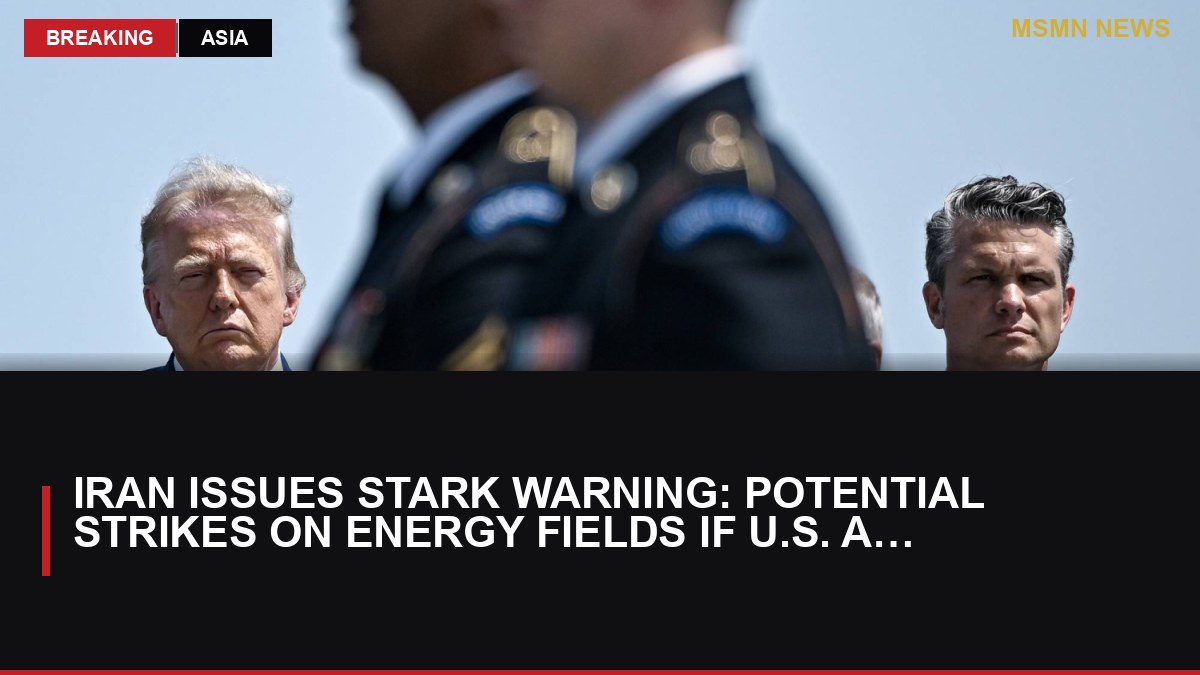
Iran has issued a bold warning, indicating it may target oil and gas fields in Saudi Arabia, the UAE, Qatar, and Israel if the United States escalates military actions against it. This announcement raises significant concerns about regional stability and energy security.
- Californians Alarmed by Federal Moves to Undermine Coastal Protections: MSMN News
- Dublin's Bin Scavenging Crisis: A Daily Cost of €1,000 to City Council, Reports MSMN News
- Capturing Nature's Majesty: Steven Scott Grogin's Stunning Bullfrog Photo: MSMN News
- Social Media Strategy Gains Importance: MSMN News
- Michael Sheen Uncovers Wales' Toxic Legacy: MSMN News
### Iran's Warning
In a recent escalation of tensions, Iranian officials have threatened to launch attacks on energy infrastructure in several countries if the United States proceeds with renewed military actions against Iran. This warning specifically mentions potential strikes on oil fields in Saudi Arabia and the United Arab Emirates (UAE), as well as gas fields in Qatar and Israel. The implications of such threats could have far-reaching consequences for global energy markets and regional security.
### Background of the Tensions
The relationship between Iran and the United States has been strained for decades, with recent developments intensifying these hostilities. The U.S. has accused Iran of destabilizing activities across the Middle East, including support for militant groups and threats to shipping routes in the Persian Gulf. In response, the U.S. has conducted various military operations aimed at countering these perceived threats. The current climate of suspicion and hostility has led to a precarious situation, where any miscalculation could result in significant military confrontations.
Iran's recent warning comes in the context of heightened military readiness by the U.S. and its allies in the region. The U.S. has deployed additional forces to the Gulf, and military exercises have been conducted, raising alarm in Tehran. Iranian officials assert that these actions constitute a direct threat to their national security and sovereignty.
### Specific Threats to Energy Fields
Iran’s threats specifically target critical energy infrastructure in neighboring countries. Saudi Arabia and the UAE are two of the largest oil producers globally, and any disruption to their oil fields could have severe implications for global oil prices and supply stability. Iran’s warning highlights the vulnerability of these countries' energy sectors, which are crucial not only for their economies but also for the Energy Security of many nations reliant on Middle Eastern oil.
Additionally, Iran mentioned potential attacks on gas fields in Qatar and Israel. Qatar is a leading exporter of liquefied natural gas (LNG), and any military action affecting its gas fields could disrupt global LNG markets. On the other hand, Israel's energy infrastructure has been a point of contention, especially given the ongoing conflict between Iran and Israeli interests in the region.
### Iranian Military Capabilities
Iran has developed a range of military capabilities that could potentially threaten energy infrastructure across the region. The Iranian Revolutionary Guard Corps (IRGC), which oversees many of Iran's military operations, has been involved in various regional conflicts and has a history of conducting asymmetric warfare. Their capabilities include drone technology, missile systems, and naval assets that could target shipping lanes and oil facilities.
Recent reports indicate that Iran has been enhancing its military capabilities, including the development of advanced drones and missile systems that could strike targets at significant distances. This military buildup raises concerns not only for the immediate region but also for global energy security, as any conflict involving Iran could disrupt oil and gas supplies worldwide.
### International Reactions
The international community has been closely monitoring these developments. The U.S. has reaffirmed its commitment to protecting its allies in the region, emphasizing the importance of maintaining stability in global energy markets. European nations, while advocating for diplomatic solutions, have expressed concern over the potential for an armed conflict that could have devastating consequences.
Saudi Arabia and the UAE have also reacted to Iran's threats. Both nations have invested heavily in their military capabilities and have formed alliances with Western powers to counter Iranian influence. In light of the recent threats, they may seek to bolster their defenses further or increase cooperation with U.S. forces in the region.
### The Economic Impact
The threat of Iranian strikes on energy fields could lead to significant economic repercussions. Global oil prices are particularly sensitive to geopolitical tensions, and any indication of potential conflict in the Middle East typically results in price fluctuations. Analysts warn that sustained threats or actual attacks could lead to a spike in oil prices, affecting consumers and businesses worldwide.
Moreover, the uncertainty surrounding energy supplies from key producers like Saudi Arabia and the UAE can lead to increased volatility in financial markets. Investors closely watch developments in the region, and any escalation in military actions may prompt a flight to safety, impacting stock markets and investment portfolios globally.
### Diplomatic Efforts
In response to the escalating tensions, diplomatic efforts continue, though progress has been limited. The U.S. and its allies have sought to engage Iran in discussions aimed at de-escalating tensions and addressing broader concerns about Iran's nuclear program and regional activities. However, Iran's hardline stance and insistence on its right to defend itself complicate these efforts.
Regional powers have also attempted to mediate between Iran and its adversaries. Countries like Oman and Qatar have historically played roles as intermediaries, seeking to reduce tensions and foster dialogue. However, the recent threats from Iran may complicate these diplomatic initiatives and create an environment where dialogue becomes increasingly difficult.
### Future Implications
The situation remains fluid, and the potential for conflict looms large. As Iran continues to assert its military capabilities and threatens its neighbors, the international community must navigate a complex web of interests and alliances. The risk of miscalculation or unintended escalation is high, and any military confrontation could have dire consequences for regional stability and global energy security.
As the U.S. and Iran continue to engage in a high-stakes game of military posturing and diplomatic maneuvering, the focus remains on whether cooler heads can prevail. The potential for strikes on energy fields adds another layer of complexity to an already volatile situation, with implications that extend far beyond the immediate region.
### Conclusion
Iran's recent threats to target energy infrastructure highlight the precarious balance of power in the Middle East. As tensions escalate, the possibility of military conflict looms, raising concerns about the security of energy supplies and the stability of the region. The international community watches closely, hoping for a resolution that avoids further conflict and promotes stability in a critical area of the world.
Source / Reference
Reporting by MSMN News, based on publicly available source material.
Source: Japan Times
Reference link: https://www.japantimes.co.jp/news/2026/08/02/world/iran-strike-energy-fields-us/
Recommended products
 -20%
-20%

 Editor's choice
Affiliate disclosure: MSMN may earn from qualifying purchases. Prices and availability may change.


Comments