
Nigeria Dismantles Over 2,800 Seized Weapons in Effort to Combat Insecurity: MSMN News
Follow MSMN
Official channels from Martins Studio Media Network.
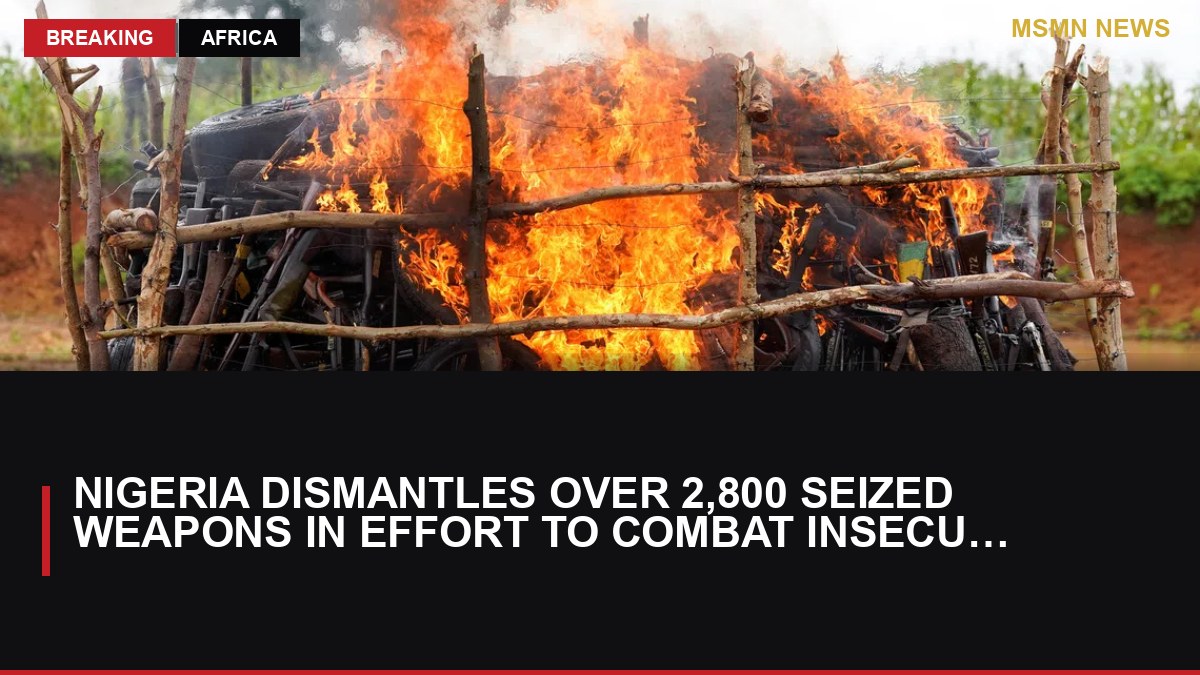
In a decisive move to combat insecurity fueled by illegal arms, Nigeria's National Commission for the Coordination of the Control of Small Arms and Light Weapons destroyed 2,819 seized weapons on July 30.
- Eater's Off Menu Event Set for Los Angeles: MSMN News
- Rotterdam's Controversial New Landmark: MSMN News
- Exploring Fantasy TV Shows That Stay True to Their Literary Roots: MSMN News
- Terranigma Remaster Set for US Release: MSMN News
- 'I Love Lucy' to Receive Inaugural Legacy Award from TV Academy: MSMN News
Nigeria's Ongoing Battle with Illegal Arms
Nigeria continues to grapple with a severe Security crisis that has been exacerbated by the widespread availability of illegal firearms. In a decisive response to this growing threat, the National Commission for the Coordination of the Control of Small Arms and Light Weapons (NCCSALW) announced on July 30 that it had destroyed 2,819 illicit, obsolete, and decommissioned weapons. This action is part of a multi-faceted strategy aimed at curbing the rampant violence that has plagued various regions of the country.
Context of the Destruction
The destruction of these weapons is not an isolated event; rather, it forms part of Nigeria's ongoing efforts to tackle insecurity driven by the proliferation of illegal arms. Over the years, the country has faced numerous challenges, including insurgency in the northeast, banditry in the northwest, and ethnic clashes in various regions. These conflicts have been fueled in part by the availability of illicit firearms, which have made it easier for criminal groups and insurgents to operate with impunity.
The NCCSALW's initiative to destroy these weapons underscores the Nigerian government’s recognition of the critical link between Arms Control and national security. By eliminating these weapons, officials hope to reduce the potential for their misuse in violent conflicts and criminal activities. This operation is seen as part of a broader commitment to restoring peace and stability in a nation that has long suffered from violence and insecurity.
Details of the Operation
The destruction operation took place in Abuja, the capital city, where officials from the NCCSALW oversaw the incineration of the seized arms. This event was publicized as a symbol of the government’s commitment to restoring peace and security in the country. The weapons destroyed included a variety of firearms that had been collected through various means, including seizures from criminal groups and voluntary surrender by civilians.
The NCCSALW has been actively involved in the collection and destruction of illegal arms for several years. This recent operation is part of a systematic approach to arms control that includes increased law enforcement efforts, community engagement, and international cooperation to combat the illegal arms trade. By focusing on the destruction of these weapons, officials aim to send a strong message to both the public and potential offenders about the government's zero-tolerance policy towards illegal arms.
Public Reaction and Support
The public response to the destruction of the weapons has been mostly positive. Many citizens see this as a necessary step towards improving safety and security in their communities. Local leaders and community organizations have expressed support for the initiative, emphasizing the need for continued efforts to address the root causes of violence in Nigeria.
However, some critics argue that while the destruction of weapons is a step in the right direction, it should be accompanied by more comprehensive measures to address the underlying issues that contribute to insecurity, such as poverty, unemployment, and lack of education. They stress that without addressing these root causes, the cycle of violence and crime will likely continue. The challenge for the Nigerian government lies not only in dismantling illegal arms but also in fostering socio-economic development that can alleviate these underlying issues.
The Bigger Picture: Nigeria's Security Challenges
Nigeria's security landscape is complex and multifaceted. The country has been plagued by various forms of violence, including Boko Haram insurgency, banditry, and ethnic clashes. Each of these issues is intertwined with the availability of illegal arms, which have made it easier for violent groups to carry out attacks and disrupt communities.
Boko Haram, the notorious Islamist militant group, has been a significant source of violence in the northeast, where it has carried out numerous attacks on civilians and military targets. The group has been known to acquire weapons through various means, including raids on military installations and the illegal arms trade. The destruction of illicit arms is seen as a critical component of efforts to weaken such groups and restore stability in affected regions.
In the northwest, banditry has surged, with armed groups engaging in kidnappings for ransom and attacks on rural communities. These groups often rely on illegal firearms to carry out their operations, further underscoring the need for aggressive arms control measures. The Nigerian government has recognized that addressing the issue of illegal arms is essential for restoring law and order in these regions. The challenge remains, however, in effectively coordinating military and law enforcement responses to these threats.
International Collaboration
Nigeria's efforts to combat the proliferation of illegal arms are also supported by various international partners. Organizations such as the United Nations and regional bodies have provided assistance in the form of training, resources, and strategic guidance. Such collaboration is vital, as the illegal arms trade is often transnational, with weapons flowing across borders and fueling conflicts in multiple countries.
The Nigerian government has been proactive in seeking international cooperation to enhance its arms control measures. This includes participation in regional frameworks aimed at addressing the security challenges posed by the illegal arms trade. By working together with other nations, Nigeria hopes to strengthen its ability to combat the influx of illegal weapons and improve overall security. The involvement of international partners not only provides resources but also helps in the sharing of best practices and intelligence that can enhance the effectiveness of Nigeria's arms control initiatives.
Next Steps for Nigeria
Following the destruction of the 2,819 weapons, Nigeria's arms control agency is expected to continue its efforts to monitor and regulate the circulation of firearms in the country. This will involve increased surveillance of illegal arms trafficking and stricter enforcement of laws governing the possession of firearms. Law enforcement agencies are being urged to enhance their capabilities to detect and dismantle illegal arms networks.
Community engagement will also play a crucial role in these efforts. The government plans to launch awareness campaigns aimed at educating citizens about the dangers of illegal firearms and encouraging voluntary surrender programs. Such initiatives are designed to foster a culture of responsibility regarding firearm ownership and to reduce the stigma associated with surrendering illegal weapons. Engaging communities in the dialogue about arms control can also help to build trust between the government and citizens, which is essential for effective governance and security.
Conclusion
As Nigeria moves forward with its arms control initiatives, the destruction of these 2,819 weapons marks a significant step in the ongoing fight against insecurity. While this action alone will not resolve the complex issues facing the country, it demonstrates a commitment to addressing the problem of illegal arms and their role in perpetuating violence. Continued efforts, both domestically and in collaboration with international partners, will be essential in creating a safer environment for all Nigerians.
By tackling the issue of illegal arms head-on, Nigeria aims to pave the way for lasting peace and stability in the region. The journey will be challenging, but the recent destruction of these weapons represents a hopeful step towards a more secure future for the nation. The international community will be watching closely to see how Nigeria builds on this momentum and implements further measures to enhance security and reduce violence across the country.
Source / Reference
Reporting by MSMN News, based on publicly available source material.
Source: Straits Times World
Reference link: https://www.straitstimes.com/world/nigeria-destroys-2819-seized-illicit-arms-in-security-crackdown
Recommended products



Affiliate disclosure: MSMN may earn from qualifying purchases. Prices and availability may change.


Comments