
Trump Targets Birthright Citizenship with New Executive Orders: MSMN News
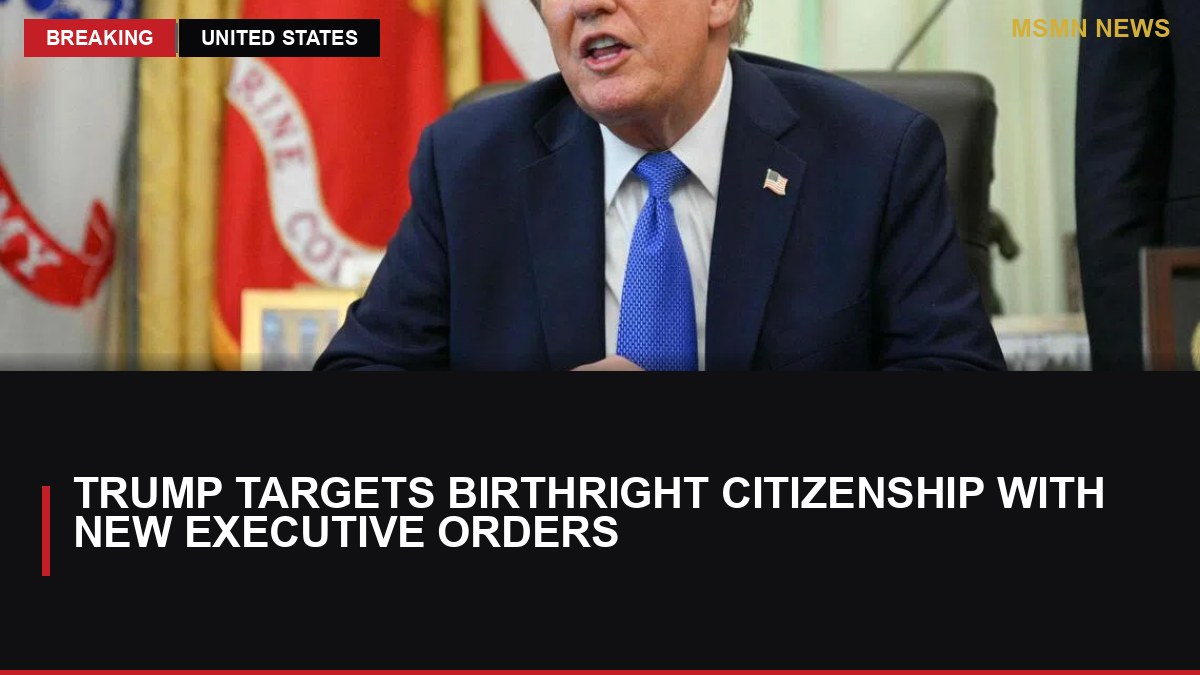
In a decisive action that has reignited the contentious debate over immigration policy, former President Donald Trump has signed a series of executive orders aimed at limiting what is commonly referred to as 'birth tourism.'
- AI Film Studios Begin to Challenge Traditional Hollywood: MSMN News
- Director Reveals Unseen Avengers Connection in The Incredible Hulk: MSMN News
- Quadarella Shines as Italy's Mixed Relay Teams Advance to Finals: MSMN News
- Rahul Gandhi to Bring 'Chhatron ki Goonj' Initiative to Pune: MSMN News
- Novak Djokovic Discloses Health Issues Following Cincinnati Open Loss: MSMN News
In a decisive action that has reignited the contentious debate over immigration policy, former President Donald Trump has signed a series of Executive Orders aimed at limiting what is commonly referred to as 'birth tourism.' This practice allows non-citizens to travel to the United States specifically to give birth, thereby granting their children automatic U.S. citizenship under the 14th Amendment. The move, which Trump has long championed, reflects his administration's ongoing efforts to reshape immigration laws and policies, a central theme of his presidency.
The orders were signed during a press conference at his Mar-a-Lago estate in Florida, where Trump emphasized the need to protect American citizens and uphold the integrity of the nation's Immigration system. He described birth tourism as a loophole that exploits the generosity of American laws, stating that it unfairly burdens taxpayers and undermines the nation's sovereignty. This latest action is part of a broader strategy by Trump to address what he perceives as a crisis in U.S. immigration, particularly in the context of his campaign to secure the southern border and reduce illegal immigration.
The implications of these executive orders are profound, as they could potentially alter the landscape of U.S. citizenship and immigration. Birthright Citizenship has been a long-standing principle in American law, rooted in the 14th Amendment, which guarantees citizenship to anyone born on U.S. soil. Critics of Trump's approach argue that his attempts to curtail this right could lead to significant legal challenges and may violate constitutional protections. Legal experts have expressed concern that such executive actions could face scrutiny in the courts, where the interpretation of the 14th Amendment has historically been upheld.
Trump's administration has previously attempted to address birthright citizenship through various means, including proposed legislation and policy changes. However, these efforts have often met with resistance from both lawmakers and advocacy groups, who argue that the right to citizenship should not be contingent upon the immigration status of a child's parents. The latest executive orders, however, signal a renewed commitment by Trump to push forward with his immigration agenda, particularly as he seeks to rally support among his base ahead of the upcoming elections.
The public reaction to Trump's orders has been mixed. Supporters of the former president have praised the move as a necessary step to protect American jobs and resources, arguing that it is essential to prioritize the needs of U.S. citizens. On the other hand, immigrant rights advocates have condemned the orders as discriminatory and harmful, asserting that they could lead to increased fear and uncertainty among immigrant communities. Many fear that the enforcement of these orders could result in families being torn apart, as parents may be deterred from seeking medical care or necessary support due to fears of deportation.
As the situation unfolds, various stakeholders are closely monitoring the potential fallout. Legal challenges are expected to emerge, as advocacy groups prepare to contest the orders in court. The American Civil Liberties Union (ACLU) has already indicated its intention to fight back against any measures that infringe upon the constitutional rights of individuals, emphasizing that birthright citizenship is a fundamental American principle. This battle could set the stage for a significant legal showdown that may ultimately shape the future of immigration policy in the United States.
In the broader context of U.S. immigration, Trump's orders come at a time when the nation is grappling with a complex array of issues related to border security, asylum policies, and the treatment of undocumented immigrants. The former president's focus on limiting birthright citizenship is indicative of his administration's commitment to a hardline stance on immigration, which has resonated with many voters who feel that the current system is flawed and in need of reform.
Looking ahead, the implications of these executive orders are likely to extend beyond the immediate legal battles. The orders could influence future legislative efforts concerning immigration reform, as lawmakers grapple with the challenges of balancing national security with humanitarian considerations. As Trump continues to advocate for stricter immigration policies, the national conversation around citizenship and the rights of immigrants is set to intensify.
With the 2024 presidential election on the horizon, Trump's actions may also serve as a rallying point for his supporters, reinforcing his identity as a champion of conservative values and a protector of American interests. Conversely, they could galvanize opposition among those who advocate for a more inclusive approach to immigration, potentially shaping the political landscape as candidates position themselves on this divisive issue.
The historical context of birthright citizenship in the United States can be traced back to the Reconstruction era, when the 14th Amendment was ratified in 1868. This amendment was designed to ensure that former slaves and their descendants would be granted citizenship and equal protection under the law. Over the years, the interpretation of this amendment has evolved, but the principle of birthright citizenship has remained a cornerstone of American identity.
Critics of Trump's executive orders argue that targeting birth tourism is a misdirected focus that overlooks the more profound issues within the immigration system. They assert that the real challenges lie in the complexities of immigration enforcement, the backlog in asylum cases, and the need for comprehensive immigration reform that addresses the root causes of migration. By concentrating on birth tourism, opponents contend that the administration is diverting attention from these critical issues.
As the legal battles commence, the potential for a Supreme Court case looms large. Any ruling on the constitutionality of Trump's executive orders could have lasting implications, not only for birthright citizenship but for immigration policy as a whole. Legal scholars are already debating the possible outcomes, with some suggesting that a ruling against the orders could reinforce the protections afforded by the 14th Amendment, while a ruling in favor could open the door for further restrictions on citizenship rights.
In addition to the legal ramifications, the political fallout from these executive orders is likely to be significant. As public opinion remains deeply divided over immigration, candidates from both parties will need to navigate this contentious issue carefully. For Republicans, aligning with Trump's hardline stance may be essential for securing the support of the party's base, while Democrats will likely continue to advocate for more inclusive policies that prioritize the rights of immigrants.
In conclusion, Trump's signing of executive orders targeting birthright citizenship marks a pivotal moment in the ongoing debate over immigration in the United States. As the nation navigates the complexities of citizenship, rights, and immigration policy, the ramifications of these actions will undoubtedly be felt for years to come. The legal and political battles that lie ahead will not only define the future of U.S. immigration but also reflect the broader societal values that underpin the nation’s identity.
Source / Reference
Reporting by MSMN News, based on publicly available source material.
Source: Straits Times World
Reference link: https://www.straitstimes.com/world/united-states/trump-to-sign-orders-on-birthright-citizenship-axios-reports
Recommended products
 -30%
-30%
SpringerLink Shop INT
Exploring Game Mechanics
Approx. USD 18.89
26.99
Final price on merchant site
3 merchants

 Editor's choice
Affiliate disclosure: MSMN may earn from qualifying purchases. Prices and availability may change.


Comments