
Engineers Work to Rescue NASA's Swift Satellite: MSMN News
Follow MSMN
Official channels from Martins Studio Media Network.
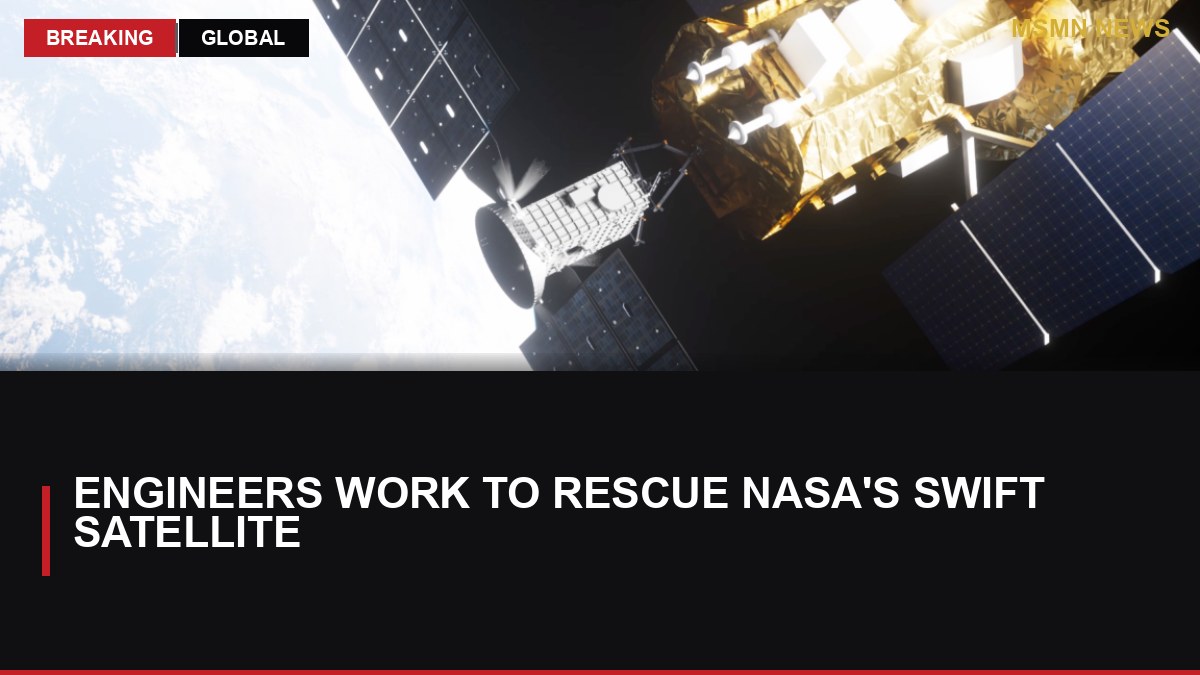
NASA's Swift satellite faces critical challenges as engineers devise a rescue plan to save its mission. The potential capture operation could redefine space engineering.
- Nielsen is leaning more on wearables to hear what people are watching: MSMN News
- Dubai accelerates India deal to adopt agentic AI in private sector: MSMN News
- Exploring the Best Thrillers by Taylor Sheridan: MSMN News
- Ryan Gosling Set to Replace Obi-Wan Kenobi in Star Wars: MSMN News
- The Epic Convergence of Tolkien and Martin: MSMN News
Engineers Seek to Rescue Swift Satellite
NASA's Swift Satellite, launched in 2004, has been instrumental in observing cosmic events and studying gamma-ray bursts. However, the spacecraft is facing significant challenges that jeopardize its ongoing mission. As engineers at NASA and its partner organizations work diligently to devise a rescue plan, the stakes are high for both the satellite and the scientific community that relies on its data.
### Background of the Swift Mission
The Swift satellite was designed to rapidly detect and analyze gamma-ray bursts, which are among the most energetic explosions in the universe. Equipped with a suite of powerful instruments, Swift has provided invaluable data that has advanced our understanding of these phenomena. Over the years, it has observed thousands of gamma-ray bursts and other high-energy events, contributing to a wealth of scientific publications and discoveries.
Despite its success, Swift is now facing technical difficulties that threaten its operational capacity. The satellite's aging systems and components have raised concerns among engineers about its long-term viability. The mission, which was initially planned for a two-year duration, has exceeded expectations and continued for nearly two decades, but the wear and tear on the satellite are becoming increasingly evident.
### Technical Challenges Ahead
The immediate concern for engineers is the satellite's ability to communicate effectively with ground control. Reports indicate that Swift's communication systems have become unreliable, leading to intermittent data transmission. This situation complicates efforts to monitor the satellite's health and operational status.
Additionally, the satellite's power systems, which rely on solar panels, have been affected by the accumulation of dust and debris in space. This buildup can reduce the efficiency of the solar panels, leading to power shortages that could impact the satellite's ability to function properly. Engineers are considering various strategies to address these issues, including potential cleaning methods for the solar panels and repairs to the communication systems.
### The Rescue Plan
In light of these challenges, engineers are exploring several options to rescue the Swift satellite. One of the primary strategies involves attempting a capture of the satellite. This ambitious plan would require the development of new technologies and techniques for rendezvousing with the aging spacecraft in orbit.
A capture operation would involve sending a robotic spacecraft to intercept Swift, allowing engineers to perform repairs or adjustments directly in space. This approach is complex and would require careful planning to ensure the safety of both the Swift satellite and the robotic vehicle.
Engineers believe that capturing Swift is a feasible option, given the advancements in robotic Technology and space navigation. They are currently assessing the technical requirements and potential risks associated with such a mission. The team behind the rescue effort is optimistic about the possibilities, stating that the idea of capturing Swift is “very much in the cards.”
### Timeline and Next Steps
While the specifics of the rescue plan are still being developed, engineers are working against the clock. The satellite's operational status is deteriorating, which means that prompt action is essential. Engineers are conducting simulations and modeling various scenarios to determine the best course of action.
The timeline for the rescue operation is still uncertain. Engineers are prioritizing the assessment of Swift's current systems and capabilities to establish a clear understanding of what is possible. They are also in discussions with NASA officials to secure the necessary funding and resources for the operation.
### Public Reaction
The scientific community has expressed both concern and hope regarding the potential rescue of the Swift satellite. Many researchers rely on the data collected by Swift for their studies, and its loss would be a significant setback for ongoing research in Astrophysics.
On social media and forums, scientists and enthusiasts have been actively discussing the implications of the satellite's challenges. Some have voiced their support for the rescue efforts, emphasizing the importance of Swift's contributions to the field. Others have raised questions about the feasibility of a capture operation and the potential risks involved.
### The Importance of Swift's Data
The data gathered by Swift over the years has been crucial to numerous scientific breakthroughs. It has helped identify the origins of gamma-ray bursts, provided insights into the formation of black holes, and even contributed to our understanding of the expansion of the universe. The satellite’s observations have been a cornerstone in the field of astrophysics, influencing research and theories that extend beyond just gamma-ray bursts.
Given the extensive database Swift has built, the loss of this satellite would not only hinder current research but could also set back future studies that rely on comparative data. The implications of its potential failure resonate deeply within the astrophysics community, as many researchers depend on Swift’s unique capabilities to further their own work.
### Engineering and Technological Challenges
The technical challenges facing the Swift satellite are not just limited to communication and power systems. The spacecraft's onboard instruments, designed to observe and analyze high-energy cosmic events, are also aging. Engineers must consider whether these instruments can continue to function effectively as the satellite ages.
Moreover, the environment of space presents unique challenges. Radiation exposure can degrade electronic components over time, leading to failures that are difficult to predict or diagnose from Earth. This reality necessitates a robust understanding of the satellite's current state and the potential for further degradation as time goes on.
### What to Watch Next
As engineers continue to explore the feasibility of capturing the Swift satellite, the next few months will be critical. Key milestones include the completion of detailed assessments of Swift's systems and the formulation of a comprehensive rescue plan. Additionally, discussions with NASA leadership regarding funding and resource allocation will be pivotal in determining the project’s viability.
The engineering team is expected to release updates on their progress, including findings from simulations and potential timelines for the rescue operation. The scientific community will be closely monitoring these developments, as the outcome could significantly impact ongoing research efforts.
### Conclusion: A Mission in Jeopardy
As engineers work tirelessly to save the Swift satellite, the future of the mission hangs in the balance. The complexities of space operations and the realities of aging technology present formidable challenges. However, the determination of the engineering team and the support from the scientific community provide a glimmer of hope.
The potential capture of Swift could mark a significant achievement in Space Engineering and offer valuable lessons for future missions. As the situation unfolds, the scientific community and the public will be closely watching for updates on this ambitious rescue endeavor. The fate of Swift is not just a matter of preserving a satellite; it embodies the spirit of exploration and the relentless pursuit of knowledge in the cosmos.
Source / Reference
Reporting by MSMN News, based on publicly available source material.
Source: Ars Technica
Reference link: https://arstechnica.com/space/2026/08/heres-how-engineers-plan-to-save-the-satellite-sent-to-save-nasas-swift-mission/
Recommended products
 -32%
-32%
 Editor's choice

Affiliate disclosure: MSMN may earn from qualifying purchases. Prices and availability may change.





Comments