
Thailand's Government Aims for Increased Investment to Achieve High-Income Status: MSMN News
Follow MSMN
Official channels from Martins Studio Media Network.
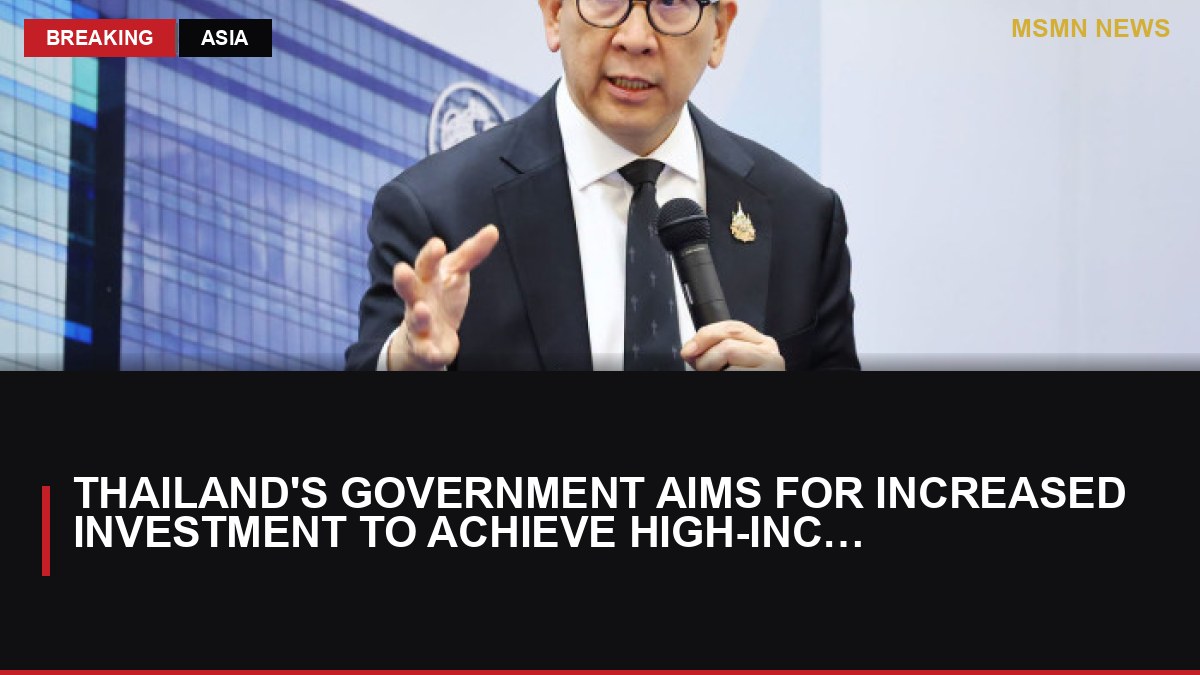
The Thai government is determined to increase total investment to 30% of GDP by 2035, aiming to escape the middle-income trap and achieve high-income status, Finance Minister Ekniti Nitithanprapas stated.
- Migrant Worker Found Dead in Foggia: Murder Suspected: MSMN News
- Italy's Finance Minister Proposes Income Tax Cuts: MSMN News
- Fuel Prices Continue to Rise in Italy: MSMN News
- Texas Seeks Federal Investigation into Airport Ablution Facilities: MSMN News
- Regulations Tighten on Cold Medicines for Young Children: MSMN News
Thailand's Ambitious Investment Goals
The Thai government has set its sights on significantly increasing the country’s total investment, aiming for it to reach 30% of the gross domestic product (GDP) by the year 2035. Finance Minister Ekniti Nitithanprapas announced this ambitious plan during a recent press conference, indicating that such a strategy is crucial for Thailand to escape the middle-income trap and transition into a high-income economy.
### Understanding the Middle-Income Trap
The middle-income trap refers to a situation where a country's growth slows after reaching a certain income level, making it difficult to transition into a high-income economy. Many nations find themselves stuck in this phase, unable to boost productivity and innovation to drive economic growth further. Thailand, which has been classified as a middle-income country for several years, faces this challenge head-on. The government believes that increasing Investment is a key component of breaking free from this cycle.
### Economic Context
As of now, Thailand's economic growth has been sluggish, with the GDP growth rate hovering around 3% in recent years. To achieve the target of 30% investment to GDP, the government will need to stimulate both public and private sector investments. This requires a multifaceted approach that includes improving infrastructure, enhancing regulatory frameworks, and fostering a business-friendly environment to attract foreign direct investment (FDI).
### Strategies for Boosting Investment
Minister Ekniti outlined several strategies that the government plans to implement to boost investment. One of the primary focuses is on enhancing infrastructure across the country. This includes not only transportation networks but also digital infrastructure, which is increasingly vital in a global Economy that relies on technology. The government envisions a comprehensive upgrade of roads, railways, ports, and airports, ensuring that they can support increased economic activity.
The government is also looking to streamline regulations that currently hinder investment. By simplifying processes and reducing bureaucratic red tape, officials hope to make it easier for both local and international businesses to invest in Thailand. This involves revising existing laws and regulations that may be outdated or overly complex, thereby creating a more conducive environment for investment.
Additionally, there is a focus on promoting key sectors such as technology, renewable energy, and tourism, which are seen as vital for future economic growth. The government believes that by prioritizing investment in these areas, it can create jobs, stimulate economic activity, and ultimately lift the country’s income levels. For instance, investments in renewable energy can not only help meet growing energy demands but also position Thailand as a leader in sustainable development in Southeast Asia.
### Public and Private Sector Collaboration
A significant part of the investment strategy will involve collaboration between the public and private sectors. The government is encouraging private investment by offering incentives and support for businesses willing to invest in Thailand. This is especially important as the private sector is often more agile and innovative than public entities.
The Thai government is also working to create partnerships with foreign investors, particularly from countries that have shown a strong interest in investing in Southeast Asia. By building these relationships, Thailand aims to tap into global capital flows and bring in the expertise needed to develop key industries. This includes exploring joint ventures and public-private partnerships that can leverage both local knowledge and international experience.
### Timeline for Implementation
The timeline for achieving the 30% investment to GDP target is ambitious but not impossible, according to the finance minister. With a twelve-year horizon, the government has time to implement its strategies and make necessary adjustments based on economic conditions. However, the success of this initiative will depend heavily on both domestic and international economic factors, including global market trends and geopolitical stability. Monitoring these factors will be crucial as the government navigates the complexities of the global economy.
### Public Reaction and Concerns
The public response to the government’s investment plans has been mixed. While many citizens recognize the importance of increasing investment for economic growth, there are concerns about the execution of these plans. Skepticism remains regarding whether the government can effectively implement the necessary reforms and attract sufficient investment in a competitive global environment.
Moreover, some analysts caution that without addressing underlying issues such as income inequality and environmental sustainability, simply increasing investment may not lead to the desired outcomes. Critics argue that the government must ensure that economic growth benefits all segments of society, particularly those who have been left behind in the current economic landscape. This includes addressing the needs of rural communities and ensuring that job creation is inclusive.
### Next Steps
Moving forward, the Thai government will need to communicate its strategies clearly to the public and potential investors. Building trust and demonstrating a commitment to reform will be essential for attracting the necessary investments. Additionally, monitoring progress and being transparent about challenges will be key components of this initiative.
As the government embarks on this journey to elevate Thailand's economic status, stakeholders from various sectors will be watching closely. The success of this investment strategy will not only determine Thailand's economic future but also its position in the global market. Investors will be particularly attentive to how the government addresses concerns about regulatory transparency and the overall business climate.
### Conclusion
Thailand’s drive to increase investment to 30% of GDP is a bold move aimed at escaping the middle-income trap and achieving high-income status within the next twelve years. While the path forward is fraught with challenges, the government's commitment to enhancing infrastructure, simplifying regulations, and fostering collaboration between public and private sectors represents a proactive approach to revitalizing the economy. As this plan unfolds, all eyes will be on Thailand to see if it can turn its ambitious goals into reality. The coming years will be crucial in determining whether these strategies can translate into tangible economic benefits for all Thais.
### Background on Thailand’s Economic Landscape
To better understand the implications of this investment strategy, it is essential to consider Thailand's economic landscape. Thailand has been a key player in the Southeast Asian economy, known for its robust tourism sector, agricultural exports, and manufacturing. However, the country has faced challenges, including political instability, a declining birth rate, and increasing competition from neighboring countries.
In recent years, the government has recognized the need for diversification and innovation to maintain economic growth. The COVID-19 pandemic further exacerbated existing vulnerabilities, highlighting the importance of resilience in the face of global disruptions. As such, the government’s focus on increasing investment is not only about achieving numerical targets but also about building a more sustainable and adaptable economy.
### The Role of Foreign Direct Investment (FDI)
Foreign direct investment plays a crucial role in Thailand’s economic strategy. The government aims to attract FDI by offering incentives such as tax breaks, streamlined processes, and support for research and development. Countries like Japan, China, and the United States have historically been significant investors in Thailand, and the government’s outreach efforts will likely focus on these nations.
Investors will be looking for assurances regarding the stability of the Thai political landscape and the consistency of government policies. As Thailand positions itself as a regional hub for innovation and technology, ensuring a favorable environment for foreign investors will be key to achieving the ambitious investment goals.
### Monitoring Progress
As Thailand embarks on this journey, it will be critical to establish mechanisms for monitoring and evaluating progress toward the 30% investment target. This could involve regular reporting on investment flows, economic performance indicators, and feedback from the business community. Transparency in these processes will help build trust among investors and the public, ensuring that the government remains accountable for its commitments.
### Conclusion
In summary, Thailand’s ambitious plan to increase total investment to 30% of GDP by 2035 represents a significant step toward escaping the middle-income trap and achieving high-income status. While challenges remain, the government's focus on infrastructure, regulatory reform, and public-private collaboration provides a roadmap for revitalizing the economy. As stakeholders watch closely, the next few years will be pivotal in determining whether Thailand can turn its vision into reality, ensuring sustainable growth and prosperity for its citizens.
Source / Reference
Reporting by MSMN News, based on publicly available source material.
Source: Bangkok Post
Reference link: https://www.bangkokpost.com/thailand/general/3294665/govt-eyes-boost-to-investment
Recommended products
 -20%
-20%

 Editor's choice
Affiliate disclosure: MSMN may earn from qualifying purchases. Prices and availability may change.


Comments