
Ebola Crisis Deepens in DR Congo as Death Toll Exceeds 2,000: MSMN News
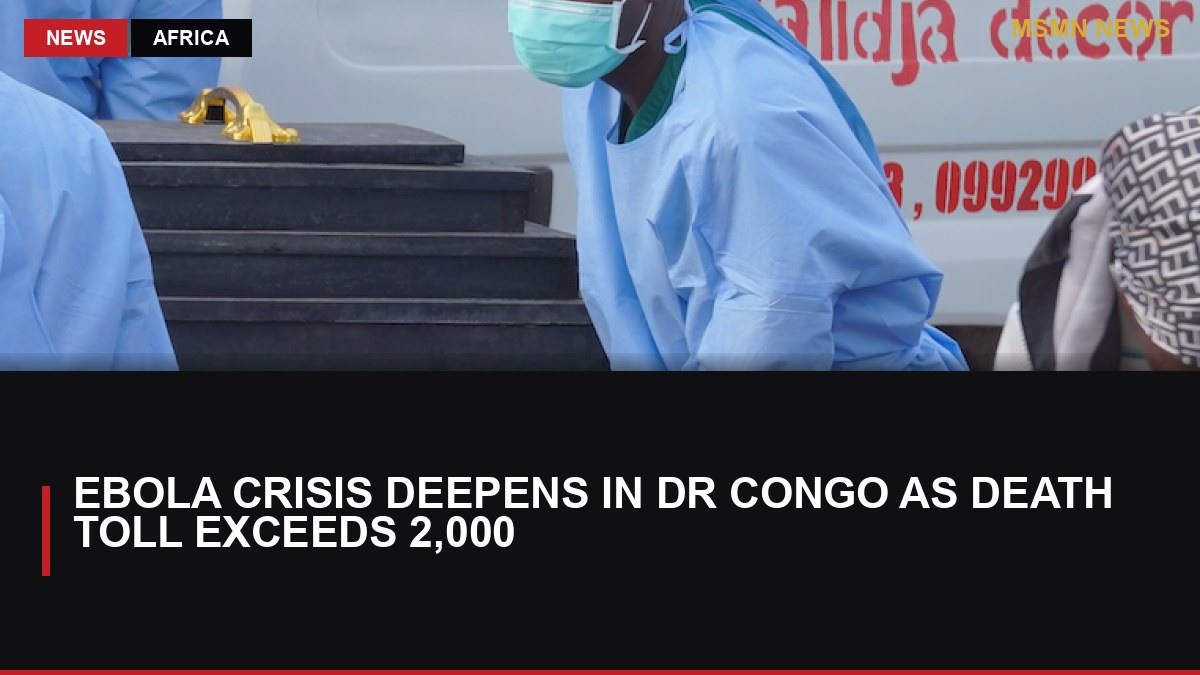
The Democratic Republic of the Congo faces a severe Ebola outbreak, with the death toll surpassing 2,000. Health officials warn of escalating cases and urgent need for international assistance.
- Magnitude 5.7 Earthquake Strikes Indonesia: MSMN News
- Andrew Coscoran Secures Bronze in 1500m at European Championships: MSMN News
- Police Conduct Unique Stakeout to Catch Illegal Racers: MSMN News
- Four paintings by Renaissance artist stolen from Italian museum: MSMN News
- New High Bond Rate Announced: MSMN News
The Democratic Republic of the Congo (DRC) is grappling with a devastating Ebola outbreak that has claimed over 2,000 lives, marking a grim chapter in the nation’s ongoing battle against this deadly virus. The outbreak, which began several months ago, has seen a rapid escalation in cases, prompting urgent calls for international assistance and a reassessment of containment strategies. Health officials report that the situation is becoming increasingly dire, with new cases emerging daily across various provinces.
The DRC has a long history of Ebola outbreaks, but the current crisis is particularly alarming due to its scale and the speed at which the virus is spreading. The World Health Organization (WHO) has issued warnings that the outbreak could escalate further if immediate action is not taken to curb transmission. Efforts to contain the virus have been hampered by a combination of factors, including inadequate healthcare infrastructure, widespread misinformation, and resistance from some communities.
In the past few weeks, health authorities have reported clusters of new infections in areas that were previously considered under control. This resurgence has raised concerns among public health experts, who fear that the virus could spread even more widely if not contained quickly. Many of the recent cases have been traced back to traditional burial practices and community gatherings, which have historically been linked to the transmission of the virus. These cultural practices, while deeply rooted in the communities, pose significant challenges for health officials attempting to implement effective control measures.
The DRC’s health system, already strained by years of conflict and underfunding, is struggling to cope with the influx of patients. Hospitals in affected regions are overwhelmed, and medical supplies are running low. The government has been working closely with international partners to bolster the response, but logistical challenges remain a significant hurdle. Health workers are facing not only the physical toll of treating patients but also the psychological burden of witnessing the loss of life on such a large scale.
In response to the outbreak, the WHO has deployed additional personnel and resources to support the DRC’s health ministry. Vaccination campaigns have been ramped up, with efforts to immunize frontline health workers and those who have come into contact with confirmed cases. However, vaccine hesitancy in some communities poses an additional challenge. Many residents are skeptical about the efficacy of vaccines, fueled in part by misinformation circulating on social media platforms.
As the death toll continues to rise, the DRC’s government is under increasing pressure to take decisive action. Local leaders are advocating for more resources to be allocated to health services, as well as increased public education campaigns to combat misinformation. The challenge lies not only in providing immediate medical care but also in fostering trust within communities that have historically been wary of government interventions.
The international community is watching closely, with many organizations poised to offer assistance. Humanitarian groups are mobilizing to provide support, but the security situation in some regions complicates their efforts. Access to remote areas is often limited, and ongoing conflict in parts of the country hinders the delivery of essential services.
The DRC’s experience with previous Ebola outbreaks has highlighted the importance of swift and coordinated responses. Lessons learned from past crises underscore the need for comprehensive strategies that address not only the medical aspects of the outbreak but also the social and cultural dynamics at play. Public health officials emphasize that engaging local communities in the response efforts is crucial for success, as trust and cooperation can significantly enhance the effectiveness of containment measures.
As the situation continues to evolve, health experts are urging the DRC and its partners to remain vigilant. The potential for the virus to spread beyond its current borders is a constant concern, particularly given the interconnectedness of the region. Neighboring countries are on high alert, implementing their own surveillance measures to detect any signs of the virus crossing into their territories.
In the coming weeks, the DRC will likely face critical decisions regarding its response to the outbreak. With the death toll surpassing 2,000, the urgency for action is palpable. The government’s ability to coordinate an effective response will be tested, as will the resilience of the communities affected by this tragic epidemic. The hope is that through collaboration, education, and support, the tide can be turned against this relentless virus.
For now, the people of the DRC continue to endure the heartbreaking consequences of the outbreak, with families mourning the loss of loved ones and communities grappling with fear and uncertainty. The fight against Ebola is far from over, and as the nation confronts this latest challenge, the world watches and waits, hoping for a breakthrough that will bring an end to this devastating chapter in the DRC’s history.
The DRC's long-standing struggle with Ebola has been marked by several outbreaks since the virus was first identified in 1976 near the Ebola River, from which it derives its name. The nation has faced numerous public health crises, with Ebola being one of the most persistent threats. Each outbreak has presented unique challenges, but the current situation is compounded by factors such as political instability, economic challenges, and the ongoing effects of armed conflict in various regions.
In the past, the DRC has seen successful containment efforts, but these have often relied on a combination of international support and local engagement. The current outbreak, however, has highlighted the fragility of the healthcare system, which has been further strained by the COVID-19 pandemic. Hospitals are not only dealing with Ebola patients but also the residual effects of COVID-19, including a backlog of non-Ebola-related medical cases that have been neglected during the pandemic.
As the DRC government faces mounting pressure, it is crucial to enhance collaboration with international health organizations and NGOs. This collaboration is essential not just for immediate medical interventions, but also for long-term strategies to strengthen the healthcare infrastructure. Experts suggest that investing in community health initiatives, improving access to healthcare, and fostering public trust in medical institutions are vital steps to prevent future outbreaks.
The WHO has emphasized the importance of rapid response teams in containing outbreaks, and their presence in the DRC is a critical component of the current response strategy. These teams are tasked with identifying and isolating cases, conducting contact tracing, and educating communities about safe practices to reduce transmission. However, their effectiveness is heavily reliant on local cooperation, which has been inconsistent due to cultural beliefs and mistrust of external interventions.
As the situation develops, public health officials are also concerned about the potential for the virus to mutate. The longer the outbreak continues, the greater the risk that the virus could evolve in ways that make it more transmissible or resistant to vaccines. This underscores the urgency of the current response and the need for ongoing surveillance and research.
In conclusion, the DRC's battle against Ebola is far from over, and the international community must remain engaged. The lessons learned from this outbreak will be crucial for future responses, not only in the DRC but also in other regions vulnerable to similar public health threats. As the world watches, the hope remains that through coordinated efforts, education, and resilience, the tide can be turned against this relentless virus, bringing an end to this tragic chapter in the DRC's history.
Source / Reference
Reporting by MSMN News, based on publicly available source material.
Source: Al Jazeera English
Reference link: https://www.aljazeera.com/video/newsfeed/2026/8/11/dr-congo-ebola-death-toll-surpasses-2000?traffic_source=rss
Recommended products
 -55%
-55%

 Editor's choice
Affiliate disclosure: MSMN may earn from qualifying purchases. Prices and availability may change.


Comments