
Haiti's Upcoming Elections Face Uncertainty Amid Gang Violence: MSMN News
Follow MSMN
Official channels from Martins Studio Media Network.
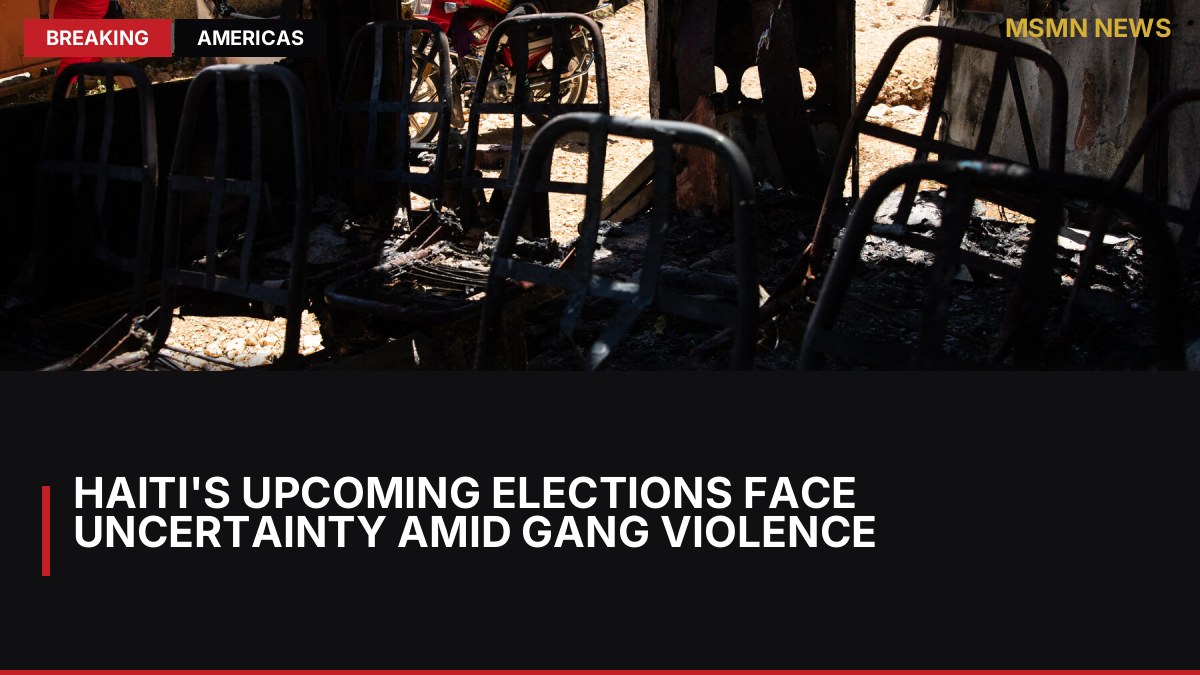
As Haiti prepares for elections on December 13, the pervasive threat of gang violence raises serious questions about the feasibility of a safe electoral process.
- Investigation Launched into Violent Incidents at Torino Minimarket: MSMN News
- Gloria Steinem, Icon of American Feminism, Passes Away at 92: MSMN News
- Meloni Government Approaches Milestone of Longevity, Celebrating with Festivities: MSMN News
- Celebrating a Century of Cinematic Brilliance: The Legacy of Buster Keaton's 'The General': MSMN News
- Australia Tightens Regulations on Crypto Businesses Ahead of October Deadline: MSMN News
Haiti is bracing itself for a pivotal moment in its political history as the country gears up for elections scheduled for December 13. However, the looming threat of extreme Gang Violence casts a shadow over the electoral process, leaving many experts questioning whether these elections can take place as planned. The situation is dire; with gangs controlling significant portions of the capital, Port-au-Prince, the stakes have never been higher for the Haitian people, who are yearning for stability and governance amidst chaos.
The Haitian government, along with election officials, has been adamant about proceeding with the elections, viewing them as a crucial step towards restoring democratic order after years of Political Instability and social unrest. Yet, the reality on the ground tells a different story. With gangs increasingly asserting their dominance in urban areas, the ability of citizens to cast their votes safely and freely is in serious jeopardy. Recent reports indicate that gang-related violence has surged, with armed groups engaging in brutal confrontations, kidnapping, and extortion, further complicating an already fragile situation.
The backdrop of this electoral crisis is deeply rooted in Haiti's tumultuous history. The nation has long struggled with political corruption, weak institutions, and economic hardship. The assassination of President Jovenel Moïse in July 2021 plunged the country into further instability, leading to a power vacuum that gangs have exploited. In the absence of a strong central authority, these groups have not only expanded their territorial control but also wield significant influence over local populations, often dictating daily life and governance in their areas.
As the election date approaches, the international community has expressed growing concern over the implications of gang violence on the electoral process. Various organizations, including the United Nations, have called for urgent measures to ensure a safe and fair voting environment. However, calls for intervention have met with skepticism, as previous attempts at international involvement in Haiti have often resulted in mixed outcomes. Many Haitians remain wary of foreign interventions, fearing that they may not address the root causes of the violence or may even exacerbate existing tensions.
In the lead-up to the Elections, the Haitian National Police have ramped up efforts to restore order, yet their capabilities are severely limited. The police force is under-resourced and often outgunned by the heavily armed gangs. This power imbalance raises serious questions about the feasibility of securing polling places and ensuring the safety of voters on election day. Local communities are caught in a web of fear and uncertainty, with many residents expressing doubt about whether they will even be able to participate in the elections safely.
Moreover, the political landscape itself is fraught with challenges. The lack of credible candidates and political parties has left many voters disillusioned. In a country where trust in governance is already at a historic low, the prospect of elections seems to offer little hope for meaningful change. The absence of a robust electoral framework and the pervasive influence of gangs further complicate the situation, leading many to question whether the elections will be a genuine reflection of the will of the people or merely a facade.
The implications of postponing the elections are profound. Many fear that delaying the electoral process could lead to further entrenchment of gang power, as the absence of legitimate governance may allow these groups to operate with impunity. The potential for increased violence and instability could also deter international aid and investment, exacerbating Haiti's dire humanitarian situation. With the country already facing significant challenges, including food insecurity and economic decline, the stakes could not be higher for the Haitian people.
In response to the escalating violence, some civil society groups have begun to mobilize, advocating for community safety and urging citizens to demand their right to vote. These grassroots movements highlight the resilience of the Haitian people and their desire for change, even in the face of overwhelming odds. However, the effectiveness of these efforts remains to be seen, as the power of armed gangs continues to overshadow the voices of ordinary citizens.
As December 13 approaches, the world watches closely, hoping for a peaceful resolution to this crisis. The outcome of these elections could shape the future of Haiti for years to come, either paving the way for a return to democratic governance or plunging the nation deeper into chaos. The situation remains fluid, and while officials remain committed to holding elections, the realities on the ground suggest that the road ahead is fraught with challenges.
In the coming weeks, it will be crucial for both national and international stakeholders to work collaboratively to address the security concerns and create a conducive environment for elections. Engaging local communities and strengthening the police force are essential steps toward achieving a semblance of order. However, without a comprehensive strategy addressing the underlying issues of gang violence and political corruption, the prospects for a successful electoral process remain bleak. The Haitian people deserve a chance to exercise their democratic rights in a safe and secure environment, but whether that will be possible in December remains uncertain. The world can only hope that the resilience of the Haitian spirit will prevail against the tide of violence that threatens to engulf the nation once more.
In addition to the immediate concerns surrounding safety and security, the electoral process is also complicated by the historical context of Haiti's political landscape. The country has experienced a series of coups and political upheavals since its independence in 1804, leading to a pervasive culture of distrust towards political institutions. Many citizens have grown disillusioned with the political class, viewing them as self-serving and disconnected from the realities faced by ordinary Haitians. This sentiment is compounded by the fact that many political parties lack clear platforms or viable candidates, leaving voters with little choice come election day.
Furthermore, the current gang violence is not a new phenomenon but rather a culmination of years of systemic issues, including poverty, unemployment, and lack of access to education. These factors have contributed to the rise of gangs as alternative power structures, often providing protection and resources to communities that feel abandoned by the state. As such, the upcoming elections represent not only a test of Haiti's democratic processes but also a reflection of the broader social and economic issues that must be addressed to create a more stable and just society.
Looking ahead, observers will be keen to see how the government and electoral authorities respond to the challenges posed by gang violence. There is a pressing need for a multi-faceted approach that goes beyond merely securing polling places. This includes investing in community development, addressing the root causes of violence, and fostering dialogue between rival gangs and the government. Without a comprehensive strategy that encompasses both immediate security concerns and long-term socio-economic solutions, the elections may not only fail to bring about the desired change but could also exacerbate the existing crises.
In conclusion, the upcoming elections in Haiti are shrouded in uncertainty, with the threat of gang violence looming large. While the government remains committed to proceeding with the electoral process, the realities on the ground present significant obstacles that must be addressed. The situation calls for urgent action from both national and international stakeholders to ensure that the voices of the Haitian people are heard and that their democratic rights are upheld amidst the chaos. The world watches with bated breath, hoping for a peaceful resolution that could pave the way for a brighter future for Haiti.
Source / Reference
Reporting by MSMN News, based on publicly available source material.
Source: NYT World
Reference link: https://www.nytimes.com/2026/09/03/world/americas/haiti-election-gangs.html
Recommended products



Affiliate disclosure: MSMN may earn from qualifying purchases. Prices and availability may change.





Comments