
Iran Maintains Stance on Strait of Hormuz Conditions Amid Pakistan's Diplomatic Efforts: MSMN News
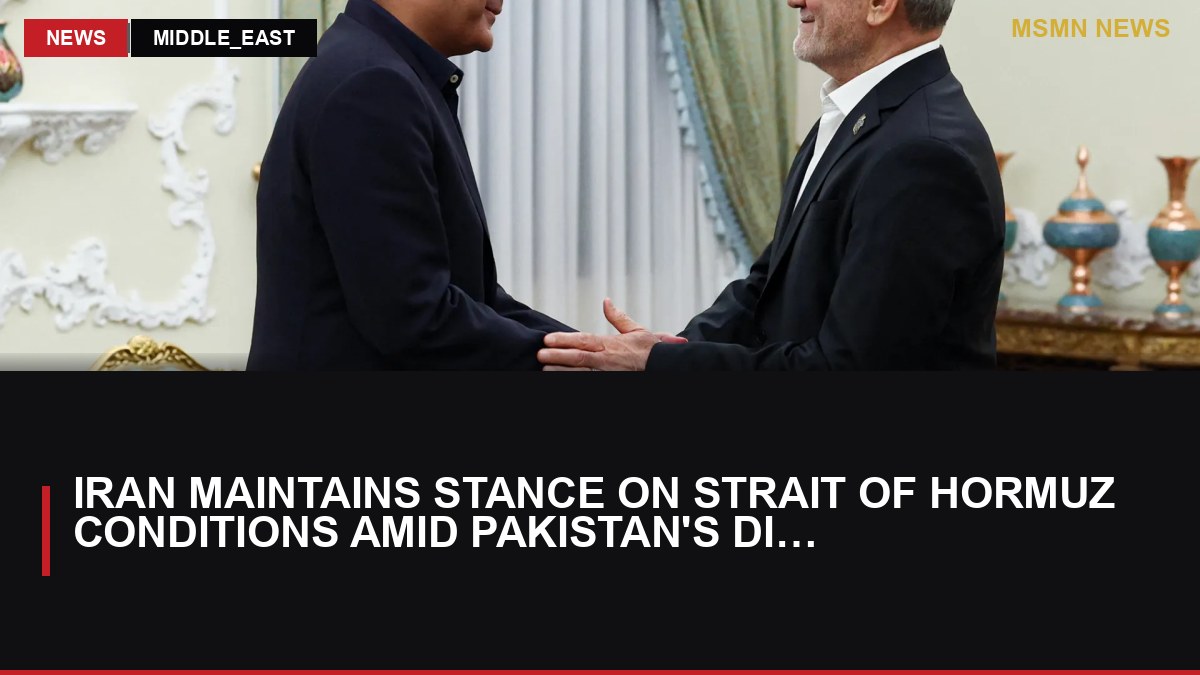
Iran has reiterated its firm stance regarding the Strait of Hormuz, asserting that it will not reopen the vital waterway unless the United States complies with specific demands. This declaration comes as Pakistan's Foreign Minister, Hina Rabbani Khar Naqvi, embarks on a diplomatic mission to Tehran aimed at addressing the escalating tensions in the region.
- Proposed Compromises from Law Society Seek Resolution to Criminal Legal Aid Dispute: MSMN News
- Two Men Remanded in Custody Following Allegations of Rape at Galway Train Station: MSMN News
- Michael Alfonso Secures Victory in Wisconsin GOP House Primary: MSMN News
- Minnesota's Primary Elections Set to Showcase Party Divides: MSMN News
- Escalating Tensions in the West Bank: Israeli Raids and Demolitions Continue Amid UN Warnings: MSMN News
In a significant development that underscores the tense geopolitical dynamics of the Middle East, Iran has reiterated its firm stance regarding the Strait of Hormuz, asserting that it will not reopen the vital waterway unless the United States complies with specific demands. This declaration comes as Pakistan's Foreign Minister, Hina Rabbani Khar Naqvi, embarks on a diplomatic mission to Tehran aimed at addressing the escalating tensions in the region. The Strait of Hormuz, a critical maritime passage for global oil shipments, has become a focal point of contention, with Iran's conditions potentially impacting international energy markets and security protocols.
The backdrop to this situation is a complex tapestry of historical grievances, military posturing, and economic pressures. The Strait of Hormuz, which connects the Persian Gulf with the Gulf of Oman, is one of the world's most strategically significant waterways, with approximately 20% of the global oil supply transiting through its narrow channels. Iran's control over this chokepoint has made it a pivotal player in regional security discussions, especially as tensions between Tehran and Washington have escalated in recent years.
During her visit, Naqvi engaged in high-level discussions with Iranian officials, seeking to mediate a path forward amid the rising stakes in the region. The Pakistani government has long advocated for stability in the Gulf, recognizing that any disruption in the Strait of Hormuz could have dire implications not just for Iran and the Gulf states, but also for global economies that rely heavily on oil imports. Naqvi's visit signals Pakistan's willingness to play a role in easing tensions, a move that reflects its strategic interests in maintaining cordial relations with both Iran and the United States.
Iran's Chief of Staff of the Armed Forces, Major General Mohammad Bagheri, articulated Tehran's unwavering position, emphasizing that the reopening of the Strait hinges on the fulfillment of Iran's conditions by the U.S. This includes demands related to sanctions, military presence in the region, and broader geopolitical negotiations. The Iranian leadership views these stipulations as essential to safeguarding its national interests and regional influence.
The U.S. has maintained a significant military presence in the Persian Gulf, ostensibly to ensure the free flow of commerce and to deter Iranian aggression. Recent months have seen heightened tensions, marked by confrontational naval encounters and aggressive rhetoric from both sides. Iran's threats to disrupt shipping in the Strait of Hormuz have prompted the U.S. and its allies to bolster their naval operations in the area, further complicating the security landscape.
Naqvi's diplomatic overtures come at a time when Pakistan is navigating its own challenges, including economic pressures and security concerns stemming from regional instability. By positioning itself as a mediator, Pakistan aims to enhance its diplomatic standing while also securing its energy supply routes, which could be jeopardized by any escalation in the Strait. The potential for a conflict in this crucial maritime corridor could have ripple effects across the region, impacting not only Iran and the U.S. but also other neighboring countries and global markets.
Public sentiment in Iran regarding the U.S. presence in the Gulf remains largely negative, with many citizens viewing it as a direct threat to their sovereignty. The Iranian government has leveraged this sentiment to bolster its domestic support, framing its military posturing as a defensive measure against foreign aggression. As such, any concessions made by Tehran are likely to be met with significant political backlash at home, complicating the likelihood of a diplomatic resolution.
The international community is closely monitoring these developments, as the potential for conflict in the Strait of Hormuz poses a serious threat to global energy security. Analysts warn that a miscalculation by either Iran or the United States could lead to a broader military confrontation, with far-reaching consequences for global markets and regional stability. This scenario raises concerns about the stability of oil prices and the security of energy supplies, particularly for countries heavily reliant on oil imports.
As Naqvi returns to Pakistan, the outcome of her discussions in Tehran remains uncertain. While her visit reflects a proactive diplomatic approach, the entrenched positions of both Iran and the U.S. present formidable obstacles to any meaningful progress. The situation calls for a delicate balancing act, not only for Pakistan but also for other nations invested in the stability of the Gulf region. The stakes are high, as any misstep could lead to a rapid escalation of tensions, potentially drawing in other regional players and complicating the geopolitical landscape.
Looking ahead, the timeline for resolving the tensions surrounding the Strait of Hormuz is unclear. Iran's steadfast conditions serve as a reminder of the complexities involved in Middle Eastern Diplomacy, where historical grievances and national pride often complicate negotiations. The U.S. response to Iran's demands will be critical in shaping the future of the Strait and its implications for global oil supplies. As the situation evolves, observers will be watching closely to see how the U.S. administration chooses to navigate these demands and whether it will engage in further diplomatic efforts or maintain its current military posture.
In conclusion, the ongoing developments in the Strait of Hormuz, coupled with Pakistan's diplomatic engagement, highlight the intricate web of relationships and tensions that characterize the region. As the world watches closely, the stakes remain high, with the potential for both conflict and cooperation hanging in the balance. The next steps taken by the involved parties will be crucial in determining the future of this vital maritime corridor and the broader geopolitical landscape of the Middle East. The potential for a negotiated settlement remains, but it will require significant political will and compromise from all sides to avert a crisis that could have disastrous consequences for the region and beyond.
Source / Reference
Reporting by MSMN News, based on publicly available source material.
Source: Al Jazeera English
Reference link: https://www.aljazeera.com/news/2026/8/12/iran-holds-firm-on-hormuz-conditions-as-pakistans-naqvi-visits-tehran?traffic_source=rss
Recommended products
 -30%
-30%
 Editor's choice

Affiliate disclosure: MSMN may earn from qualifying purchases. Prices and availability may change.
Quick answers
What is this story about?
Which MSMN desk covers this?
What are the key developments?
Related Stories

Israeli strike on police post in north Gaza kills seven, officials say: MSMN News



Over 360,000 People Evacuated as Wildfires Sweep Through France and Spain: MSMN News
Comments