
Major-General Fawzi al-Mansouri Assassinated in Car Bomb Attack in Eastern Libya: MSMN News
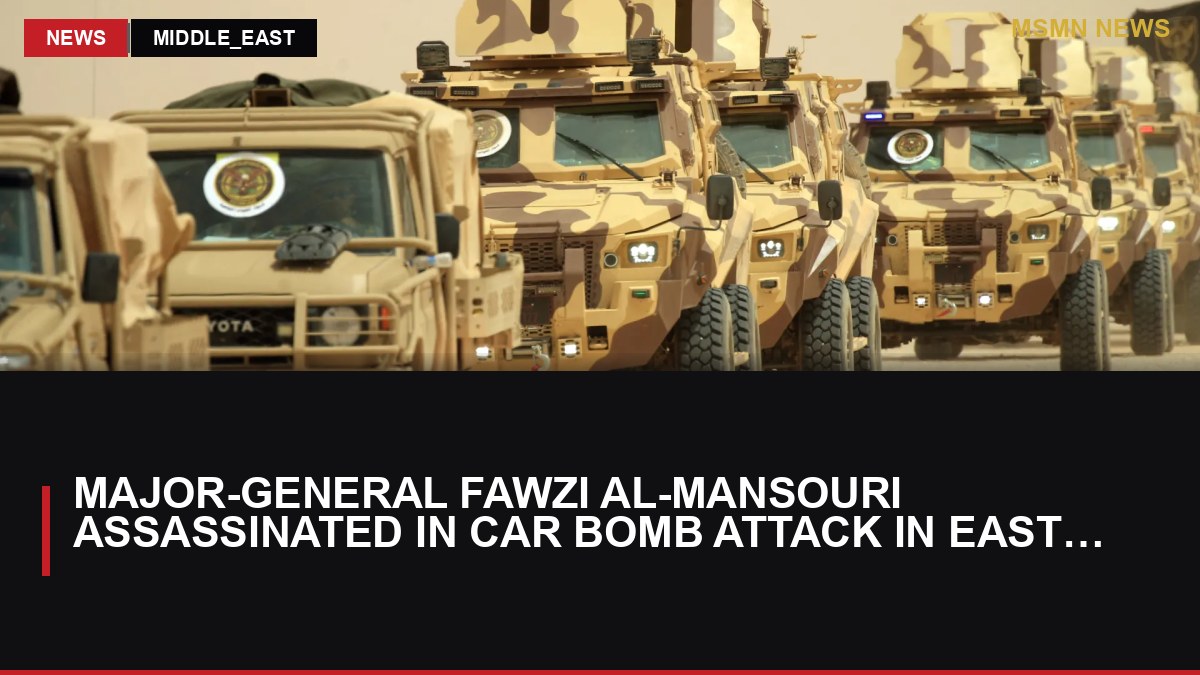
The assassination of Major-General Fawzi al-Mansouri, chief of military intelligence in eastern Libya, raises alarms over escalating violence and instability in the region.
In a shocking act of Violence that has reverberated across Libya, Major-General Fawzi al-Mansouri, the chief of military intelligence in the eastern part of the country, was killed in a car bomb explosion. The incident occurred in the city of Benghazi, a location that has been pivotal in Libya’s tumultuous political and military landscape since the 2011 uprising that toppled Muammar Gaddafi. Al-Mansouri’s death not only highlights the ongoing instability in the region but also raises questions about the effectiveness of security measures in place to protect key military figures amidst escalating violence.
The car bomb detonated as al-Mansouri's vehicle was traveling through a busy area, instantly claiming his life and injuring several bystanders. Eyewitnesses reported a powerful explosion that shattered windows and sent debris flying, leaving the scene in chaos. Emergency services rushed to the site to assist the injured and secure the area, but the damage was already done. This brutal Assassination marks a significant escalation in the conflict that has engulfed Libya, particularly in the eastern regions where power struggles continue to unfold.
In the aftermath of the bombing, the Prime Minister of the eastern Libyan government, which operates independently from the UN-backed administration in Tripoli, expressed outrage over the attack. He condemned the assassination, calling it a cowardly act that undermines the efforts to stabilize the region. The Prime Minister's statement reflects a broader concern among Libyan officials regarding the threats posed by armed groups and the pervasive culture of violence that has persisted since the civil war.
Major-General al-Mansouri was known for his role in the military intelligence community and was seen as a key figure in the eastern government’s efforts to consolidate power and combat rival factions. His assassination is likely to send shockwaves through the ranks of the military and could lead to increased tensions among various armed groups vying for control in the region. The eastern government has been engaged in an ongoing struggle against various militias and rival factions, which has made the security situation increasingly precarious.
The killing of such a high-profile military leader raises several pressing questions about the future of security in Libya. With a history of political assassinations and violent reprisals, the potential for further unrest looms large. Analysts fear that al-Mansouri's death may lead to retaliatory attacks against rival factions, escalating the cycle of violence that has plagued the country for years. The incident underscores the fragility of the security landscape in Libya, where local militias often operate with impunity, complicating efforts to establish a unified and stable government.
Moreover, the international community has been closely monitoring developments in Libya, particularly as the country approaches critical elections aimed at restoring a semblance of normalcy after years of conflict. The assassination of a military leader of al-Mansouri’s stature could derail any progress made towards these elections, as fears of violence and instability may deter voter participation and undermine the legitimacy of the electoral process. Observers note that without a secure environment, the prospects for a peaceful transition of power remain dim.
The attack has also drawn condemnation from various political factions within Libya. Many leaders have called for unity against the backdrop of this senseless violence, urging all parties to come together to address the security crisis that has gripped the nation. However, the reality on the ground is often marred by deep-seated divisions and mistrust among rival factions, making meaningful dialogue and collaboration a daunting challenge.
In the wake of this tragedy, security forces in eastern Libya are expected to intensify their operations, though the effectiveness of such measures remains uncertain. The government has vowed to bring those responsible for the bombing to justice, but similar promises have been made in the past with little to show for it. The challenge of dismantling entrenched networks of violence and ensuring the safety of military and political leaders is a task that has proven to be overwhelming for the current administration.
As the investigation into the assassination unfolds, many will be watching closely to see how the government responds. The potential for further violence looms large, and the risk of retaliatory strikes from al-Mansouri’s supporters against rival factions could ignite a new wave of conflict. The already fragile peace in Libya hangs by a thread, and the repercussions of this assassination may be felt far beyond the borders of Benghazi.
As Libya continues to navigate its complex political landscape, the international community remains engaged, albeit cautiously. Diplomatic efforts aimed at fostering dialogue between conflicting factions are ongoing, but the path to reconciliation is fraught with obstacles. The assassination of Major-General Fawzi al-Mansouri serves as a stark reminder of the challenges that lie ahead for Libya as it seeks to break free from the cycle of violence and instability that has defined its recent history.
The implications of this assassination extend beyond immediate security concerns. It raises critical questions about the future of governance in eastern Libya and the role of military leaders in shaping the political landscape. Al-Mansouri was not only a military figure but also a symbol of the eastern government’s attempts to assert control over a region rife with competing interests. His loss could create a power vacuum that rival factions may seek to exploit, further complicating the already volatile situation.
The broader geopolitical context cannot be ignored either. Libya's ongoing strife has attracted the attention of various external powers, each with their own interests and agendas. The assassination of a key military leader may provoke reactions from these external actors, potentially leading to increased foreign involvement in Libya’s internal affairs. This could further exacerbate the conflict and hinder efforts to achieve a lasting peace.
In conclusion, the killing of al-Mansouri is not just a tragic loss for his family and colleagues; it is a significant event that could alter the course of Libya’s political future. The ramifications of this act of violence will likely be felt for years to come as the country grapples with its ongoing struggle for peace and stability in a region where the specter of violence remains ever-present. As local and international actors assess the situation, they must consider the broader implications of this assassination, including its potential to exacerbate existing tensions and hinder efforts toward a peaceful resolution of Libya's protracted crises. The coming days and weeks will be crucial in determining whether this tragic event leads to further escalation or if it can serve as a catalyst for renewed dialogue and cooperation among Libya's fragmented political factions.
Source / Reference
Reporting by MSMN News, based on publicly available source material.
Source: Al Jazeera English
Reference link: https://www.aljazeera.com/news/2026/8/11/east-libya-military-intelligence-chief-killed-in-car-bomb?traffic_source=rss
Recommended products

 Editor's choice

OnBuy EU
Architektoniczny ROUTER ROUTER ZESTAW ROUTER ROUTER NEWDELI 1/2 RAITER RAITER KNOKTURACJA ROOTER ROUTER ROUTER ROUTER ROUTER BIT DO ZAWRUT
Approx. PLN 255.77 Final price on merchant site
Affiliate disclosure: MSMN may earn from qualifying purchases. Prices and availability may change.




Comments