
Russia Excludes Opposition Party from Parliamentary Vote Amid War Tensions: MSMN News
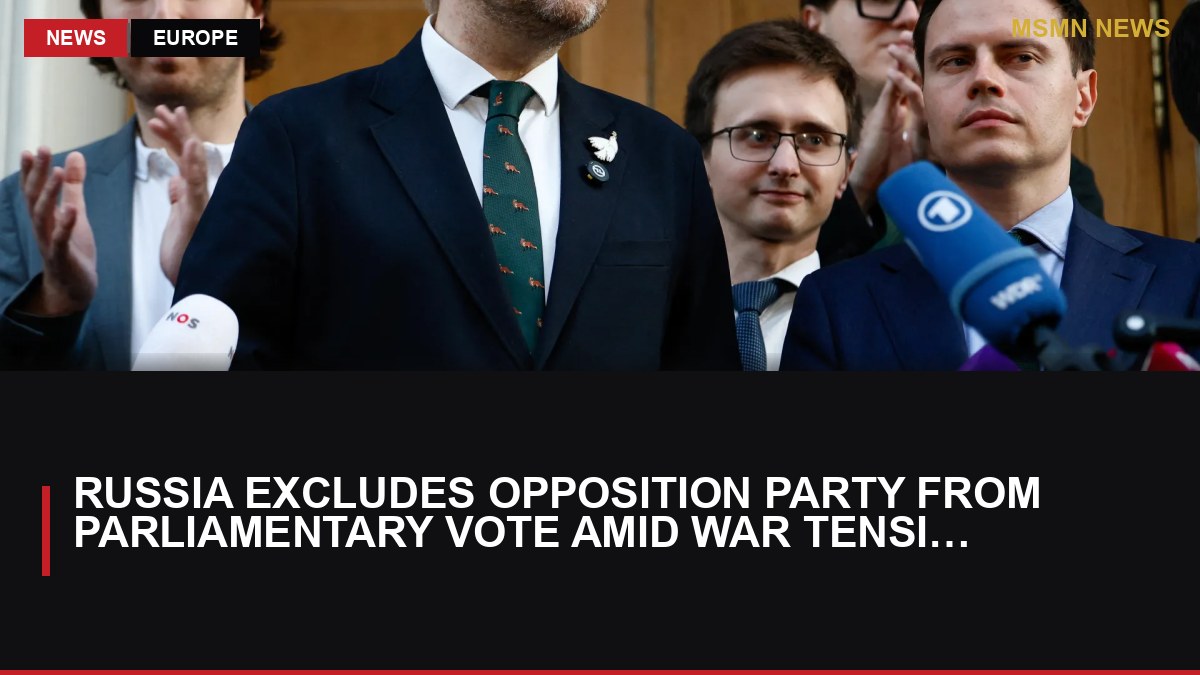
In a significant move reflecting the Kremlin's crackdown on dissent, the Yabloko party, the only political entity opposing the war in Ukraine, has been barred from the upcoming parliamentary elections. This decision raises serious concerns about the future of democracy in Russia.
- Meet Jinny Lu, the World’s Ugliest Dog of 2026: MSMN News
- Democrats Make South Carolina the First Contest in 2028 Presidential Primary Calendar: MSMN News
- After 43 Years, Diane Chambers' Best Cheers Line Is Still A True Sitcom Classic: MSMN News
- Hannah Einbinder Aims to Retain Emmy Title Amidst Strong Competition: MSMN News
- Moroccan police arrest more than 100 people as they attempt to enter Ceuta: MSMN News
In a striking move that underscores the growing suppression of dissent in Russia, authorities have announced that the Yabloko party, the sole political entity that has vocally opposed the ongoing war in Ukraine, will be excluded from the upcoming parliamentary Elections. This decision has been met with widespread condemnation from political analysts and activists alike, who view it as a blatant effort to stifle opposition voices and consolidate power within the Kremlin. The ruling comes amid an increasingly tense atmosphere, where any dissent against the government's military actions is swiftly quashed.
The announcement was made public by various Russian media outlets, following accusations from the pro-Kremlin nationalist party Rodina. Rodina claimed that Yabloko had received undeclared campaign support, a serious allegation in a political environment already fraught with suspicion and scrutiny. This accusation appears to be part of a broader strategy to delegitimize Yabloko, which has long been critical of the government’s military strategy and advocated for a peaceful resolution to the conflict in Ukraine.
As tensions escalate in Ukraine, the Kremlin's actions reflect a wider trend of tightening control over political discourse in Russia. The Yabloko party, founded in the early 1990s, has been a consistent voice for liberal democracy and human rights, standing in stark contrast to the increasingly authoritarian rule of President Vladimir Putin. Its exclusion from the parliamentary vote is not merely a tactical maneuver; it signifies a critical juncture in Russia's political landscape, where the space for opposition is rapidly diminishing.
The implications of this decision are profound. By sidelining Yabloko, the Kremlin is not only eliminating a vocal opponent but also sending a chilling message to other potential dissenters. Political analysts argue that this could lead to increased repression of civil society and further erosion of democratic norms in Russia. The absence of Yabloko in the elections means that voters will have fewer choices, reinforcing the dominance of pro-government parties that support the Kremlin's aggressive foreign policy.
This latest development comes on the heels of heightened military activity in Ukraine, where the conflict has resulted in significant casualties and displacement. The war, which began in 2022, has polarized opinions within Russia, with many citizens expressing fatigue over the prolonged conflict. However, the government has maintained a tight grip on the narrative, framing the war as a necessary defense against Western aggression. In this context, the elimination of Yabloko from the electoral process is seen as a strategic move to prevent any dissenting views from gaining traction.
The political climate in Russia has been further complicated by recent legislative changes that have made it increasingly difficult for opposition parties to operate freely. New laws have imposed stringent regulations on campaign financing and public demonstrations, effectively curtailing the ability of groups like Yabloko to mobilize support. The Kremlin's crackdown on dissent has intensified since the start of the war, with numerous activists and opposition leaders facing harassment, arrest, or exile.
In response to the barring of Yabloko, international observers and human rights organizations have expressed alarm. Many see this as part of a broader trend of Authoritarianism in Russia, where the government is willing to go to great lengths to silence any opposition. The exclusion of Yabloko raises fundamental questions about the future of democracy in Russia and the ability of citizens to express dissenting opinions without fear of retribution.
Public reaction to the news has been mixed. While some citizens support the Kremlin's actions, viewing them as necessary for national unity, others are increasingly disillusioned by the lack of political alternatives. The atmosphere of fear and repression has led many to disengage from the political process altogether, a trend that could have long-term implications for civic engagement in Russia. The absence of a credible opposition party like Yabloko could lead to a further entrenchment of authoritarian rule, as citizens feel they have no viable means of influencing government policy.
Looking ahead, the implications of Yabloko's exclusion from the parliamentary vote will likely reverberate throughout Russian society. As the war in Ukraine continues to unfold, the Kremlin may feel emboldened to pursue its military objectives without the constraints of political opposition. This could lead to a further escalation of hostilities, both in Ukraine and in the broader geopolitical landscape.
The future of political opposition in Russia hangs in the balance as the country approaches the parliamentary elections. With Yabloko barred from participating, the remaining political landscape is likely to be dominated by parties that align closely with the Kremlin, further entrenching the current regime's power. The international community will be watching closely, as the exclusion of Yabloko raises critical concerns about the state of democracy and human rights in Russia, particularly as the country grapples with the consequences of its actions in Ukraine.
As the situation develops, the need for a unified response from the international community becomes increasingly urgent. The exclusion of Yabloko from the electoral process is not just a national issue; it has implications for global democracy and the international order. Observers are urging foreign governments and organizations to take a stand against the Kremlin's repressive tactics and to support the fundamental rights of the Russian people to engage freely in political discourse.
In summary, the barring of the Yabloko party from the parliamentary elections marks a significant moment in Russia's political trajectory. As the country continues to navigate the complexities of war and governance, the absence of a legitimate opposition raises alarms about the future of democracy and the potential for increased authoritarianism. With the Kremlin tightening its grip, the path forward for Russian citizens seeking change remains fraught with challenges, underscoring the critical need for vigilance and support from the global community.
This situation is emblematic of a broader pattern of political suppression that has characterized Russia under Putin's leadership. The Yabloko party, with its long-standing commitment to democratic principles, has faced increasing challenges as the government has sought to eliminate any potential threats to its authority. The party's exclusion from the electoral process can be viewed as a culmination of years of escalating repression, where dissenting voices are systematically silenced.
In the wake of these developments, analysts are urging citizens and political activists to remain vigilant. The struggle for political representation and civil liberties in Russia is far from over. While the Kremlin may have succeeded in marginalizing Yabloko for now, the underlying discontent among the populace could eventually lead to calls for change. Observers are keenly aware that history has shown that repressive regimes often face significant challenges when public sentiment shifts.
As the international community grapples with its response to Russia's actions, the exclusion of Yabloko serves as a stark reminder of the fragility of democracy in the face of authoritarianism. It highlights the importance of solidarity among nations that value human rights and democratic governance. The coming months will be crucial, as the world watches how the situation unfolds in Russia and the potential ramifications for the broader geopolitical landscape.
Source / Reference
Reporting by MSMN News, based on publicly available source material.
Source: Al Jazeera English
Reference link: https://www.aljazeera.com/news/2026/8/10/russia-bars-only-party-opposing-war-in-ukraine-from-parliamentary-vote?traffic_source=rss
Recommended products
 -40%
-40%
 Editor's choice

Affiliate disclosure: MSMN may earn from qualifying purchases. Prices and availability may change.



Comments