
Trump Affirms Strong Ties with Netanyahu Amid Rejection of Gaza Peace Plan: MSMN News
Follow MSMN
Official channels from Martins Studio Media Network.
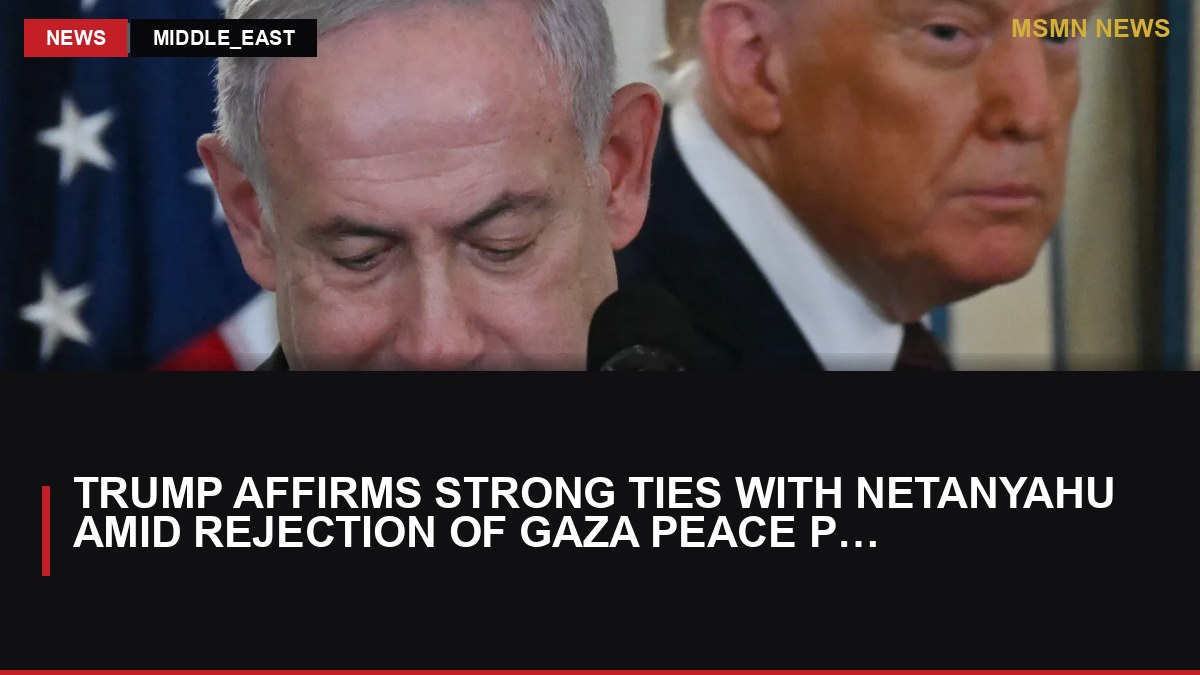
U.S. President Donald Trump has reiterated the strength of his relationship with Israeli Prime Minister Benjamin Netanyahu, despite Netanyahu's recent rejection of a proposed Gaza peace plan aimed at alleviating humanitarian crises.
- Sweden's ruling coalition trails in poll, but closes gap on centre-left opposition: MSMN News
- Terranigma Remaster Set for US Release: MSMN News
- New Fantasy Adventure Series 'The Librarians' Debuts on Prime Video: MSMN News
- The Simpsons Approaches a Fitting Conclusion: MSMN News
- Exploring the Best Horror Films of 1978: MSMN News
In a recent statement that has drawn attention amidst escalating tensions in the Middle East, U.S. President Donald Trump emphasized the strength of his relationship with Israeli Prime Minister Benjamin Netanyahu. This assertion comes at a time when Netanyahu has publicly dismissed a proposed peace plan for Gaza, raising questions about the future of U.S.-Israel relations and the ongoing conflict in the region. The backdrop of this development is significant; the peace plan, which aimed to ease the humanitarian crisis in Gaza, has been met with skepticism from Israeli leadership, complicating an already fraught situation.
The relationship between Trump and Netanyahu has historically been characterized by mutual support and shared interests, particularly regarding security and military cooperation. However, the recent rejection of the Gaza peace initiative by Netanyahu suggests a potential rift in their partnership, prompting analysts to speculate on the implications for U.S. foreign policy in the region. Trump stated that he remains optimistic about their ties, asserting that they have worked closely together on various issues, including Iran's nuclear threat and military aid to Israel.
The Gaza peace plan, which sought to provide a framework for addressing the ongoing humanitarian crisis in the region, was developed in the context of rising violence and deteriorating living conditions for Palestinians. The proposal aimed to facilitate negotiations aimed at establishing a sustainable ceasefire and improving infrastructure, but Netanyahu's swift dismissal of the plan has raised eyebrows among observers who are concerned about the prospects for peace. The Prime Minister's rejection is seen as a reflection of his government’s hardline stance, which prioritizes security concerns over diplomatic solutions.
Analysts point out that Netanyahu's decision to reject the peace plan may stem from internal political pressures, particularly as he faces challenges from right-wing factions within his government that oppose concessions to Palestinian groups. This internal dynamic complicates the already intricate web of Israeli politics and foreign relations, as Netanyahu balances the demands of his coalition partners with the expectations of international allies, including the United States.
Trump's comments underscore a crucial aspect of U.S. foreign policy: the unwavering support for Israel, regardless of the shifting political landscape. Historically, the U.S. has positioned itself as a key ally of Israel, providing substantial military and economic assistance. However, the current administration's approach has sparked debate about the effectiveness of traditional diplomatic strategies in resolving long-standing conflicts in the region. Critics argue that a more balanced approach is necessary to address the underlying issues that fuel the Israeli-Palestinian conflict, while proponents of Trump's policies assert that a strong stance against adversaries is essential for ensuring Israel's security.
The international community is closely monitoring the situation, particularly as humanitarian conditions in Gaza remain dire. The United Nations has repeatedly called for urgent action to address the humanitarian crisis, highlighting the need for a sustainable solution that considers the rights and needs of all parties involved. As tensions continue to escalate, the prospects for a peaceful resolution appear increasingly dim, raising concerns about the potential for further violence.
In light of Netanyahu's rejection of the peace plan and the ongoing humanitarian crisis in Gaza, many are left wondering what the next steps will be for both the Israeli government and the U.S. administration. Trump's insistence on a strong relationship with Netanyahu may reflect a commitment to maintaining the status quo, but it also raises questions about the effectiveness of this approach in fostering genuine dialogue and reconciliation. The U.S. has long positioned itself as a mediator in the Israeli-Palestinian conflict, but the current trajectory suggests that achieving lasting peace will require more than just affirmations of friendship between leaders.
As the situation unfolds, public reaction to Trump's remarks and Netanyahu's actions will likely play a significant role in shaping the future of U.S.-Israel relations. Many observers are concerned that the continued rejection of diplomatic initiatives could lead to increased tensions and violence in the region. The stakes are high, with both humanitarian and geopolitical implications hanging in the balance.
In the coming weeks, it will be crucial to watch how both the U.S. and Israeli governments respond to the ongoing challenges in Gaza and whether they will take meaningful steps towards addressing the humanitarian crisis. The international community's response will also be pivotal, as pressure mounts for a coordinated effort to bring about a resolution to the conflict. Trump's reaffirmation of his relationship with Netanyahu may provide a temporary sense of stability, but the underlying issues remain unresolved, and the path to peace appears more complex than ever.
As the dialogue continues, it is clear that the relationship between the U.S. and Israel will be tested in the face of mounting challenges. The rejection of the Gaza peace plan may signify a critical juncture in the ongoing struggle for peace, and the world will be watching closely to see how these developments unfold in the coming months. The stakes are not just political; they are deeply human, affecting millions of lives on both sides of the conflict. How leaders navigate this turbulent landscape will have profound implications for the future of the region and the prospects for lasting peace.
The peace plan itself was seen as an opportunity for renewed dialogue, aiming to establish a framework that could lead to a cessation of hostilities and a path toward a two-state solution. However, Netanyahu's dismissal raises questions about the viability of any future negotiations. Observers have noted that Netanyahu's government, which includes several hardline elements, may be unwilling to entertain any proposals that could be perceived as concessions to Palestinian factions.
The timing of Trump's comments is also noteworthy, as they come amidst a broader context of geopolitical shifts in the Middle East. The U.S. has been recalibrating its foreign policy approach, focusing on countering Iranian influence while maintaining its traditional alliances. Trump's close relationship with Netanyahu has been a cornerstone of this strategy, but the rejection of the peace plan could complicate these dynamics further.
Moreover, the humanitarian situation in Gaza continues to deteriorate, with reports of shortages in basic necessities such as food, water, and medical supplies. As international organizations call for urgent intervention, the potential for a humanitarian disaster looms large. The ongoing conflict has already resulted in significant loss of life and displacement, and the rejection of diplomatic efforts to address these issues may exacerbate the crisis.
As the international community grapples with these developments, the role of regional actors will also be critical. Countries such as Egypt and Jordan, which have historically played mediating roles in Israeli-Palestinian relations, may need to step up their efforts to facilitate dialogue. The Arab League and other regional organizations are likely to intensify their calls for a renewed focus on peace negotiations, emphasizing the need for a comprehensive approach that addresses the root causes of the conflict.
Looking ahead, the implications of Netanyahu's rejection of the peace plan are profound. It not only raises questions about the future of U.S.-Israel relations but also casts doubt on the prospects for a peaceful resolution to one of the world's most intractable conflicts. As the situation evolves, the international community's response will be crucial in shaping the trajectory of events in the region. The hope for a sustainable peace may hinge on the ability of leaders on all sides to prioritize dialogue over division, recognizing that the stakes are too high for continued inaction.
In conclusion, the relationship between Trump and Netanyahu remains a focal point in the complex landscape of Middle Eastern politics. While Trump expresses confidence in their partnership, the rejection of the Gaza peace plan signals challenges ahead. The coming weeks and months will be critical in determining whether meaningful steps can be taken toward alleviating the humanitarian crisis in Gaza and fostering a renewed commitment to peace. As the world watches, the need for a concerted effort to address the underlying issues of the Israeli-Palestinian conflict has never been more urgent.
Source / Reference
Reporting by MSMN News, based on publicly available source material.
Source: Al Jazeera English
Reference link: https://www.aljazeera.com/news/2026/8/10/trump-says-relationship-is-good-even-as-netanyahu-rejects-gaza-peace-plan?traffic_source=rss
Recommended products

 Editor's choice

Affiliate disclosure: MSMN may earn from qualifying purchases. Prices and availability may change.




Comments