
Trump Reveals Plane Switch After NATO Summit Due to Threat Concerns: MSMN News
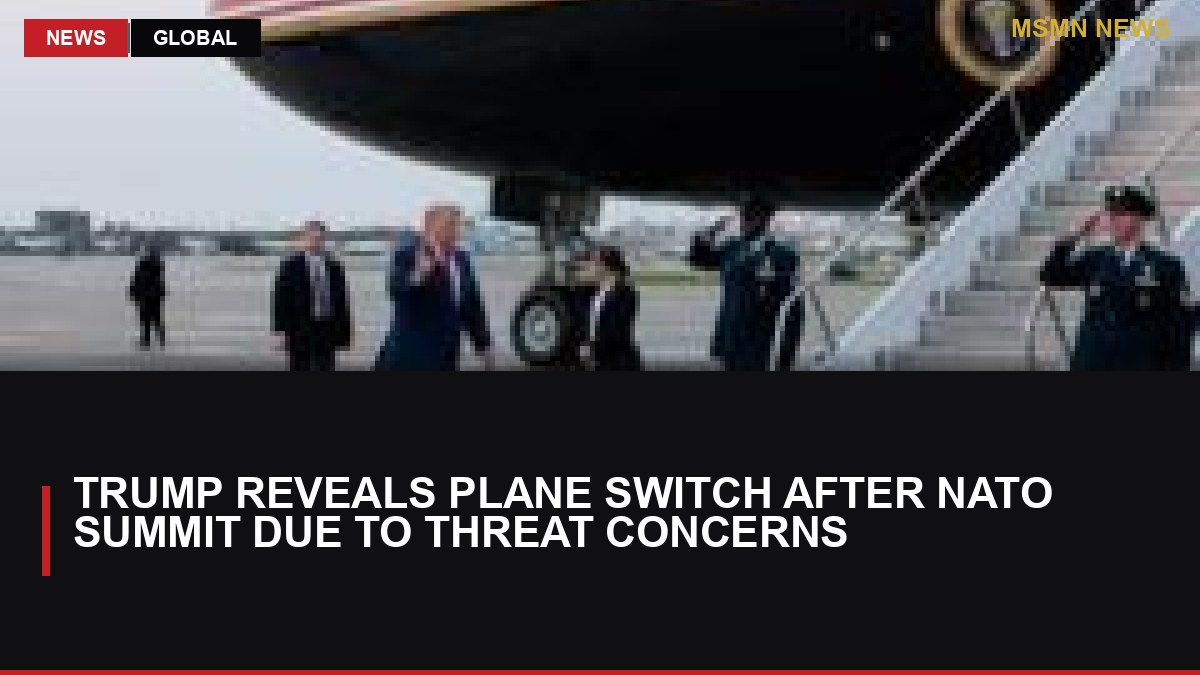
In a startling revelation, former President Donald Trump has shared details of his decision to switch planes following his attendance at the NATO summit, citing fears for his safety.
- Frank Stella and the wild freedom of postwar American artists in Saint-Etienne: MSMN News
- Tyland Lannister Makes a Comeback in Latest Game of Thrones Release: MSMN News
- The Vampire Diaries' 20 Major Differences Between The Books & The TV Show: MSMN News
- Trump Dismisses Concerns Over U.S.S. Abraham Lincoln Deployment: MSMN News
- Bangladesh Achieves Historic Test Victory Over Australia: MSMN News
In a startling revelation, former President Donald Trump has shared details of his decision to switch planes following his attendance at the NATO summit. Trump, who has long been known for his controversial statements and actions, indicated that his choice was driven by fears of a possible threat to his safety. This announcement comes at a time when Security protocols for high-profile politicians have come under scrutiny, particularly in the context of international gatherings where tensions can run high.
During a recent interview, Trump explained that after the NATO summit, he felt it necessary to alter his travel plans. He suggested that the aircraft he ultimately boarded was at a "greater risk" than the decoy version of Air Force One that had been previously arranged for his departure. This revelation raises questions about the security measures in place for leaders during such significant events, as well as the decision-making processes that guide their actions.
The NATO summit, held in Vilnius, Lithuania, was marked by discussions on key issues such as defense spending and the ongoing conflict in Ukraine. These discussions often provoke strong reactions from various political factions, not only within NATO member states but also from adversaries outside the alliance. Trump's comments shed light on the heightened atmosphere surrounding these gatherings, where the stakes are often perceived to be extraordinarily high.
Security experts have pointed out that the nature of international Diplomacy can sometimes lead to increased risks for leaders. The presence of multiple world leaders in one location can create a complex web of security challenges. Trump's decision to switch planes may reflect a broader concern for personal safety that many leaders face during such events. However, the former president's assertion that the alternative aircraft presented a greater risk than the decoy raises eyebrows and invites scrutiny from security analysts.
This incident has reignited discussions about the protocols surrounding the safety of heads of state. How are these decisions made, and what criteria are used to assess the risks associated with various travel options? In Trump's case, the implications of his choice could extend beyond his own safety, as they touch on the broader issues of public trust in security measures employed for high-profile government officials.
In light of Trump's claims, experts are calling for a comprehensive review of the security strategies used during international summits. While the Secret Service and other agencies work diligently to protect leaders, the dynamic nature of global politics means that threats can evolve rapidly. The complexity of these situations requires constant vigilance and adaptability, both of which are paramount when ensuring the safety of world leaders.
The former president's comments also highlight the often fraught relationship between personal perception of risk and the actual threats present in any given situation. Trump's decision to switch planes is a reflection of his instinctual response to perceived danger, a trait that has characterized his approach to leadership throughout his political career. His assertion that the alternate aircraft was more vulnerable than the decoy suggests a level of paranoia that may influence decision-making in high-pressure environments.
Public reaction to Trump's claims has been mixed. Supporters may see this as a justified precaution, reflecting a leader's instinct to protect himself in potentially dangerous situations. Critics, however, may argue that such a decision only serves to amplify fears unnecessarily, potentially undermining public confidence in the established safety protocols that are designed to protect heads of state.
Looking ahead, the implications of this incident could extend beyond the immediate narrative surrounding Trump. As International Relations continue to evolve, the need for effective and transparent security measures becomes increasingly apparent. The balance between protecting leaders and maintaining a sense of normalcy in diplomatic engagements is delicate, and it is essential that governments assess and adapt their strategies accordingly.
As the political landscape shifts, the former president's comments may serve as a catalyst for broader discussions about security in international diplomacy. How nations respond to perceived threats, and the measures they take to protect their leaders, will likely remain a topic of significant interest in the coming months. The scrutiny of Trump's actions and statements may also prompt other leaders to reevaluate their own security protocols, as the global community watches closely.
In the meantime, Trump's narrative surrounding the NATO summit and his decision to switch planes underscores the complexities that accompany leadership in an increasingly volatile world. As geopolitical tensions rise and international relations become more intricate, the stakes for public figures continue to grow, necessitating an ongoing dialogue about the safety and security of those at the forefront of global affairs. The unfolding story of Trump’s flight changes is just one example of how personal safety and international diplomacy intersect, shaping the way leaders navigate their roles in a complex world.
The former president's revelations serve as a reminder that the threats faced by leaders are not merely theoretical; they are a tangible aspect of modern governance. As the dialogue continues, both Trump and other world leaders will need to navigate these challenges with an eye toward maintaining security while fostering diplomatic relations that are critical for global stability. The coming days and weeks will likely see further analysis and debate surrounding this issue, as the implications of Trump's decision resonate through the corridors of power both in the United States and abroad.
The NATO summit itself, taking place in Vilnius, had significant implications for transatlantic relations, particularly in the context of the ongoing conflict in Ukraine. With Russia's military actions prompting a reevaluation of defense strategies among NATO members, the stakes were indeed high. Trump's choice to switch planes may also reflect a broader unease among leaders regarding the potential for escalation in tensions, both within NATO and with external adversaries.
As discussions at the summit focused on increasing defense spending and bolstering military support for Ukraine, the backdrop of these deliberations may have influenced Trump's perception of risk. The heightened environment, characterized by a sense of urgency and the need for decisive action, can lead to an atmosphere where leaders feel particularly vulnerable. This context underscores the importance of understanding the psychological factors at play in international diplomacy, as leaders navigate not only the political landscape but also their own instincts and fears.
Moreover, Trump's decision to switch planes may also reflect a broader trend among politicians to prioritize personal safety in an era where threats to leaders can come from various sources, including domestic extremism and international terrorism. The evolving nature of these threats necessitates a reassessment of security protocols, as traditional measures may not be sufficient to address the complexities of modern threats.
In conclusion, Trump's decision to switch planes following the NATO summit raises significant questions about the intersection of personal safety, public perception, and international diplomacy. As the debate surrounding security measures continues, it is imperative for leaders to balance their instincts with the realities of the threats they face. The coming weeks will likely see continued scrutiny of Trump's actions, as well as a broader examination of how nations can effectively protect their leaders while engaging in the critical work of diplomacy that shapes the future of global relations.
Source / Reference
Reporting by MSMN News, based on publicly available source material.
Source: BBC World
Reference link: https://www.bbc.co.uk/news/articles/c980r4wpl9lo?at_medium=RSS&at_campaign=rss
Recommended products
 Editor's choice

Affiliate disclosure: MSMN may earn from qualifying purchases. Prices and availability may change.



Comments