
Trump Seeks Compensation from Iran for War-Related Casualties: MSMN News
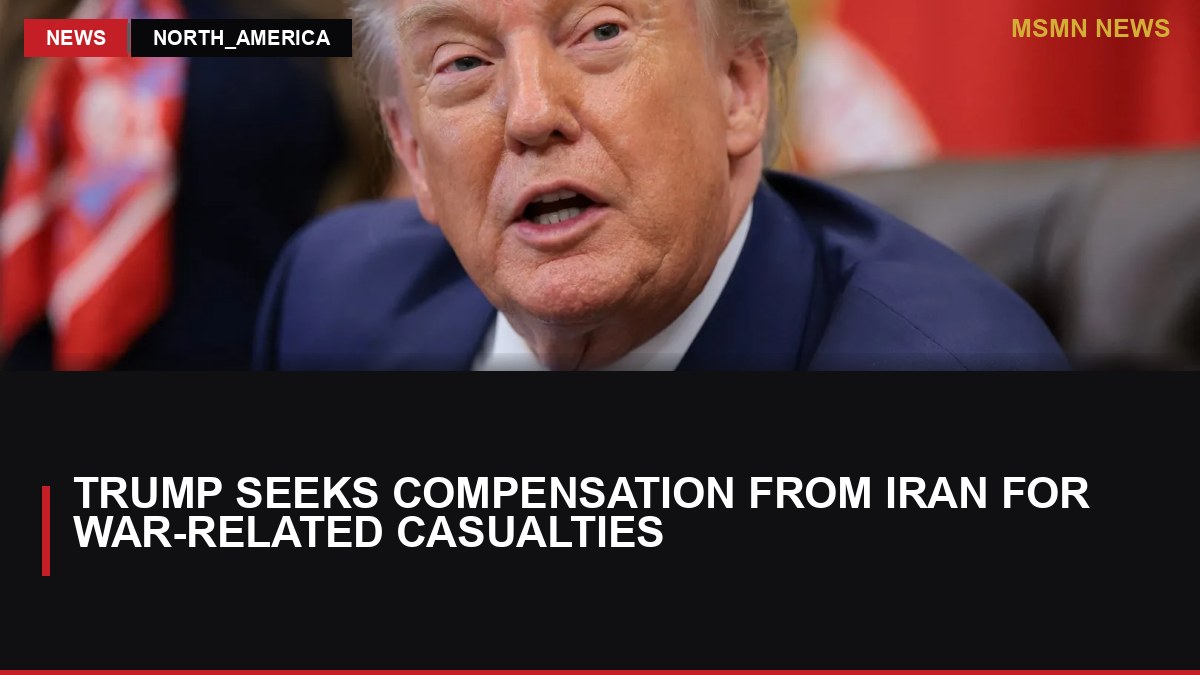
In a striking announcement that could further strain already tense U.S.-Iran relations, former President Donald Trump has declared his intention to pursue compensation from Iran for the casualties sustained by U.S. personnel during military operations in the region. This latest development raises questions about the implications for diplomatic relations between the two nations and the broader geopolitical landscape in the Middle East.
In a striking announcement that could further strain already tense U.S.-Iran relations, former President Donald Trump has declared his intention to pursue compensation from Iran for the casualties sustained by U.S. personnel during military operations in the region. The comments come as Trump continues to assert his influence within the Republican Party and seeks to position himself for a potential 2024 presidential run. This latest development raises questions about the implications for diplomatic relations between the two nations and the broader geopolitical landscape in the Middle East.
Trump's assertion was made during a recent rally in which he addressed a crowd of supporters, emphasizing the sacrifices made by American service members. "We will not stand idly by while our heroes are forgotten," he proclaimed, vowing to hold Iran accountable for what he described as the direct consequences of its actions against U.S. interests. The former president's remarks echo a long-standing narrative within his administration, which often framed Iran as a principal adversary in the region.
The context of Trump's demand is rooted in a history of conflict between the U.S. and Iran that has spanned decades, marked by military engagements, economic sanctions, and diplomatic standoffs. The U.S. has been involved in various military operations against Iranian-backed forces and interests, particularly in Iraq and Syria, leading to significant loss of life on both sides. Trump's call for compensation is not just a reflection of personal conviction but also a strategic maneuver aimed at galvanizing his base, especially as he navigates a political landscape that remains deeply polarized.
The implications of this demand are manifold. For one, it could exacerbate tensions that have already reached a boiling point following the U.S. withdrawal from the Iran nuclear deal in 2018, a decision that Trump championed. Since then, relations have soured significantly, with Iran ramping up its nuclear activities and the U.S. imposing stringent sanctions that have crippled the Iranian economy. Trump's latest comments could be interpreted as a direct challenge to the Biden administration's more diplomatic approach to Iran, which seeks to revive negotiations over the nuclear program while managing regional security concerns.
In the wake of Trump's announcement, reactions from various quarters have been swift and varied. Supporters of the former president have lauded his stance as a necessary step toward ensuring accountability for the loss of American lives, framing it as a patriotic duty. Conversely, critics have lambasted the move as inflammatory, warning that it could lead to further escalation and undermine efforts for peaceful resolution in the region. Analysts suggest that Trump's approach may resonate with a segment of the electorate that prioritizes a strong national defense and views Iran as a significant threat.
Moreover, the demand for compensation raises complex legal and diplomatic questions. Historically, the U.S. has sought reparations or compensation from other nations in the context of wartime actions, but the success of such claims is often fraught with challenges. International law does provide mechanisms for addressing grievances arising from conflicts, yet the political realities surrounding U.S.-Iran relations complicate the feasibility of such demands. Experts are divided on whether this initiative could yield any substantive results or if it is merely a rhetorical flourish aimed at rallying support.
Looking ahead, the potential for further diplomatic fallout looms large. Should Trump follow through on his promise, it could lead to a fracturing of any tentative diplomatic overtures that might have been considered by the current administration. With the U.S. and Iran at an impasse, Trump's rhetoric may serve to entrench positions on both sides, making dialogue increasingly difficult. The Biden administration has focused on re-engaging Iran through diplomatic channels, but Trump's uncompromising stance could undermine these efforts, leading to a hardening of attitudes that stifles any chance for reconciliation.
Public opinion on the matter is likely to be shaped by the ongoing narrative surrounding U.S. military involvement in the Middle East and the implications of such conflicts on American soil. Many voters have grown weary of prolonged military engagements, particularly as the human cost becomes increasingly visible. Trump's framing of the issue as a matter of accountability may resonate with those who feel that the sacrifices of service members have not been adequately acknowledged or addressed.
As the political landscape evolves, the fallout from Trump's comments will be closely monitored by both supporters and detractors alike. The former president's ability to leverage this issue for political gain could have significant ramifications for the upcoming election cycle. With a potential rematch against President Biden on the horizon, Trump's strategy of invoking national security concerns may prove to be a double-edged sword, appealing to his base while alienating moderates who favor a more diplomatic approach to international relations.
In addition to the political ramifications, there are broader implications for U.S. Foreign Policy that could arise from Trump's demand for compensation. The historical context of U.S.-Iran relations is fraught with tension, dating back to the 1953 coup that reinstated the Shah of Iran, which has left a legacy of mistrust. The subsequent Islamic Revolution in 1979, which resulted in the hostage crisis, further entrenched adversarial relations. Trump's rhetoric may be seen as a continuation of this historical narrative, which could hinder any potential thawing of relations.
Moreover, the geopolitical landscape in the Middle East is complex, with various actors and interests at play. Iran's role as a regional power, its influence over proxy groups in Iraq, Syria, Lebanon, and Yemen, and its contentious relationship with Israel all factor into the equation. Trump's demand for compensation could be perceived as an escalation in this already fraught environment, potentially provoking a response from Iran that could destabilize the region further.
The timing of Trump's announcement also raises questions. As he seeks to solidify his base ahead of the 2024 elections, invoking national security and accountability resonates with many voters. However, it also risks alienating those who prioritize diplomatic solutions over military confrontations. The Biden administration's approach to Iran has been characterized by attempts to re-enter negotiations and address the nuclear issue through diplomacy, contrasting sharply with Trump's combative stance.
As the situation continues to develop, observers will be watching closely for any signs of escalation or attempts at dialogue. The potential for military engagements or retaliatory actions by Iran in response to Trump's rhetoric cannot be overlooked. Additionally, the role of international allies and adversaries in this context will be crucial, as they may seek to influence the dynamics of U.S.-Iran relations.
In conclusion, Trump's demand for compensation from Iran underscores the persistent volatility of U.S.-Iran relations. As he continues to assert his voice within the Republican Party, the implications of his statements will reverberate through the political landscape, shaping discussions around national security, foreign policy, and the legacy of American military interventions. As the situation unfolds, all eyes will be on how both the Trump camp and the Biden administration navigate these complex dynamics, with the potential for both conflict and dialogue hanging in the balance. The world watches closely as the narrative continues to develop, with the stakes higher than ever for both nations and the broader region.
Source / Reference
Reporting by MSMN News, based on publicly available source material.
Source: Al Jazeera English
Reference link: https://www.aljazeera.com/video/newsfeed/2026/8/10/trump-to-demand-compensation-for-tehrans?traffic_source=rss
Recommended products


 Editor's choice
Affiliate disclosure: MSMN may earn from qualifying purchases. Prices and availability may change.



Comments