
US Defense Spending Under Scrutiny Amid Weapon Shortages: MSMN News
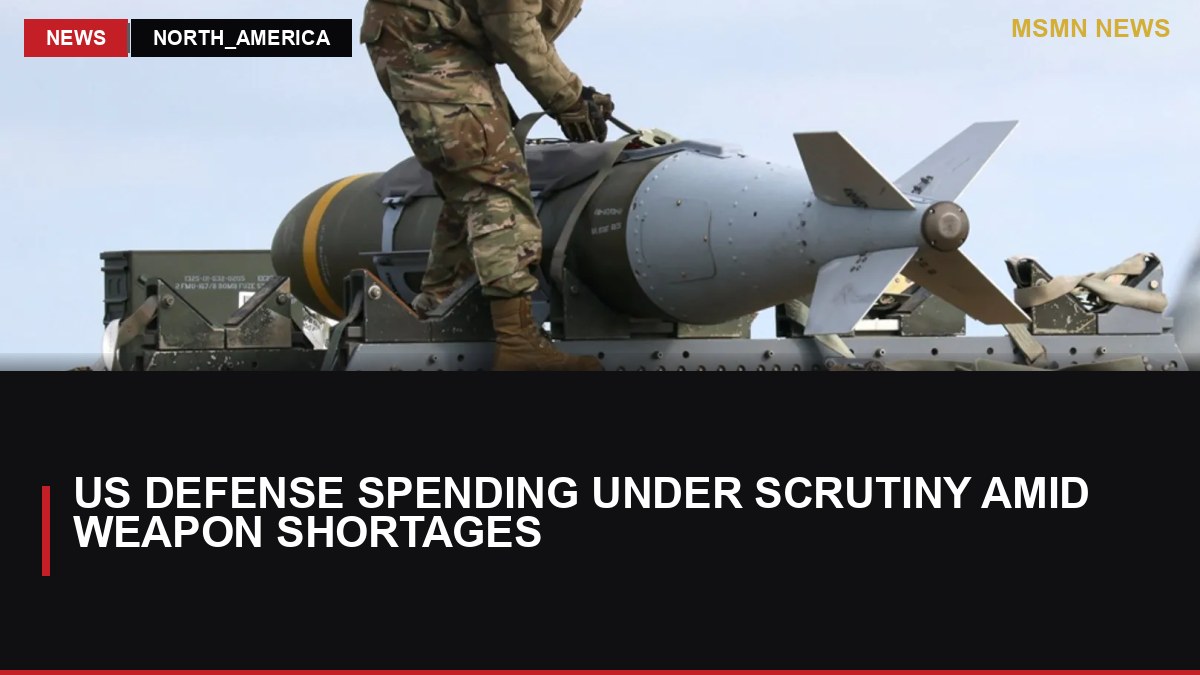
As tensions rise with Iran, the U.S. faces alarming weapon shortages, prompting critical evaluations of defense spending and military preparedness.
In the wake of rising tensions with Iran, the United States is confronting a troubling reality: its weapon stockpiles are dwindling, raising pressing questions about the effectiveness and allocation of years of defense spending. As military operations intensify, the stark contrast between the U.S. government's financial commitments to defense and the actual availability of military resources is becoming increasingly evident. This situation has sparked a national conversation around the adequacy of the U.S. military's preparedness and the implications for global security.
The current conflict, which has seen heightened military engagement in the Middle East, is forcing officials and analysts to reevaluate the state of U.S. munitions and armaments. Reports indicate that various military branches are experiencing shortages in critical weaponry, including munitions and advanced systems. This shortage has raised alarms within defense circles, as the U.S. is not only tasked with supporting its own forces but also providing assistance to allies in the region.
The timing of these shortages is particularly concerning. The U.S. has long prided itself on maintaining a robust military capability, backed by substantial annual defense budgets. In recent years, the Pentagon's budget has consistently surpassed the $700 billion mark, with significant allocations directed toward modernization efforts and new technologies. However, as the current conflict unfolds, the stark reality of depleted stockpiles is challenging the narrative of military superiority.
Military experts are now questioning the strategic decisions that have led to this predicament. Critics argue that the focus on cutting-edge technologies and long-term modernization projects may have inadvertently come at the expense of maintaining adequate supplies of conventional weaponry. As the U.S. has invested heavily in high-tech systems such as drones, cyber capabilities, and missile defense, traditional munitions have not received the same level of attention, leading to a precarious situation in the face of ongoing military operations.
The implications of these shortages extend beyond mere numbers. The U.S. military's ability to respond effectively to threats is now under scrutiny, with some lawmakers expressing concern that the country may not be able to sustain prolonged engagements without replenishing its stockpiles. The situation has prompted calls for a reassessment of defense priorities, with some advocating for a more balanced approach that ensures both cutting-edge capabilities and sufficient conventional weaponry.
In the halls of Congress, discussions are heating up as legislators grapple with the implications of these shortages. Some members are pushing for increased funding to replenish depleted stockpiles, while others are advocating for a reevaluation of defense spending priorities altogether. The debate is not merely about numbers; it encompasses broader questions about U.S. Military Strategy and its role in global security.
Public sentiment is also shifting as citizens become more aware of the challenges facing the military. The notion that the U.S. is running low on essential weaponry raises concerns about National Security and the effectiveness of defense spending. Voters are increasingly questioning whether the substantial amounts allocated to the Pentagon are being used efficiently and effectively. This growing skepticism could have ramifications for future defense budgets and military policy.
As the situation evolves, military officials are working diligently to address the immediate shortages. Efforts are underway to expedite the production of critical munitions and to explore alternative sources for replenishing stockpiles. However, these solutions take time, and the urgency of the current conflict means that the military must act swiftly to ensure it can meet operational demands.
Looking ahead, the U.S. faces a crucial juncture in its defense strategy. The ongoing conflict with Iran is not only a test of military capabilities but also a pivotal moment for policymakers to reassess the nation's approach to defense spending. The question of where the money has gone is not simply an accounting issue; it reflects deeper concerns about military readiness and the future of U.S. engagement in global conflicts.
As the U.S. navigates these challenges, the repercussions of its decisions will be felt not only on the battlefield but also in the political arena. The balance between maintaining military superiority and ensuring adequate resources is a delicate one, and the current situation underscores the need for a thoughtful and strategic approach to defense policy. The coming months will likely reveal whether the U.S. can adapt to this new reality and ensure that its military remains capable of responding to emerging threats.
In summary, the dwindling stockpiles of weapons amid escalating tensions with Iran expose significant flaws in U.S. defense spending and military strategy. As lawmakers, military officials, and citizens grapple with these challenges, the implications for national security and international relations will continue to unfold, making this an issue that merits close attention in the months ahead.
The backdrop of this situation is rooted in a long history of U.S. military engagements across the globe, particularly in the Middle East. The U.S. has been involved in various conflicts since the early 2000s, including wars in Iraq and Afghanistan, which have significantly impacted military resources and strategic planning. The lessons learned from these engagements have shaped current military doctrine, but the ongoing crisis with Iran highlights the potential for miscalculations in resource allocation and military readiness.
Moreover, the geopolitical landscape is shifting, with other nations, including China and Russia, increasing their military capabilities and assertiveness. This dynamic creates additional pressure on the U.S. to maintain its military edge while simultaneously addressing its internal shortcomings. The interplay between domestic defense spending and international military commitments is a complex equation that policymakers must navigate carefully.
As the U.S. military grapples with these challenges, it is also essential to consider the role of defense contractors and the defense industrial base. The relationship between the government and private defense firms has been a focal point of discussion, particularly regarding the efficiency of production and the responsiveness of the supply chain. Delays in weapon production and procurement processes may exacerbate the current shortages, creating a cycle of inefficiency that could hinder military operations.
In the coming weeks and months, it will be crucial for the U.S. to not only address the immediate weapon shortages but also to develop a long-term strategy that ensures military readiness in the face of evolving threats. This includes investing in both traditional and advanced capabilities, fostering innovation within the defense sector, and ensuring that the military can adapt to rapidly changing circumstances.
Ultimately, the U.S. must confront the reality that its military strategy and defense spending priorities may need a fundamental reassessment. As tensions with Iran continue to escalate, the implications of these shortages will be felt not only on the battlefield but also in the broader context of U.S. foreign policy and its ability to project power globally. The ongoing debate in Congress, public sentiment, and the actions of military leaders will shape the future of U.S. defense policy and its approach to national security in an increasingly complex world.
Source / Reference
Reporting by MSMN News, based on publicly available source material.
Source: Al Jazeera English
Reference link: https://www.aljazeera.com/video/newsfeed/2026/8/11/where-did-all-the-money-go-if-the-us-is-running-out-of-weapons?traffic_source=rss
Recommended products



OnBuy EU
Architektoniczny ROUTER ROUTER ZESTAW ROUTER ROUTER NEWDELI 1/2 RAITER RAITER KNOKTURACJA ROOTER ROUTER ROUTER ROUTER ROUTER BIT DO ZAWRUT
Approx. PLN 255.77 Final price on merchant site
Affiliate disclosure: MSMN may earn from qualifying purchases. Prices and availability may change.



Comments