
South Australian Court Orders Pensioner to Remove 'Therapy' Roosters Amid Noise Complaints: MSMN News
Follow MSMN
Official channels from Martins Studio Media Network.
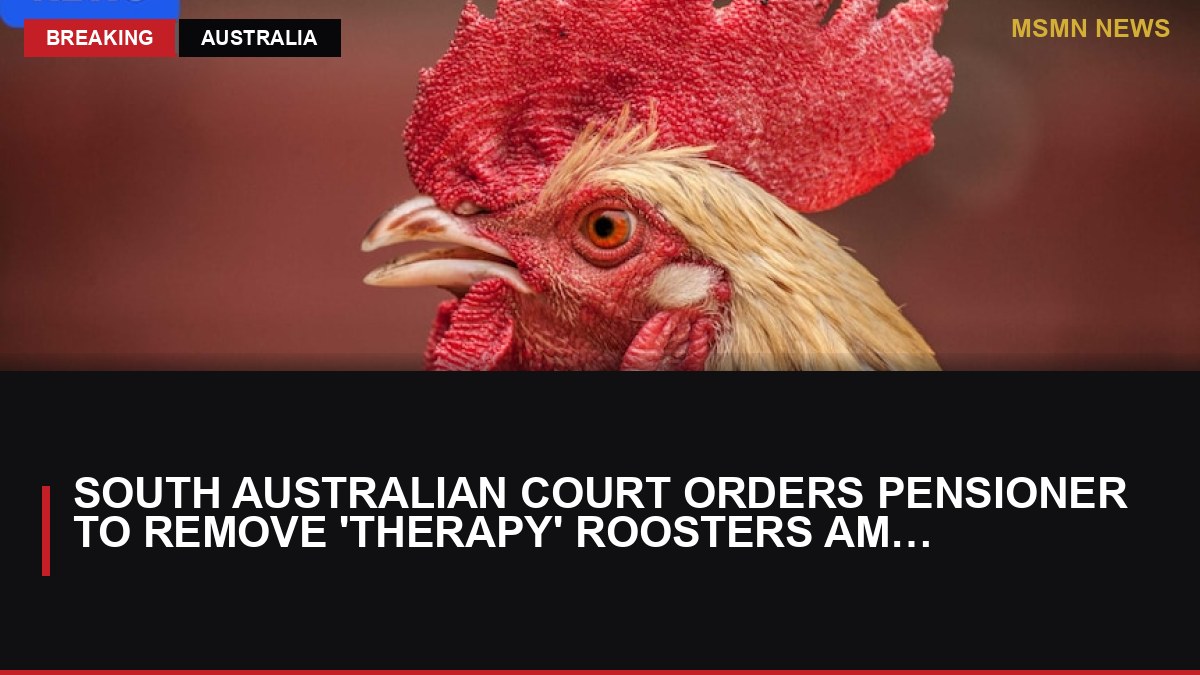
A South Australian court has ruled that a disability pensioner must remove his three roosters, regarded as therapeutic companions, due to noise complaints from neighbors. The case highlights the balance between individual needs and community rights.
- Bitcoin Faces Significant Supply Challenge at $80,000: MSMN News
- Andrew Tate Seeks Bail Amid Extradition Battle: MSMN News
- Patrick Dempsey’s New Sports Documentary Is Quietly One of the Most Inspiring Releases of 2026 [Exclusive]: MS...
- Space: Sophie Adenot recounts her two spacewalks: MSMN News
- US Army to Construct Nuclear Microreactors at Military Bases: MSMN News
In a case that underscores the intricate balance between individual needs and community rights, a South Australian court has mandated that a disability pensioner must remove his three roosters, which he considers therapeutic companions, from his property. This decision follows complaints from neighbors who claimed that the incessant crowing of the birds was disrupting their peace and quiet in the regional community.
The pensioner, whose name has not been disclosed, argued that the roosters provided him with essential emotional support, playing a crucial role in his daily life. He described these animals as a source of comfort and companionship, which helped alleviate the symptoms of his disability. However, his neighbors had a different perspective, asserting that the constant noise from the roosters was unbearable and significantly impacted their quality of life.
The court's decision highlights the ongoing challenge of balancing individual rights with community standards, especially in rural areas where livestock and pets are integral to everyday life. The case was brought before the Environment, Resources, and Development Court of South Australia, where both parties presented their arguments. The neighbors detailed how the roosters' crowing had become a persistent issue, disrupting their sleep and daily activities. They argued that while they empathized with the pensioner's need for emotional support, the noise levels were intolerable.
On the other hand, the pensioner maintained that the roosters were more than just pets; they were therapeutic animals that contributed significantly to his mental well-being. He noted that living with a disability can be isolating, and the roosters provided a sense of routine and companionship that he found beneficial. His defense centered around his right to maintain a quality of life that accommodated his emotional and psychological needs.
In its ruling, the court acknowledged the pensioner's reliance on the roosters for emotional support but emphasized the need to consider the rights of the broader community. The judge noted that while the pensioner's need for therapeutic animals was valid, it did not outweigh the right of the neighbors to enjoy their homes without excessive noise. The court ordered the removal of the roosters, giving the pensioner a set period to comply with the ruling.
This case has sparked a broader discussion about the role of animals in therapy and the rights of individuals to keep such animals in residential areas. It highlights the need for clear guidelines and regulations that address the complexities of such situations. Advocates for mental health and Disability Rights argue that more needs to be done to accommodate individuals who rely on animals for emotional support, suggesting that local councils and governments should develop frameworks that allow for the coexistence of therapeutic needs and community standards.
The ruling also raises questions about the availability of alternative solutions that could satisfy both parties. Some have suggested that soundproofing measures or relocating the roosters to a part of the property further from neighbors might have been possible compromises. Others point out that this case underscores the importance of community dialogue and mediation before issues escalate to the courts.
As the deadline for compliance approaches, the pensioner faces the difficult task of finding a new home for his roosters. Animal welfare organizations have expressed concern about the welfare of the birds, urging the pensioner to seek assistance in rehoming them safely. Meanwhile, the neighbors have welcomed the court's decision, hoping it will restore peace to their community.
This case serves as a reminder of the delicate balance between personal freedoms and community rights, a theme that resonates in many rural and suburban areas facing similar challenges. As communities grow and urbanize, the need for clear policies that address the coexistence of pets and people becomes increasingly important. Observers will be watching closely to see how this case influences future legal decisions and policy-making in similar situations.
The story of the pensioner and his roosters is more than just a local dispute; it is a reflection of the broader issues at play in modern society, where individual needs must be weighed against the collective good. As the community and the pensioner navigate the aftermath of the court's decision, the case will likely serve as a precedent for how such matters are handled in the future, both in South Australia and beyond.
In examining the broader implications of this case, it is crucial to consider the role of animals in therapeutic settings. Animals have long been recognized for their ability to provide comfort and support to individuals facing various challenges, from mental health issues to physical disabilities. The pensioner's reliance on his roosters is a testament to the profound impact that animals can have on human well-being. However, as this case illustrates, the integration of therapeutic animals into everyday life is not without its challenges.
One of the central issues in this case is the lack of clear guidelines and regulations governing the presence of therapeutic animals in residential areas. While there is widespread recognition of the benefits that animals can provide to individuals with disabilities, there is less consensus on how to balance these benefits with the rights of the broader community. This case highlights the need for policymakers to develop comprehensive frameworks that address these complexities and provide clear guidance for individuals and communities navigating similar situations.
Furthermore, the case raises important questions about the role of community dialogue and mediation in resolving disputes. Before resorting to legal action, it may be beneficial for neighbors and individuals to engage in open discussions and explore potential compromises that address the needs and concerns of all parties involved. This approach not only fosters a sense of community but also helps prevent conflicts from escalating to the courts.
In the aftermath of the court's decision, the pensioner is faced with the emotional and logistical challenge of rehoming his roosters. This process is not only difficult for the pensioner but also raises concerns about the welfare of the animals. Animal welfare organizations have urged the pensioner to seek assistance in finding suitable homes for the roosters, emphasizing the importance of ensuring their well-being during the transition.
As the community and the pensioner move forward, it is essential to consider the broader implications of this case for future legal decisions and policy-making. The outcome of this case may serve as a precedent for how similar disputes are handled in the future, both in South Australia and beyond. Observers will be watching closely to see how policymakers and communities address the challenges of balancing individual needs with community rights in an increasingly urbanized world.
Ultimately, the story of the pensioner and his roosters is a reflection of the broader issues at play in modern society, where individual needs must be weighed against the collective good. As communities continue to grow and evolve, the need for clear policies and open dialogue becomes increasingly important. This case serves as a reminder of the delicate balance between personal freedoms and community rights, and the importance of finding solutions that accommodate the needs of all parties involved.
Source / Reference
Reporting by MSMN News, based on publicly available source material.
Source: ABC Australia
Reference link: https://www.abc.net.au/news/2026-08-06/erd-court-orders-disability-pensioner-to-remove-roosters/106994502
Recommended products

Wayfair North America
12"Thickness Mattresses
Approx. USD 389.99 Final price on merchant site
2 merchants


OnBuy EU
Travel Blender, Portable Blender, , Blender, Beverage Blender, Electric , Small Blender
Approx. EUR 412.63 Final price on merchant site
4 merchants
Affiliate disclosure: MSMN may earn from qualifying purchases. Prices and availability may change.


Comments