
Concerns Rise as Autistic Children Face School Placement Crisis in Ireland: MSMN News
Follow MSMN
Official channels from Martins Studio Media Network.
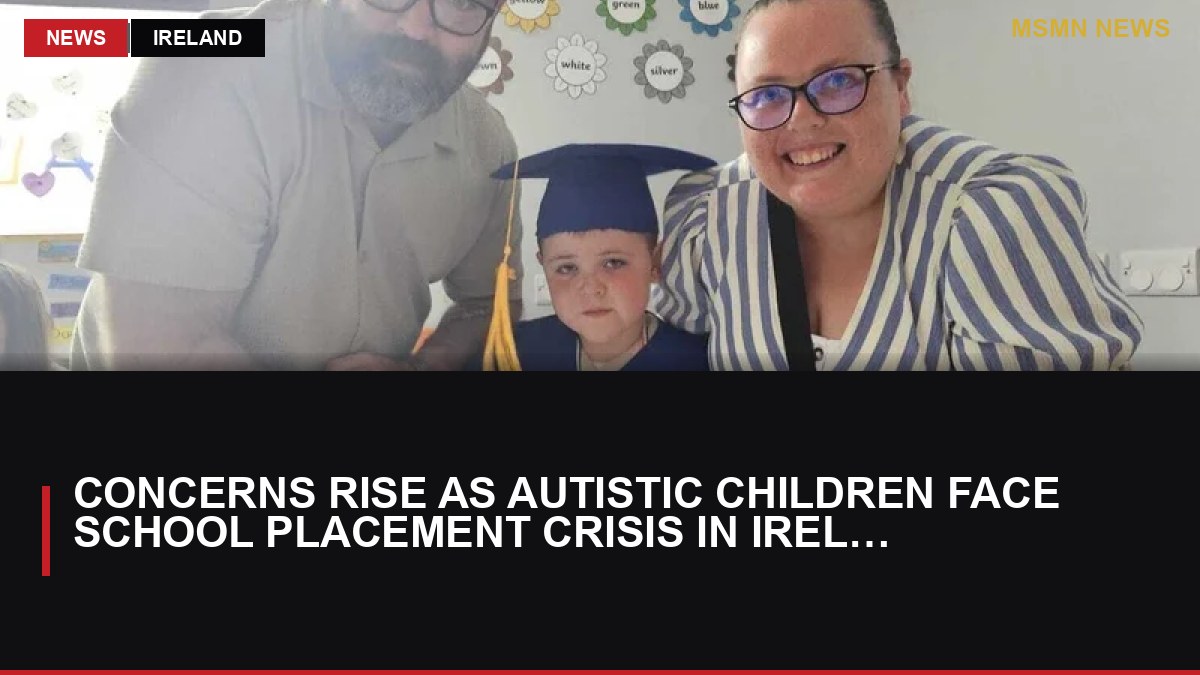
As the new school year approaches, many families in Ireland are grappling with the distressing reality of their autistic children being left without promised placements in special schools. This situation has sparked outrage and anxiety among parents, raising critical questions about the adequacy of the educational framework for children with special needs.
As the end of August approaches, anticipation fills the air for many families in Ireland preparing for the return to school. However, for some, this season brings not excitement but deep concern. Numerous families with autistic children are facing a distressing reality: their children have been left without a promised place in a special school as the academic year looms. This situation has sparked outrage and anxiety among parents, who are now grappling with the implications of their children remaining at home instead of receiving the Education and support they desperately need.
One mother, who wished to remain anonymous, expressed her fears about her son’s lack of a school placement. Like many parents in similar situations, she had been assured that her son would secure a spot in a special school by the time classes resumed. With the opening of schools just around the corner, her hopes are now dashed, leaving her to confront the uncertainty of her child’s educational future. "I feel lost and worried for my son. He needs the structure and support that a special school can provide, and now I’m left wondering what will happen next," she said, voicing a sentiment echoed by many.
The issue is not isolated. Reports indicate that a significant number of autistic children across the country are in a similar predicament. With the government's commitment to inclusive education, many parents had anticipated that their children would be accommodated in appropriate educational settings this September. Yet, as the new school year approaches, it is becoming painfully clear that the promises made have not materialized for all families. The situation raises critical questions about the adequacy of the current educational framework for children with Special Needs in Ireland.
At the heart of this crisis is a broader systemic issue that has plagued the country for years. The shortage of places in special schools, coupled with an increasing number of children diagnosed with Autism, has created a perfect storm. Parents are left navigating a complex landscape of educational options, often feeling overwhelmed and confused. Many advocate for better resources and support systems, insisting that the government must take immediate action to address the shortcomings in special education.
The Department of Education has acknowledged the challenges faced by families but has not provided a clear solution. While officials have stated that they are working to increase the number of available places, the urgency of the situation demands immediate attention. Parents are calling for transparency regarding the allocation of resources and the criteria used to determine school placements. They argue that without clear communication, families are left in the dark, forced to make difficult decisions about their children's education without adequate guidance.
As the school year begins, the concerns extend beyond individual families. Advocacy groups are raising alarms about the long-term impact on children who are unable to access the support they need. Education is not just about academic learning; it is also about socialization, emotional development, and overall well-being. The absence of a structured environment can lead to regression in skills and increased anxiety for children who thrive on routine and support.
In light of the ongoing crisis, many parents are organizing and mobilizing to demand better outcomes for their children. Parent-led groups are forming support networks to share information and strategies, as well as to collectively advocate for policy changes. They are urging the government to prioritize the needs of children with special educational requirements and to allocate necessary funding to expand special education services.
The situation has also attracted attention from political leaders and community organizations, who are beginning to recognize the urgency of the matter. Calls for a more comprehensive approach to special education have been echoed in various forums, with leaders emphasizing the need for collaboration between government bodies, educational institutions, and families. The emphasis is on creating a system that is not only reactive but proactive in addressing the needs of all students, particularly those with disabilities.
As the first day of school draws near, the clock is ticking for families still awaiting news about their children’s placements. The anxiety is palpable, and many parents are left grappling with the harsh reality that their children may not receive the education they deserve. This situation underscores a critical need for systemic change in Ireland’s approach to special education, as families continue to advocate for a future where all children have access to the support they require.
The upcoming weeks will be crucial as parents and advocacy groups continue to push for answers. As the government faces mounting pressure to resolve the placement crisis, the hope is that meaningful changes will emerge from this challenging situation. For now, many families remain in limbo, anxiously awaiting a resolution that will determine the educational paths for their children.
The implications of this crisis extend beyond the immediate concerns of families; they highlight a broader societal responsibility to ensure that all children, regardless of their needs, have access to quality education. The voices of parents, advocates, and community leaders are growing louder, demanding accountability and action from those in positions of power. As the new school year approaches, the focus remains on the children who are caught in the middle of this crisis, hoping for a brighter future that includes the right educational environment to foster their growth and development.
In the past, similar crises have led to public outcry and eventual policy changes, but many families are left wondering if this time will be different. The long-term implications of inadequate educational placements can have lasting effects not only on the children involved but also on society as a whole. Children who do not receive appropriate educational support may struggle with social integration and face challenges in adulthood, creating a ripple effect that impacts families and communities.
As families await further guidance and solutions, the urgency of the situation cannot be overstated. The government must act quickly to address the current crisis and ensure that all children, particularly those with special needs, have access to the educational resources and support necessary for their development. The hope is that this situation will serve as a wake-up call, prompting a reevaluation of how special education is prioritized within the educational system in Ireland.
In conclusion, as the school year approaches, the spotlight is on the children who are currently without placements in special schools. Their futures hang in the balance, and the need for immediate action is clear. Advocacy efforts will likely intensify in the coming weeks, as parents and community leaders work together to demand change. The focus remains on creating a system that not only meets the needs of all students but also fosters an inclusive environment where every child can thrive. The journey ahead will undoubtedly be challenging, but with collective voices advocating for change, there is hope for a more equitable educational landscape in Ireland.
Source / Reference
Reporting by MSMN News, based on publicly available source material.
Source: RTE News
Reference link: https://www.rte.ie/news/ireland/2026/0809/1587158-sam-special-school/
Recommended products


 Editor's choice
Affiliate disclosure: MSMN may earn from qualifying purchases. Prices and availability may change.




Comments