
Iran Faces Historic Oil Export Drought Amid U.S. Naval Blockade: MSMN News
Follow MSMN
Official channels from Martins Studio Media Network.
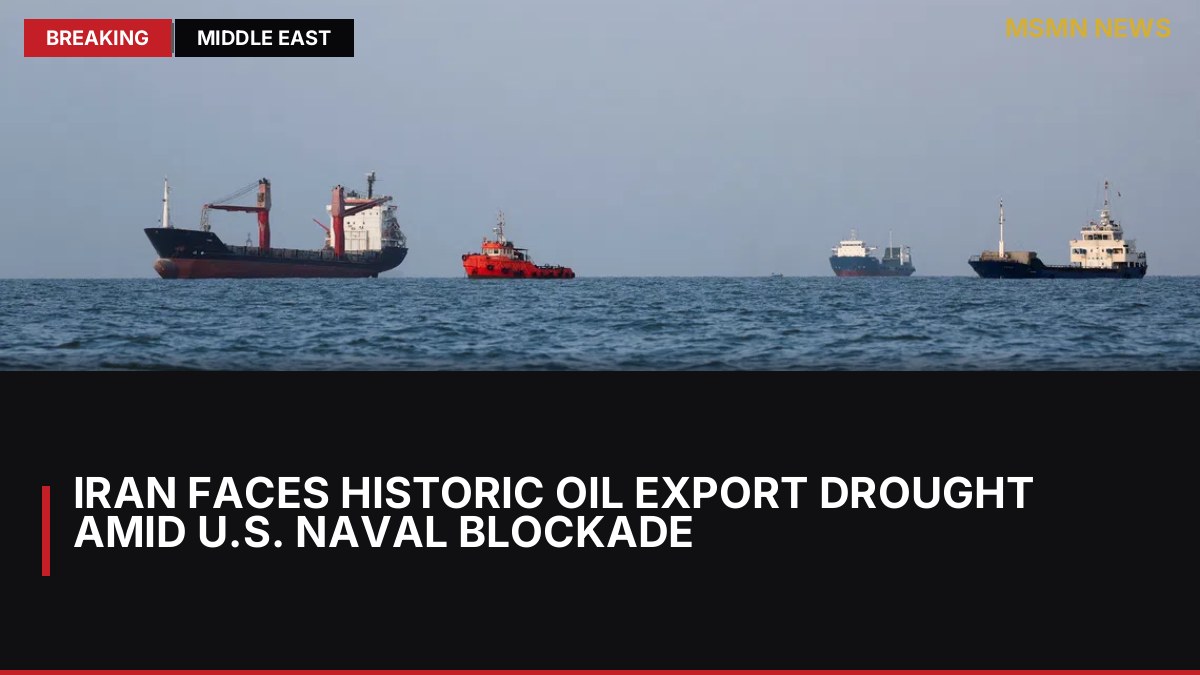
Iran has experienced an unprecedented halt in crude oil exports, marking a significant achievement for the U.S. naval blockade that has effectively disrupted Tehran's oil trade for the first time in history.
- Why the Supreme Court's ballroom ruling could matter beyond the ballroom: MSMN News
- AS Monaco Claims Top Spot in Ligue 1 After Victory Over Marseille: MSMN News
- Family mourn 'deeply loved' girl killed in Middlesbrough fire: MSMN News
- Baby girl found at house was stabbed, say police: MSMN News
- Aliens: Fireteam Elite 2 Is As Mediocre As Its Steam Reviews Let On: MSMN News
In a striking development, Iran has reportedly gone over seven weeks without significant oil shipments through the strategically vital Strait Of Hormuz. This unprecedented situation, which began in early September 2023, highlights the effectiveness of a U.S. naval blockade that has successfully curtailed one of Tehran's primary sources of foreign currency revenue.
The U.S. blockade, aimed at crippling Iran's oil trade, has proven to be more effective than previous sanctions that have been in place for years. Historical patterns had seen Iran manage to export oil despite sanctions, but the current blockade has created a scenario where exports have nearly ground to a halt. This shift comes at a time when global oil markets are already volatile, and the implications for both Iran and international energy prices are significant.
The Strait of Hormuz is a critical chokepoint for global oil transportation, with a significant percentage of the world's oil passing through its waters. The U.S. military presence in the region aims to deter Iranian aggression and protect maritime trade routes. The blockade's success in limiting Iran's oil exports underscores the potential for military strategy to influence economic outcomes in the region.
As Iran struggles to cope with the economic fallout from diminished oil revenues, the situation raises questions about the future of its Economy and the potential for increased tensions in the Middle East. The Iranian government has historically relied on oil exports to fund its budget and bolster its economy, and this latest development could lead to significant political and social ramifications within the country.
Looking ahead, observers will be closely monitoring Iran's response to the blockade, as well as any potential retaliatory measures it may take. Analysts are also watching for shifts in U.S. policy and military posture in the region, particularly as the geopolitical landscape continues to evolve. The long-term effects of this blockade on Iran's economy and its relationships with other countries in the region remain to be seen, but the current status presents a critical moment in the ongoing struggle between Tehran and Washington.
Source / Reference
This MSMN News article is an original rewrite for our readers — not a copy of another publisher's story.
Source: Straits Times World
Reference link: https://www.straitstimes.com/world/middle-east/blockade-succeeds-where-sanctions-failed-as-iran-oil-exports-stall
Recommended products
 -32%
-32%
 Editor's choice

Affiliate disclosure: MSMN may earn from qualifying purchases. Prices and availability may change.




Comments