
China Censors and Punishes to Shape Narrative on Floods in Tibet, a Contrast to Nepal: MSMN News
Follow MSMN
Official channels from Martins Studio Media Network.
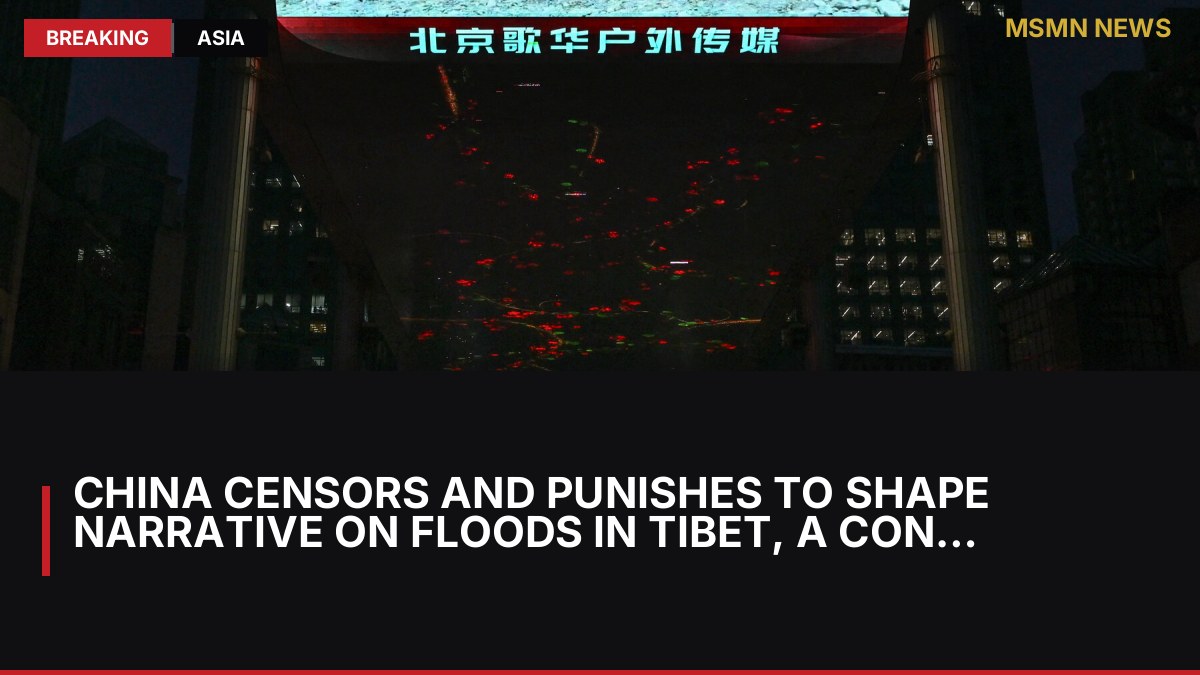
Recent floods in Tibet have prompted a stark contrast in media coverage, with China imposing strict censorship while Nepal allows free expression of grief and anger. This disparity highlights the differing approaches to disaster reporting in the two neighboring regions.
- Concerns Raised Over Telehealth Prescription of GLP-1 Drug for Eating Disorders: MSMN News
- The Best 'Godzilla' Movie Ever Made Sets Monstrous New Release Ahead of Sequel: MSMN News
- Why Hal Jordan Was Chosen Over John Stewart Sr. Explains the DCU's Biggest Green Lantern Change: MSMN News
- Ryu & Ken Face Off in Action-Packed New 'Street Fighter' Trailer: MSMN News
- PlayStation Wants To Prove In Court That You Don't Own Your Digital Games: MSMN News
In the wake of devastating Floods that have swept through Tibet, China has intensified its efforts to control the narrative surrounding the disaster, starkly contrasting with the media coverage allowed in neighboring Nepal. While journalists in Nepal are free to report on the emotional fallout and community responses to the tragedy, Chinese authorities have been quick to censor reports and punish dissenting voices in Tibet.
Reports indicate that the floods, which struck Tibet earlier this month, have caused significant damage to infrastructure and displaced thousands of residents. Despite the severity of the situation, the Chinese government has sought to present a sanitized version of events through its state-controlled media, focusing on recovery efforts while downplaying the extent of the devastation and public discontent.
This situation is particularly troubling given the historical context of media Censorship in China. The government has long been criticized for its tight grip on information, especially in regions like Tibet, which has been a focal point of political tension and cultural repression. The contrasting media freedoms in Nepal, where journalists are able to freely express the grief and anger of the affected communities, underscore the broader implications of governmental control over information in times of crisis.
As the situation unfolds, it remains crucial for the international community to monitor developments in both regions. Observers are particularly concerned about the potential for further censorship or punitive measures against those who attempt to share unapproved narratives in Tibet. The response from both governments will likely continue to shape public perception and international discourse surrounding the floods.
Looking ahead, the focus will be on how local communities in Tibet respond to the government's narrative and whether international media can successfully highlight the realities on the ground despite state-imposed restrictions. The unfolding situation serves as a reminder of the power of media in shaping public understanding and the importance of press freedom in disaster reporting.
Source / Reference
This MSMN News article is an original rewrite for our readers — not a copy of another publisher's story.
Source: NYT World
Reference link: https://www.nytimes.com/2026/09/01/world/asia/%%LINK0%%-tibet-floods-nepal-censorship.html
Recommended products
 -32%
-32%

 Editor's choice
Affiliate disclosure: MSMN may earn from qualifying purchases. Prices and availability may change.



Comments