
Coral Reefs Face Urgent Threats as Recovery Times Shrink: MSMN News
Follow MSMN
Official channels from Martins Studio Media Network.
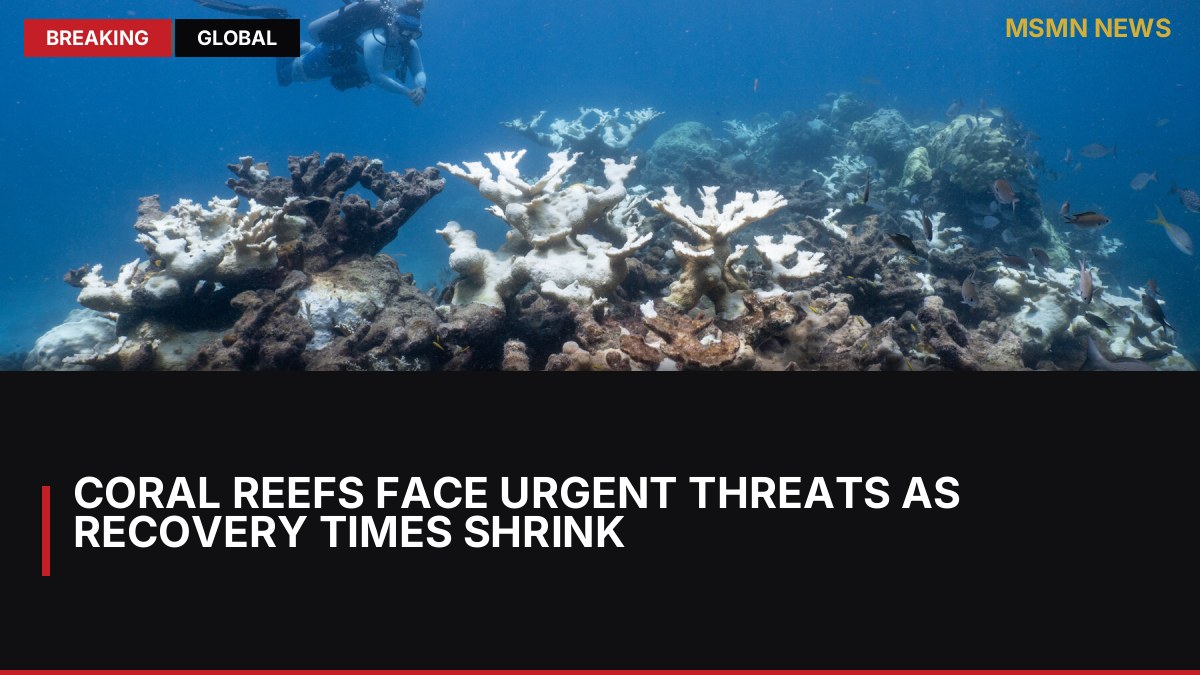
A new report reveals that escalating sea temperatures are hindering coral reefs' ability to recover from heat stress, raising alarms about their future viability.
- Goodyear's Turnaround Strategy: A Race Against Time and Debt: MSMN News
- Airbnb Manager Claims Unlawful Dismissal After Positive Review: MSMN News
- Leanne Morgan Embraces Southern Roots in LA Writers Room: MSMN News
- Square Enix Launches 'SaGa Saga' Initiative to Boost Tourism: MSMN News
- PM Modi Unveils Ambitious Trade Roadmap with Uzbekistan: MSMN News
In a stark warning for marine ecosystems worldwide, a recent study highlights that coral reefs are increasingly unable to recover from severe heat waves due to rising sea temperatures. This alarming report, published on August 31, 2026, underscores the urgent need for action to protect these vital underwater habitats, which are crucial for Biodiversity and coastal protection.
The research indicates that as global temperatures continue to rise, coral reefs are facing shortened recovery periods between heat stress events. The study suggests that the time required for corals to recuperate from bleaching events—when corals expel the algae that give them color and sustenance—has drastically reduced. This phenomenon not only threatens the survival of coral populations but also jeopardizes the myriad species that depend on these ecosystems for shelter and food.
Coral reefs are often referred to as the "rainforests of the sea" due to their rich biodiversity. They play a pivotal role in supporting marine life, protecting coastlines from erosion, and providing resources for millions of people who rely on fishing and tourism. The decline of these ecosystems could have far-reaching consequences, both environmentally and economically.
The report comes amidst growing concerns about Climate Change and its impacts on oceanic environments. As sea temperatures continue to rise, the frequency and intensity of marine heatwaves are expected to increase, further stressing coral reefs and diminishing their resilience. This situation is exacerbated by other human-induced factors, such as pollution and overfishing, which compound the challenges faced by these delicate ecosystems.
Looking ahead, it is critical for policymakers, scientists, and conservationists to prioritize initiatives aimed at mitigating climate change and protecting coral reefs. The urgency of the situation cannot be overstated, as time is running out for these vital ecosystems to recover. Continued monitoring and research will be essential to understanding the full impact of climate change on coral reefs and developing strategies to safeguard their future.
In the coming months, attention will likely turn to international climate agreements and local conservation efforts aimed at preserving marine biodiversity. Stakeholders will need to collaborate to implement effective policies that address the root causes of climate change and promote sustainable practices to ensure the longevity of coral reefs around the globe.
Source / Reference
This MSMN News article is an original rewrite for our readers — not a copy of another publisher's story.
Source: NYT World
Reference link: https://www.nytimes.com/2026/08/31/climate/coral-reef-recovery-time.html
Recommended products
 -55%
-55%
 Editor's choice

Affiliate disclosure: MSMN may earn from qualifying purchases. Prices and availability may change.





Comments