
US Treasury Chief Predicts Diminished Value of Hormuz in Two Years: MSMN News
Follow MSMN
Official channels from Martins Studio Media Network.
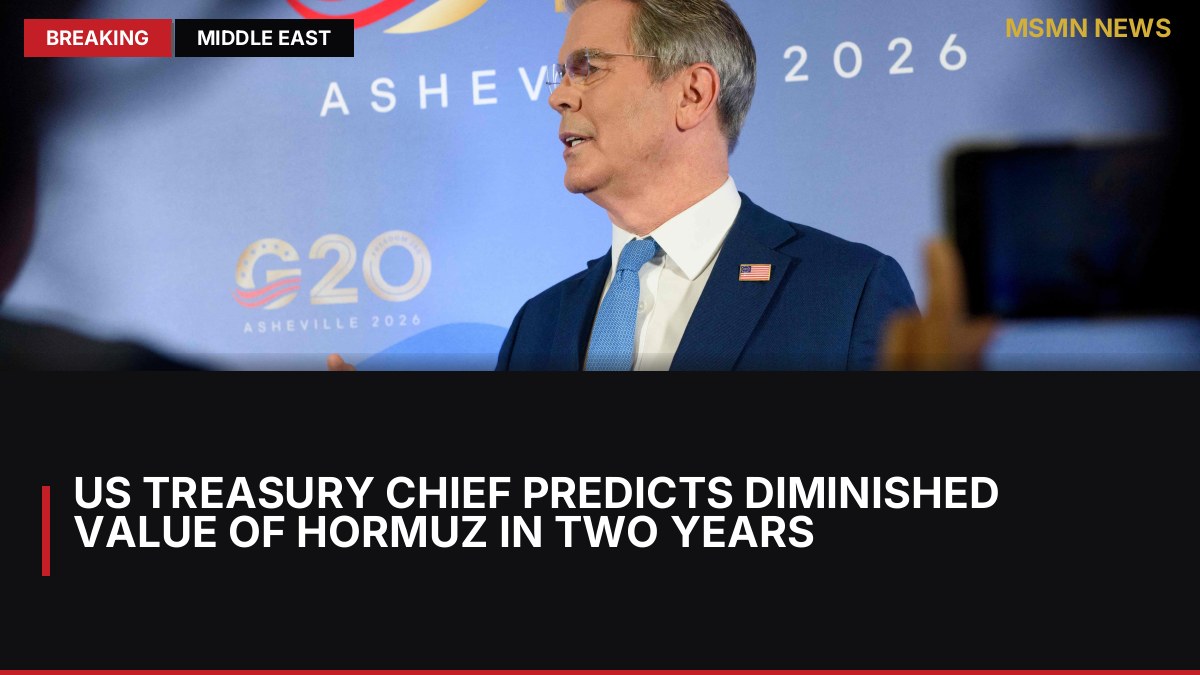
US Treasury Secretary Bessent forecasts a significant decline in the strategic importance of the Strait of Hormuz over the next two years, citing shifts in global energy dynamics.
- Kali Malone Readies New Album Burning Song: MSMN News
- Oso Oso Set to Release New Album Under Mark Quinlan's Feral Twin Records: MSMN News
- Yeah Yeah Yeahs Release New Live Album and Short Film: MSMN News
- Iran Faces Historic Oil Export Drought Amid U.S. Naval Blockade: MSMN News
- Murray-Darling Basin Authority Prevails in Class Action Lawsuit: MSMN News
In a bold statement delivered during a recent press conference, US Treasury Secretary Bessent asserted that the Strait of Hormuz, a critical maritime passage for global oil shipments, will become 'worthless' within the next two years. This declaration has raised eyebrows among policymakers and industry experts, given the strait's historical significance in international trade and Energy security.
Bessent's remarks came against the backdrop of evolving energy markets, particularly with the rise of alternative energy sources and advancements in technology that are reshaping how countries source and transport energy. The Strait of Hormuz currently facilitates a substantial portion of the world’s oil supply, making its future relevance a topic of considerable debate. As countries increasingly invest in renewable energy, the reliance on oil from the Middle East may diminish, leading to a potential shift in geopolitical power dynamics.
The implications of Bessent's prediction are profound, as the Strait of Hormuz has long been considered a vital artery for global commerce. The region has been a focal point of tension, with various geopolitical conflicts threatening the stability of oil supplies. If the strait's importance does wane, it could lead to a reevaluation of military and economic strategies by nations that have historically focused on protecting this key transit route.
Bessent's comments highlight a crucial moment in global energy discussions, especially as countries strive to meet climate targets and reduce carbon emissions. The transition towards greener energy solutions is not just an environmental imperative but also a strategic necessity that could redefine long-standing international relationships.
Looking ahead, analysts will be closely monitoring developments in energy policies and market trends. The upcoming international energy conferences and summits will likely address the future of oil supply chains and the role of traditional shipping lanes, including the Strait of Hormuz. Stakeholders across sectors will need to adapt to these changes as the landscape of global energy continues to evolve.
As these discussions unfold, the world will watch to see if Bessent's prediction holds true and how it might influence future energy security strategies and international relations.
Source / Reference
This MSMN News article is an original rewrite for our readers — not a copy of another publisher's story.
Source: The National UAE
Reference link: https://www.thenationalnews.com/news/us/2026/09/01/bessent-strait-of-hormuz/
Recommended products

 Editor's choice

Affiliate disclosure: MSMN may earn from qualifying purchases. Prices and availability may change.





Comments